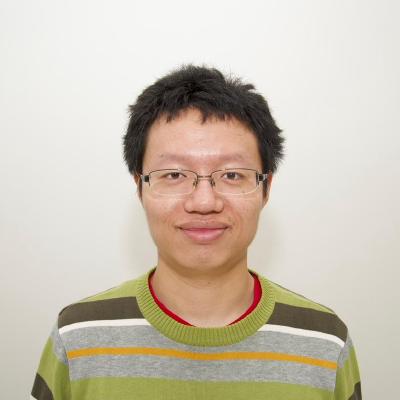
 David Feng
2026: A Year in Review
(Translated from the Chinese version with the help of LLM.)
Is Saving Black Bears Important?
I find Chen Jiaying’s books rather difficult to understand, but the books he recommends are usually quite good. Among his shorter essays, this one made a particularly strong impression on me.
People who work to rescue black bears often face a familiar challenge: Why save black bears? Wouldn’t it be more important to help children who are denied an education? Aren’t human beings more important than animals? Isn’t saving black bears just a bit of bourgeois sentimentality?
This reminds me of a famous letter written by NASA scientist Ernst Stuhlinger in 1970 in response to a nun, Sister Mary Jucunda, who had questioned how he could justify spending billions of dollars on a mission to Mars when so many children on Earth were starving.
Stuhlinger’s response was fascinating. He argued that space exploration could contribute to solving hunger in several ways. Satellites could help improve agricultural productivity through better monitoring of crops, soil, weather, and water resources. Technological innovations developed for space missions could find their way into everyday applications, including agriculture and medicine. And international cooperation through space exploration could help foster better relations between nations, making the distribution of food and humanitarian aid easier.
He also made a broader point: ambitious scientific endeavors can serve as catalysts for technological innovation and scientific discovery, often producing benefits far beyond their original objectives.
I particularly love his closing thought:
“Although our space program seems to lead us away from our Earth and out toward the moon, the sun, the planets, and the stars, … I believe that none of these celestial objects will find as much attention and study by space scientists as our Earth. It will become a better Earth, not only because of all the new technological and scientific knowledge which we will apply to the betterment of life, but also because we are developing a far deeper appreciation of our Earth, of life, and of man.”
Beautifully put.
In today’s world, with such enormous wealth inequality, billionaires could eradicate malaria and provide clean water for everyone on Earth by giving away just a small fraction of their fortunes (look up 1-pixel-wealth). What a tremendous legacy that would be, benefiting generations to come. No need to wait for the AI god to arrive.
On the other hand, the President of the United States says the federal government cannot afford Medicaid, Medicare, or daycare. We’re fighting a war, after all. Sigh.
But I digress. Back to saving black bears.
Chen’s counterargument goes something like this: If we follow that line of reasoning, aren’t there plenty of things more important than helping children who lack access to education? So why aren’t you doing those things instead?
The point is that our decisions to pursue particular causes are often matters of contingency, not the result of assigning every possible endeavor an objective score and then choosing whichever one ranks highest in urgency and importance.
We are creatures who happen to find ourselves here. As such, we fall in love with one thing and devote ourselves to another.
I myself came across this essay quite by chance, after hearing Lao Jiang mention it in one of his “Lao Jiang Is Surprisingly Reliable” videos. Life really is full of such coincidences.
Chen gives an example:
“You chose to major in chemistry at university because you got a perfect score on your first chemistry quiz competition in middle school… Not because chemistry is more important than physics. At least, that is not the main reason.”
Professor Chen, were you reading my résumé?
When I was growing up, my parents’ favorite saying was: “Master mathematics, physics, and chemistry, and you’ll never be afraid to travel the world.”
In middle school, I entered a chemistry competition and scored the highest in Zhuzhou that year (according to my teacher, though I never independently verified it). I was admitted to the science honors class at Hunan Normal University High School, so naturally I went on to pursue chemistry competitions. Then, after being admitted to Peking University through an early recommendation program, I had to choose a major. What else could I possibly choose? Chemistry, obviously! I’d already completed the first two years of the chemistry curriculum!
Deep down, life isn’t divided into you on one side and the things you choose on the other. You and the people and events around you become intertwined, forming an inseparable destiny.
As Chen puts it:
“We do not stand outside the world and outside ourselves, calculating our various personal circumstances on one hand and the pros and cons of every possible endeavor on the other, before arriving at a rational decision… Real life, with all its flesh and blood, simply doesn’t work that way.”
Beautifully said. I’m just going to quote the original directly.
(As for why I didn’t choose the physics competition track: a lot of real geniuses were in the physics group, which intimidated me, and my math wasn’t good enough. Should I admit that? I probably shouldn’t. Haha.)
What Should I Be Doing?
I never went to a school like Hengshui High School, where students’ schedules are planned down to the minute. But growing up in an intensely competitive environment nevertheless left me with a deep-seated attachment to instrumental rationality, meritocracy, and efficiency.
There is never enough time. When studying, I constantly think about how to learn as efficiently as possible. When exercising, I want the optimal results. Even when relaxing, I find myself wondering how to maximize the utility of my leisure time.
Whenever I feel I’m not operating at least locally optimally, I instinctively get worked up.
Accepting Chen’s idea of an “inseparable destiny” has helped me relax a little.
In his essay, Chen mentions that young people sometimes ask him: Among all these academic disciplines and schools of thought, which one is the most important? Which one should I study?
His answer:
“Before you’ve even entered the field, you might ask such a question, standing alone on a high tower, gazing into the distance and forgetting the road that brought you there. But as you delve deeper into your studies, the question becomes increasingly irrelevant. You are no longer the one choosing what to do. Instead, the subject itself sweeps you along, leaving you little choice but to follow.”
Looking Back at 2026
It’s already mid-November, and more than 86% of 2026 is behind us. I suppose it’s not too early to write a year-end review.
Apart from going to work and raising a child, what else have I been swept along into doing this year? This is where the greatest value of this blog becomes apparent: keeping a record of life’s little joys.
- January–March: The main theme was reading Great Books of the Western World (GBWW). This collection covers classics in Western philosophy, literature, politics, social sciences, and other disciplines. (I just realized that the editor of the Chinese edition of its companion collection of essays, The Great Ideas, was none other than Chen Jiaying. What a nice coincidence. Everything comes full circle!)
To keep readers from being overwhelmed by this intellectual feast, the editors provided a ten-year (!) reading plan, selecting a subset of works as an introduction. I divided the first year’s reading list into roughly twelve monthly portions by length and set out to complete it.
The writing in these works is generally straightforward and accessible. Despite the historical distance, the accompanying notes and discussions with ChatGPT made them relatively easy to understand. I highlighted passages as I read and added my own thoughts and comments along the way. After finishing each work, I’d discuss it with ChatGPT to deepen my understanding, feeling rather pleased with myself for having discovered the right way to use AI.
I intended to write up my reading notes, too. But life got busy, and they’ve been sitting on the back burner ever since.
-
January: Plato’s Apology and Crito: absolute classics. Everyone should read them. Aristophanes’ The Clouds and Lysistrata: ancient Greek comedies. Not as thought-provoking as Plato, nor particularly funny. Perhaps I’ve simply lost the cultural context of their original audiences. Plato’s Republic, Books I–II: I’m embarrassed to admit that I barely remember anything beyond Socrates debating with others about the nature of true justice. See? This is exactly why I should write my reading notes while everything is still fresh.
-
February: Aristotle’s Nicomachean Ethics, Book I, and Politics, Book I: Again, embarrassingly little recollection of the details. I just remember that they were impressive. Selected biographies from Plutarch’s Parallel Lives: Most of it has faded from memory, except for one passage explaining the origins of the Roman calendar months. I’d previously searched online for an authoritative explanation of why October begins with octo-, meaning eight. Now I’d finally found the historical source!
-
March: The New Testament: The Gospel According to Matthew and The Acts of the Apostles. I seem to have read them before, but this time I used an annotated edition published by a church. Combined with my memories of traveling to Israel years ago, I felt that my understanding had deepened another level.
-
April: St. Augustine’s Confessions. Perhaps his writing style is simply not to my taste. I found it a struggle to read, and as my interests shifted, I eventually put it aside.
-
Beyond GBWW: Early in the year, while preparing to write about my trip to London (yes, that travelogue is still unfinished), I came across the Rosetta Stone at the British Museum and decided to read The Keys of Egypt - The Race to Read the Hieroglyphs.
It’s essentially a biography of Jean-François Champollion. First of all, his Chinese transliterated name, Shangbo Liang (商博良), is brilliant. I have no idea which genius came up with it, but it’s infinitely better than the more conventional transliteration I’ve seen elsewhere.
Champollion had extraordinary linguistic talent and mastered several Middle Eastern languages. With a combination of historical timing, favorable circumstances, personal determination, and sheer brilliance, he succeeded in deciphering ancient Egyptian hieroglyphs.
We ordinary mortals can only marvel at such intellectual achievements. But what left an even deeper impression on me was the turmoil of the French Revolution. Political upheaval was so pervasive that France was hardly a place where anyone could enjoy the luxury of a quiet desk and peaceful scholarly work.
It was thanks to the repeated assistance and protection of the prefect Joseph Fourier (yes, the very same Fourier of the Fourier transform!) that Champollion and his family were spared further hardship.
Biographies aren’t just about great leaders commanding armies and masterfully maneuvering their way through history. Geniuses like Champollion, Bach, Raphael, and Du Fu also had to struggle to survive in this world. Their everyday worries weren’t necessarily all that different from ours.
-
April: I traveled to Paris at the end of the month, so much of April was spent refining my travel itinerary. Some people think Rick Steves’ travel guides lack a certain sophistication, but they suit my taste quite well. I had completely forgotten everything I’d painstakingly learned from the histories of Britain, France, and Germany during college. At least I still remembered that the author of my French history textbook was Professor Lü Yimin. This time, I read his A Short History of France. I’ve also been exploring Bach’s music systematically. In our Paris hotel room, I listened to BWV 244, the St. Matthew Passion — Mache dich, mein Herze, rein — while eating freshly baked croissants picked up from a street vendor. Feeling very grateful for my wife’s and son’s patience and indulgence!
-
May: At the beginning of the month, I visited the Raphael exhibition at the Metropolitan Museum of Art. I hadn’t done much preparation beforehand, but the exhibition left me wanting more. Afterwards, I dug into quite a bit of additional material to learn more about Raphael. I also developed some further thoughts after publishing my post, but haven’t had a chance to share them yet.
-
June: Another trip to Philadelphia. The travelogue is still sitting in my drafts folder.
-
July: What on earth did I do this month?
-
August:
- The 9/11 Memorial Museum. After publishing my post, I read Fall and Rise: The Story of 9/11. Still haven’t gotten around to writing the book notes.
- A visit to the world-famous Yellowstone National Park. The travelogue is still unwritten.
-
September: What did I do this month, again?
-
October:
- Reading notes on Gödel, Escher, Bach (GEB).
- A classical music concert.
Looking back, my interests are all over the place. I never seem to delve deeply enough into any of them. No wonder I haven’t accomplished anything particularly significant!
On top of that, so many reading notes and travelogues were never written in a timely manner, and the backlog just keeps growing.
I’ve come up with two tentative solutions.
First, I’ve added a new Notes section to the blog, where I can post things that aren’t necessarily highly original. That way, sharing discussions I’ve had with AI won’t feel like such a big commitment.
Second, I’ve created a Now page to make my priorities and deadlines more explicit. Hopefully, this will help me become more productive.
I need to keep reminding myself: Perfect is the enemy of good!
All right, I’ve got the rest of 2026 neatly planned out now. Happy New Year, everyone!
(Isn’t that a little premature? Haha!)