 David Feng
大都会博物馆拉斐尔特展
缘起
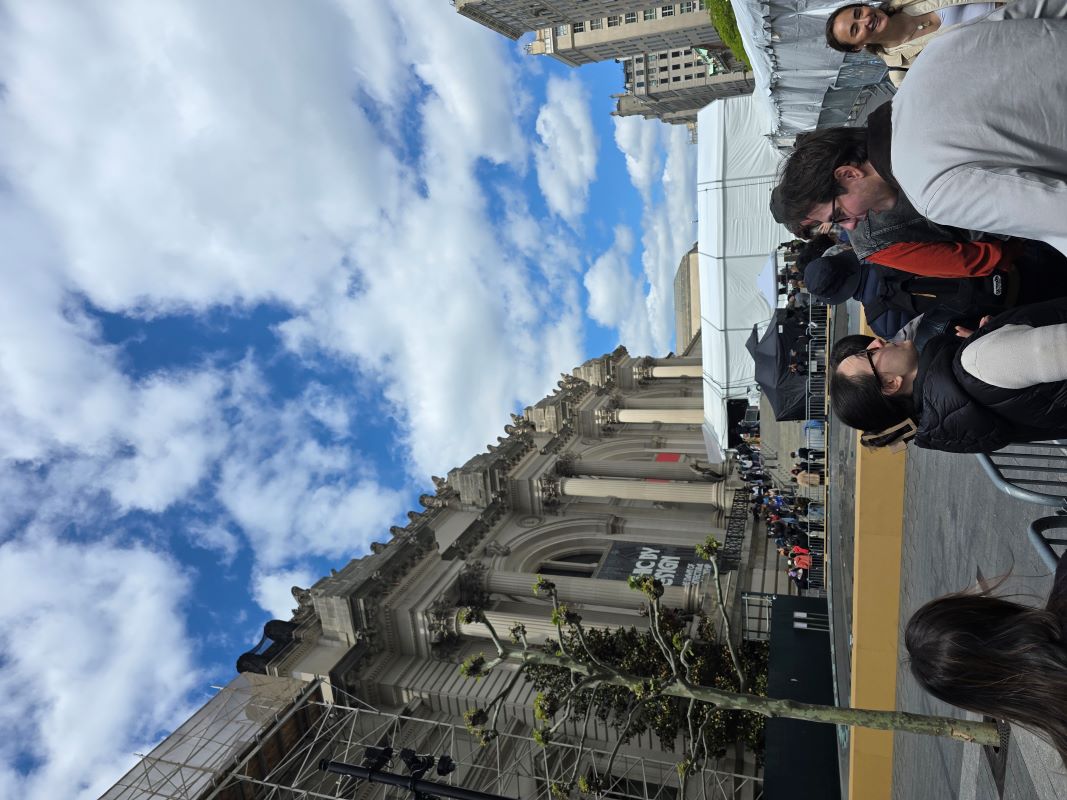
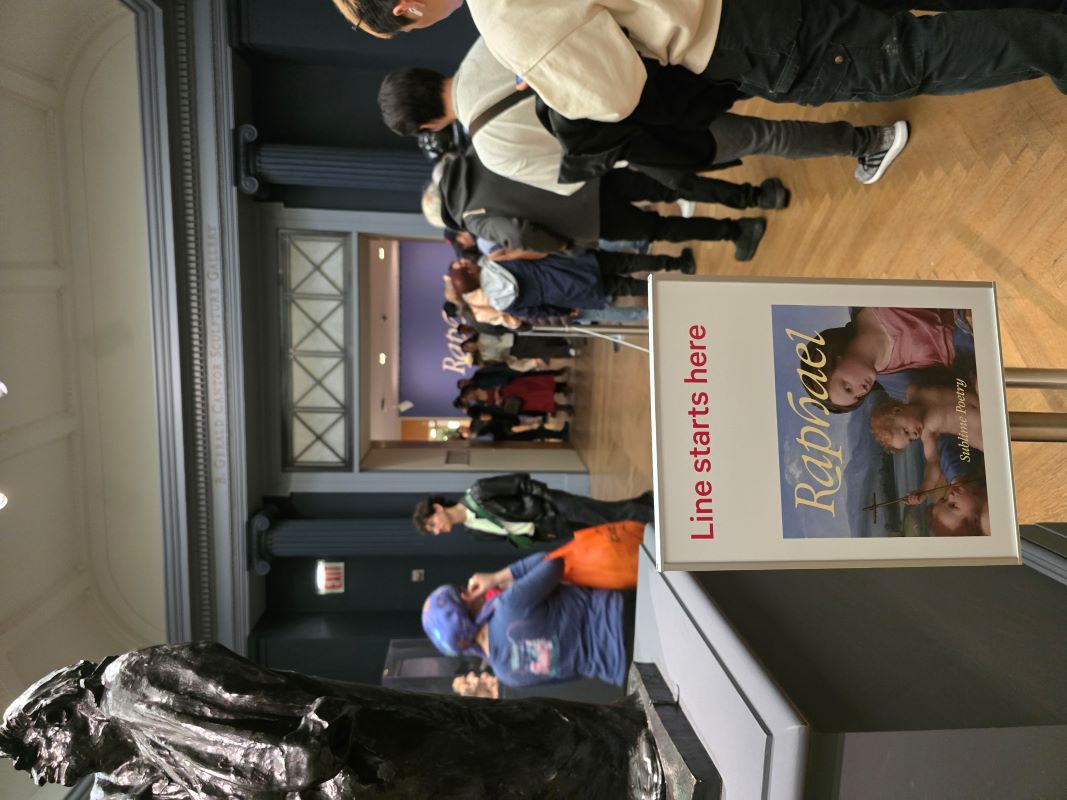
今年年初就收到大都会的宣传,今年要搞拉斐尔特展。展览3月底开始,最近终于决定5月3号周日去一下,一周时间赶紧临时抱佛脚,网上找一些文章和视频1来学习拉斐尔的相关知识。看完展览有一点点心得,给大家分享下。
此次特展的策展人 Carmen Bambach,之前已经弄过达芬奇特展(2003)和米开朗基罗特展(2017),这次2026年拉斐尔特展是她文艺复兴三杰的收官之作。这次展览策划了八年(米开朗基罗特展一完事就开始?),估计主要就是找各个博物馆借作品吧。八年磨一剑,效果如何?
拉斐尔生平简介
拉斐尔
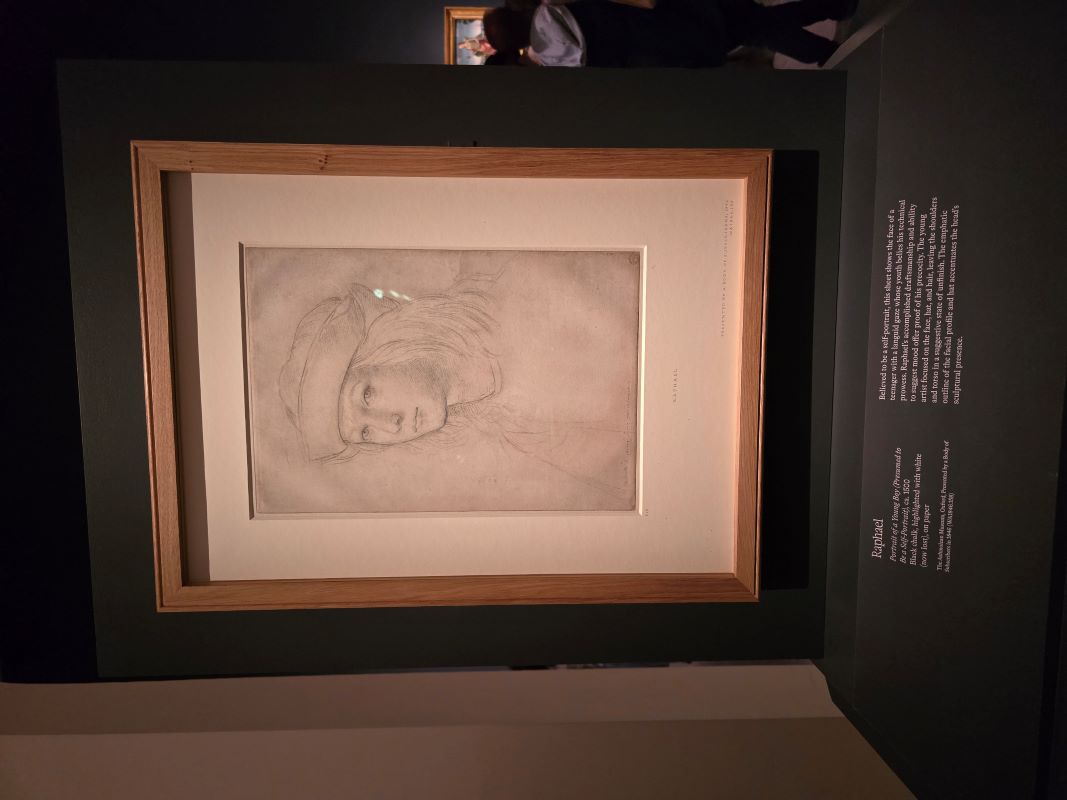
《男孩肖像(推测为自画像)》,约1500年 黑色粉笔,白垩提亮(现已脱落),纸本
牛津大学阿什莫林博物馆,1846年由一批订阅者捐赠(WA1846.158)
这幅作品被认为是拉斐尔的自画像,描绘了一名少年松弛而柔和的面容,其年轻的外表掩盖了他精湛的技艺。拉斐尔娴熟的素描技巧以及营造氛围的能力,证明了他早熟的才华。这位年轻的艺术家专注于面部、帽子和头发,而肩膀与躯干则留下了富有暗示性的未完成状态。面部轮廓和帽子的强调性线条,突出了头部如雕塑般的立体感。
Raphael
Portrait of a Young Boy (Presumed to Be a Self-Portrait), ca. 1500 Black chalk, highlighted with white (now lost), on paper
The Ashmolean Museum, Oxford, Presented by a Body of Subscribers in 1846 (WA1846.158)
Believed to be a self-portrait, this sheet shows the face of a teenager with a languid gaze whose youth belies his technical prowess. Raphael’s accomplished draftsmanship and ability to suggest mood offer proof of his precocity. The young artist focused on the face, hat, and hair, leaving the shoulders and torso in a suggestive state of unfinished. The emphatic outline of the facial profile and hat accentuates the head’s sculptural presence.
按照官方文案,一步一步开始参观。
乌尔比诺的拉斐尔——县城婆罗门2
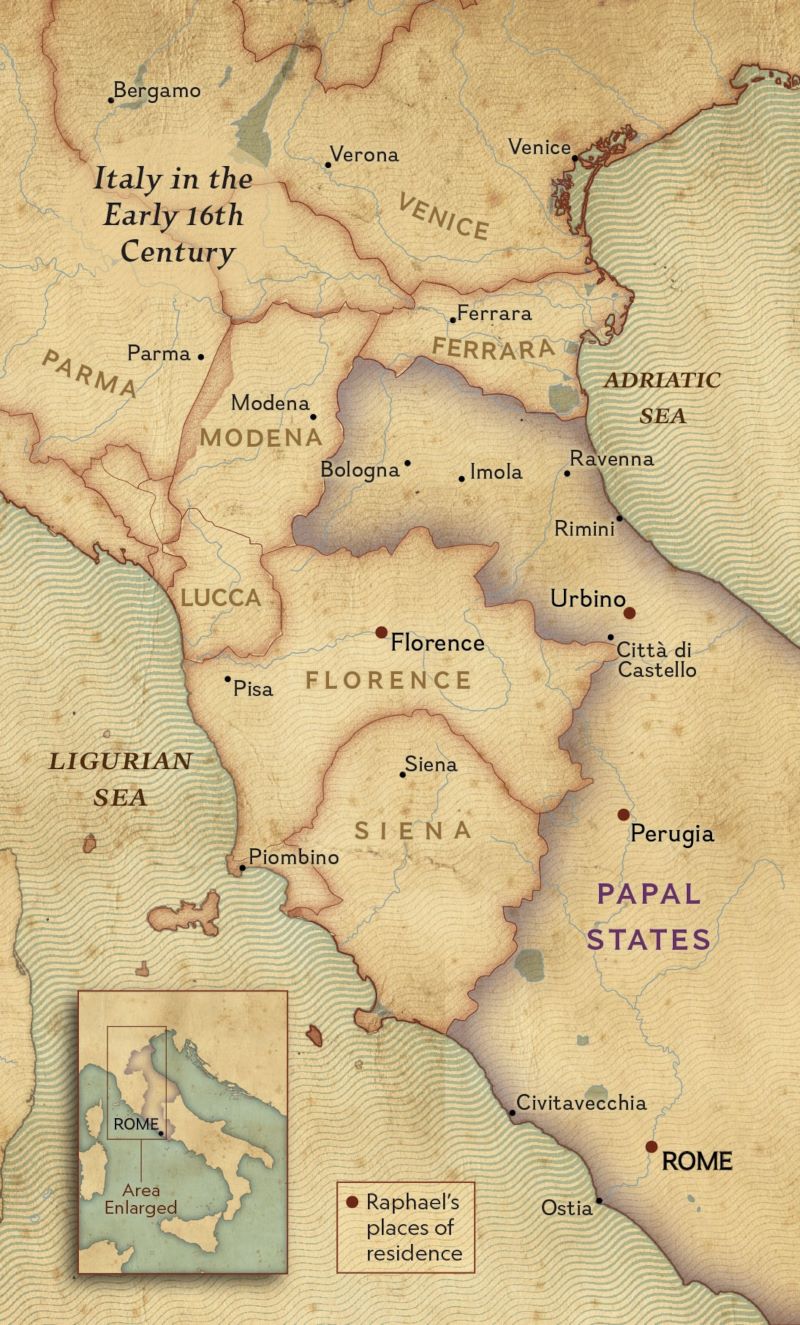
1483年,拉斐尔出生于意大利小城乌尔比诺。拉斐尔对自己的家乡很骄傲,一直以“乌尔比诺的拉斐尔”签名。
乌尔比诺公爵(乌菲兹博物馆那个著名的侧脸肖像就是他和他老婆)是雇佣兵出身,但成为一方诸侯后,积极资助艺术。拉斐尔父亲是画家兼诗人,与公爵走得很近。拉斐尔从小就在乌尔比诺的小朝廷中接受宫廷礼仪的训练和艺术的熏陶。
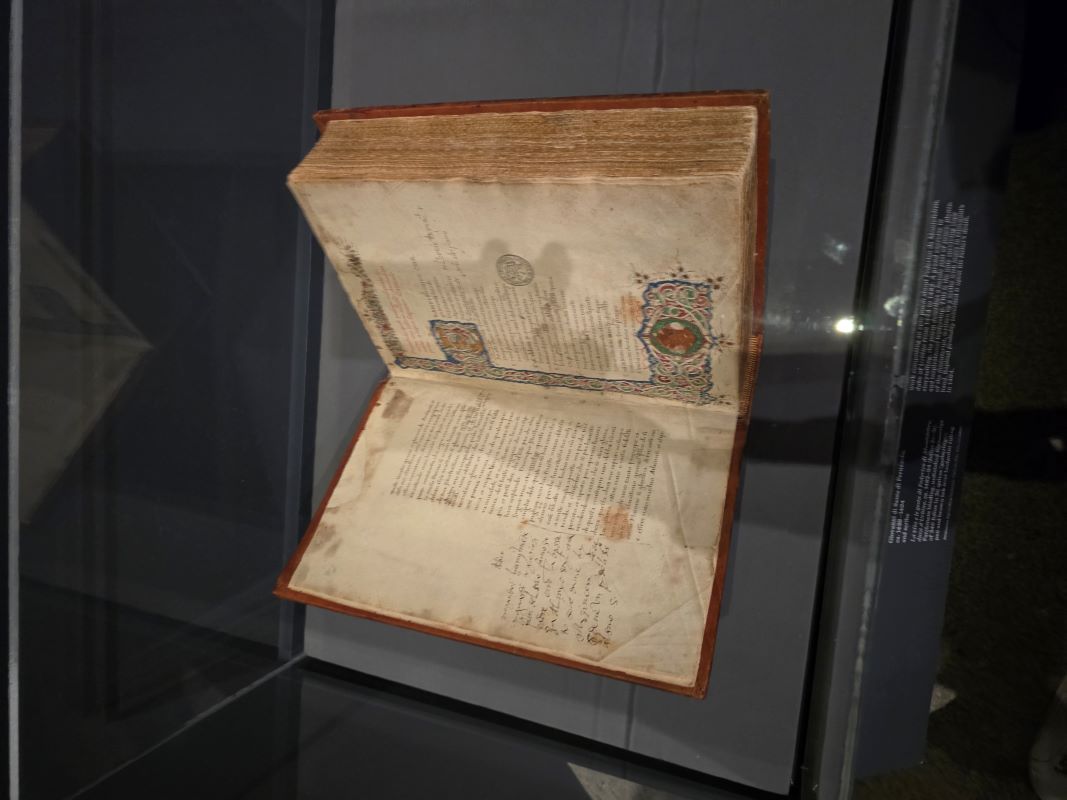
乔瓦尼·桑蒂
乔瓦尼·迪·桑特·迪·佩鲁佐洛 约1439–1494年 及抄写员
《费德里科·达·蒙特费尔特罗——乌尔比诺公爵的生平与功绩》,约1482–1494年(第2页反面至第3页正面) 羊皮纸装订,未完成手稿,共36叠(折子)346页;尖笔打格,棕墨绘制
梵蒂冈宗座图书馆,梵蒂冈城(Ort.lat.1305)
拉斐尔在十一岁之前,成长于一个围绕父亲绘画实践及史诗创作活动的家庭中。他的父亲正在创作一部关于费德里科·达·蒙特费尔特罗(1444年至1482年任乌尔比诺公爵)的史诗。这部宏大的叙事诗描绘了一段充满和平、富足与励精图治的英雄往昔。这是该手稿唯一存世的副本,由一名抄写员抄录,页边有乔瓦尼的亲笔注释。拉斐尔很可能在父亲1494年去世后继承了这部手稿。
Giovanni Santi
Giovanni di Sante di Peruzzolo; ca. 1439–1494 and scribe
La vita e le gesta di Federico di Montefeltro, duca d’Urbino, ca. 1482–94 (folios 2v–3r) Parchment binding, unfinished manuscript of 346 folios in 36 quires (gatherings); pen and brown ink over leadpoint ruling
Biblioteca Apostolica Vaticana, Vatican City (Ort.lat.1305)
Until the age of eleven, Raphael grew up in a household that revolved around his father’s painting practice and his work composing an epic poem about Federico da Montefeltro, duke of Urbino from 1444 to 1482. A grand exercise in storytelling, the poem describes a heroic past of peace, plenty, and inspirational leadership. This is the only surviving copy of the manuscript, written by a scribe with notes in Giovanni’s hand. Raphael probably inherited it upon his father’s death, in 1494.
成为艺术家——原生家庭的托举,恩师的倾囊相授
拉斐尔幼年展现出极高的天赋,父亲送他去位于佩鲁贾的佩鲁吉诺工作室学习。佩鲁吉诺绝不是泛泛之辈,西斯廷礼拜堂的耶稣把钥匙交给彼得的壁画就是他的作品。拉斐尔雄心勃勃、好学且自律(ambitious, studious, and disciplined),迅速爬完了梯子,完成了从pupil/学生(学习技法)、Apprentice/学徒(开始打下手)、Collaborator/合作者(作品可以挂名?)到独立作者的升级。对比佩鲁吉诺创作的《圣母的婚礼》和拉斐尔的仿作,可以看出拉斐尔已经青出于蓝而胜于蓝了。
拉斐尔在佩鲁吉诺的团队里,一方面学习绘画技法,另一方面也学习了如何将画画这件事情程序化、流程化、规模化,利用团队的力量,快速完成大量订单。这对他职业生涯晚期影响巨大。
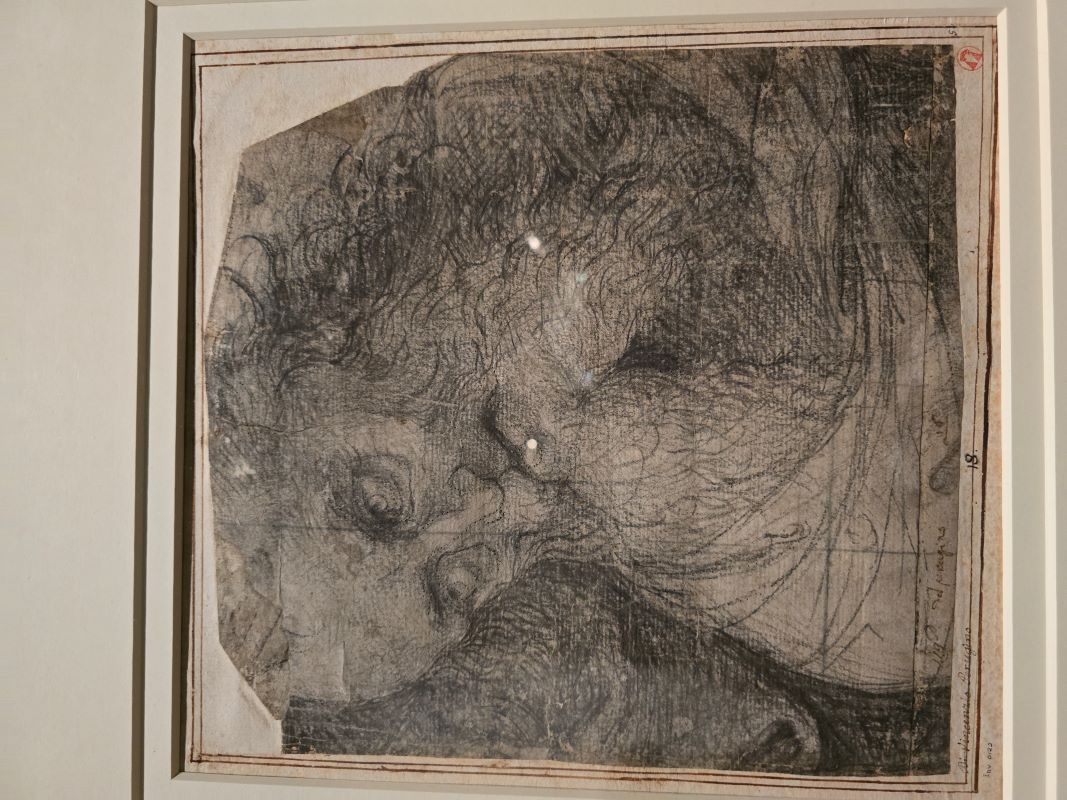
佩鲁吉诺
彼得罗·迪·克里斯托弗罗·万努奇;1446/50–1523 《蓄须男子胸像(圣基娅拉祭坛画中阿里马太的约瑟的卡通画残片)》,约1495年 黑色粉笔,轮廓线刺孔以便转印设计稿,并打有方格,纸本
牛津基督教堂学院管理委员会(0122)
这幅大型卡通画(即等大素描稿)的残片上留有刺孔轮廓线,用于将图像转印到另一表面。尽管画面被裁切得很紧,但它充分揭示了佩鲁吉诺传授给年轻拉斐尔的那种审慎的设计过程。这幅表现力极强的素描与两幅大致同期的画作有关,其中一幅即左侧所展;设计稿的重复使用或许可以解释它为何保持残片状态。仍可见方格网的残余痕迹——这些线条精心标定了人物在最终画作中的位置。拉斐尔在1500年至1512年间创作了大量素描,显示出他在设计中同样注重几何关系,并使用轴线来构建空间中的形象。
佩鲁吉诺,《哀悼基督》,1495年。木板油画,86 ⅜ × 76 ⅝ 英寸(220 × 195 厘米)。乌菲齐美术馆(1912年第164号)
Perugino
Pietro di Cristoforo Vannucci; 1446/50–1523 Bust of a Bearded Man (Cartoon Fragment for Joseph of Arimathea in the Santa Chiara Altarpiece), ca. 1495 Black chalk, outlines pricked for transfer of the design, and squared, on paper
Governing Body of Christ Church, Oxford (0122)
This fragment of a large-scale cartoon, or full-size drawing, has pricked outlines used to transfer the image to another surface. Although tightly cropped, it reveals much about the deliberate design process Perugino passed on to the young Raphael. The powerfully expressive drawing relates to two paintings of about the same date, one of which hangs at left; the reuse of the design may explain its fragmentary state. Still visible are the remnants of a squaring grid, lines that carefully plot the location of the figure in the final painting. Raphael made numerous drawings between 1500 and 1512 that reveal a similar attention to geometry in design and use axial lines to construct figures in space.
Perugino, Lamentation over the Dead Christ, 1495. Oil on wood, 86 ⅜ × 76 ⅝ in. (220 × 195 cm). Gallerie degli Uffizi (1912 no. 164)
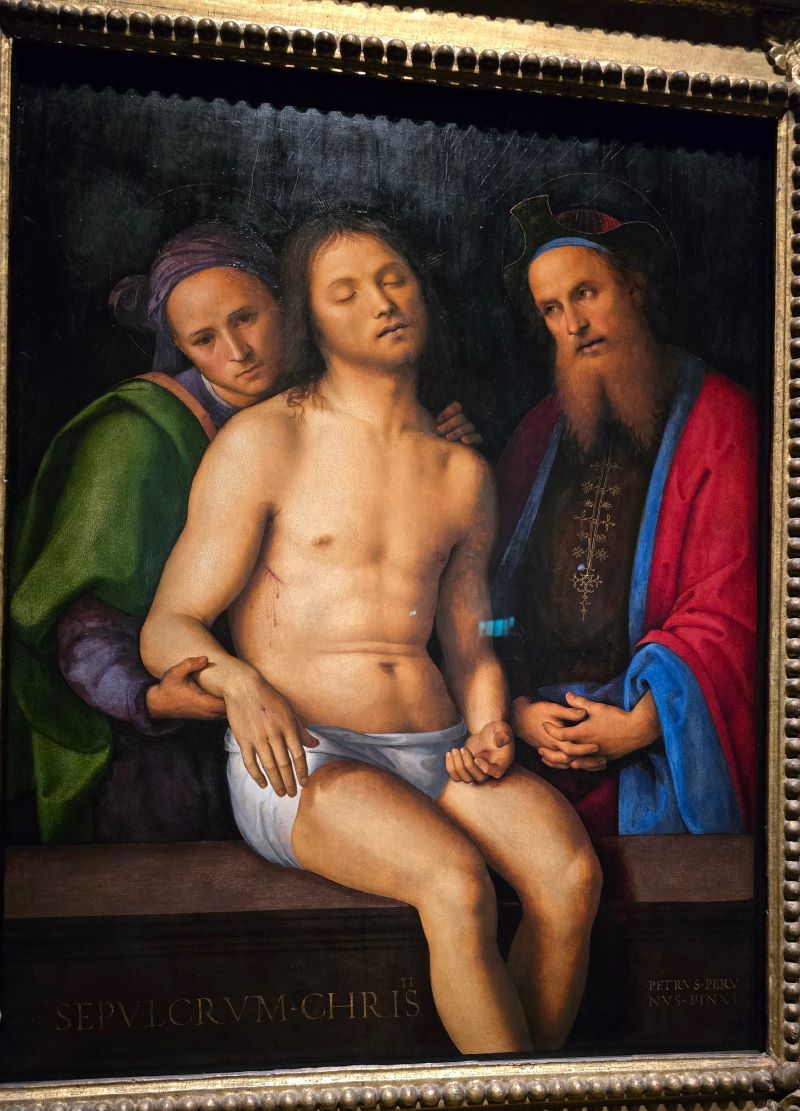
佩鲁吉诺
彼得罗·迪·克里斯托弗罗·万努奇;1446/50–1523
《基督之墓(基督遗体与阿里马太的约瑟及尼哥德慕)》,约1495–1498年 油彩和脂肪坦培拉于木板,后转移到画布并裱于木板上
斯特林和弗朗辛·克拉克艺术中心,威廉斯敦,马萨诸塞州 (1955.947)
这幅佩鲁吉诺宁静的画作描绘了两位《圣经》人物——阿里马太的约瑟(右)和尼哥德慕(左)——在耶稣受难后凝视着基督的遗体。约瑟的面部特征及头部姿态与挂在附近的引人注目的卡通画(等大素描稿)相吻合。佩鲁吉诺的素描技法及绘画设计过程成为拉斐尔日后实践的范本。精湛的绘制、画面中标注的标题(“SEPVLCRVM CHRISTI”)以及右下角醒目的艺术家签名(“PETRVS PERVSINVS PINXIT”,意为“佩鲁吉诺所画”)都强烈表明:佩鲁吉诺是将其作为一件为显赫客户所作的私人 devotional 作品(用于默祷祈祷的作品)。
Perugino
Pietro di Cristoforo Vannucci; 1446/50–1523
Sepulcrum Christi (The Dead Christ with Joseph of Arimathea and Nicodemus), ca. 1495–98 Oil and tempera grassa on wood, transferred to canvas and mounted on wood
Sterling and Francine Clark Art Institute, Williamstown, Massachusetts (1955.947)
This serene painting by Perugino depicts two biblical figures, Joseph of Arimathea (right) and Nicodemus (left), contemplating the body of Christ after the Crucifixion. Joseph’s facial features and the pose of his head coincide with the striking cartoon (full-scale drawing) hanging nearby. Perugino’s draftsmanship and design process for paintings became a model for Raphael’s own practice. The superb execution, inscribed title (“SEPVLCRVM CHRISTI”), and prominent artist’s signature (“PETRVS PERVSINVS PINXIT,” in the lower right corner) strongly suggest that Perugino made this painting as a private devotional work for a prestigious client.
寻找赞助人
1500-1507年间,年轻的拉斐尔在马尔凯、翁布里亚和托斯卡纳地区创作大型祭坛画和小型宗教作品。
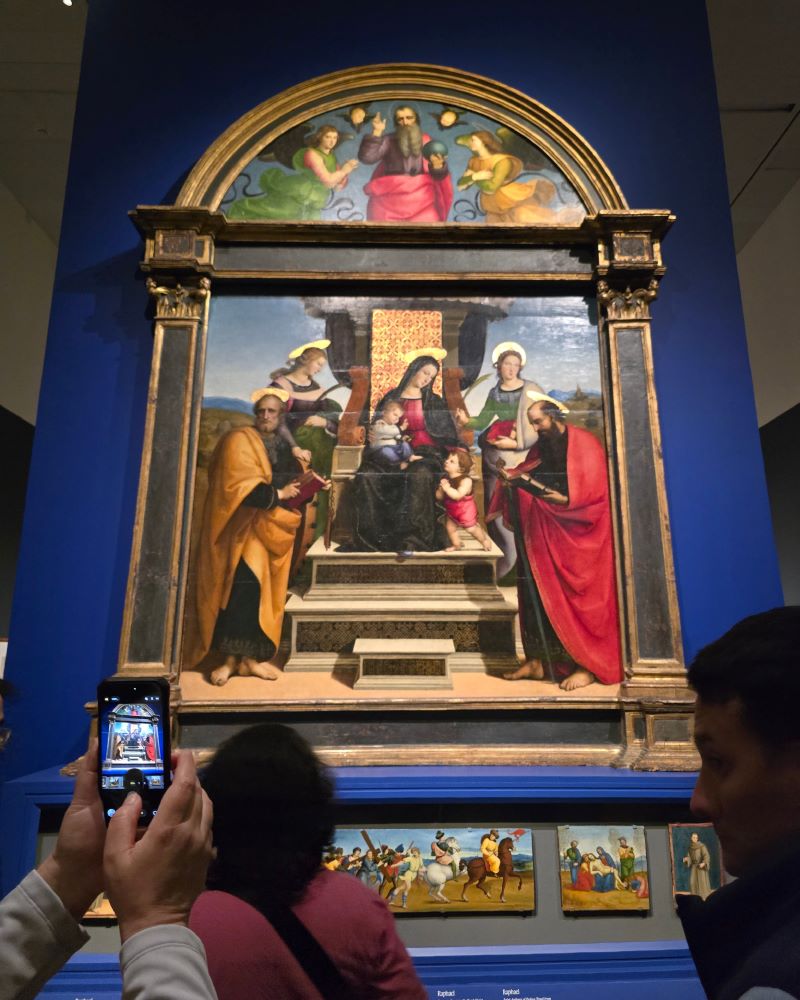
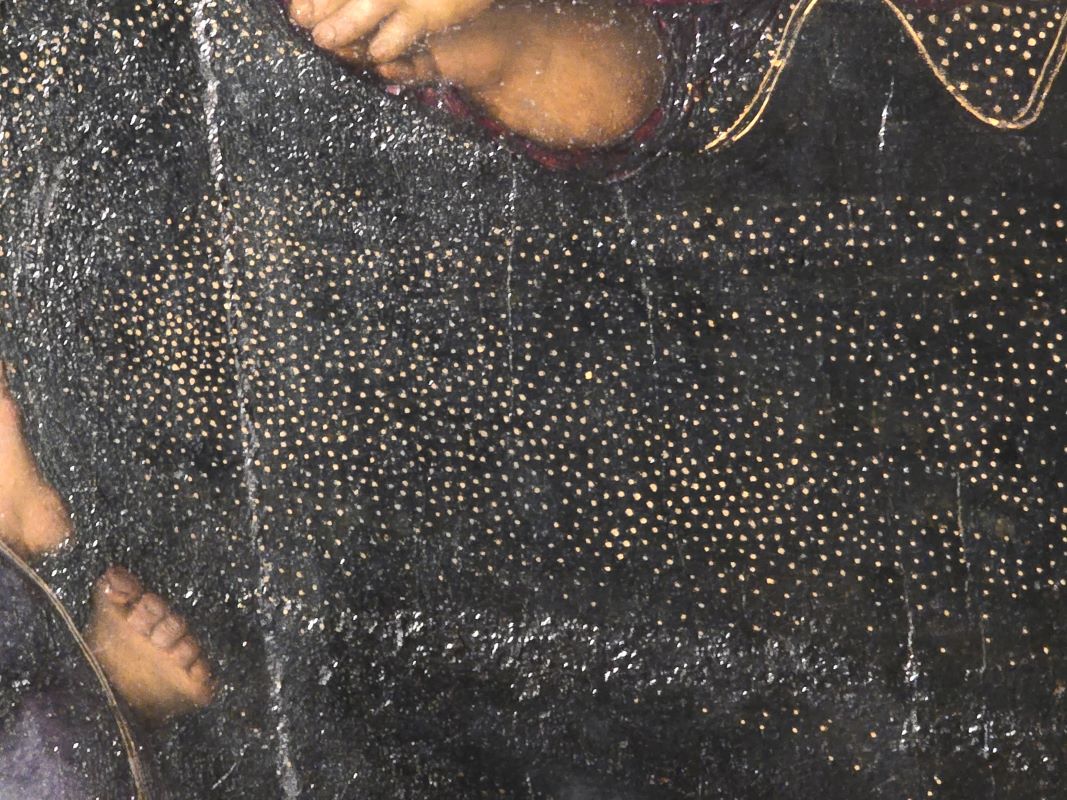
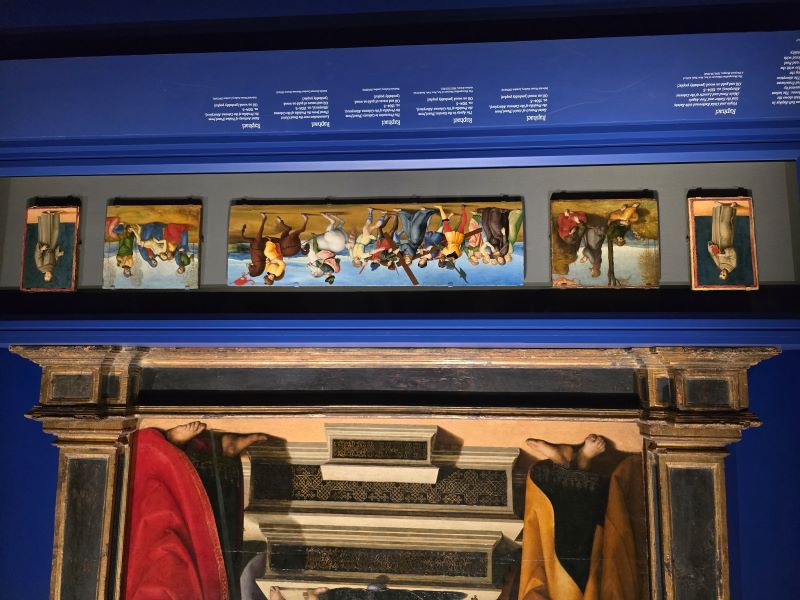
拉斐尔
《圣母子与诸圣徒登宝座;圣父与两位天使》(《科洛纳祭台画》主体画板与弦月板),约1504–1505年
木板油画(可能为杨木),施金
纽约,大都会艺术博物馆,J·皮尔庞特·摩根捐赠(这次展览的Presenting Sponsor是Morgan Stanley),1916年(16.30ab)
拉斐尔
《圣方济各》(《科洛纳祭台画》下部装饰板),约1504–1505年 木板油画(可能为杨木)
伦敦,达利奇美术馆(DPG241)
拉斐尔
《客西马尼园的祷告》(《科洛纳祭台画》下部装饰板),约1504–1505年 木板油画(可能为杨木)
纽约,大都会艺术博物馆,多位捐赠者基金,1932年(32.130.1)
拉斐尔
《前往各各他之路》(《科洛纳祭台画》下部装饰板),约1504–1505年 木板油画,带金彩痕迹(可能为杨木)
伦敦,英国国家美术馆(NG2919)
拉斐尔
《哀悼基督》(《科洛纳祭台画》下部装饰板),约1504–1505年 木板油画,带金彩痕迹(可能为杨木)
波士顿,伊莎贝拉·斯图尔特·加德纳博物馆(P16e3)
拉斐尔
《圣安东尼(帕多瓦的)》(《科洛纳祭台画》下部装饰板),约1504–1505年 木板油画(可能为杨木)
伦敦,达利奇美术馆(DPG243)
Raphael
Virgin and Child Enthroned with Saints; God the Father and Two Angels (Main Panel and Lunette of the Colonna Altarpiece), ca. 1504-5 Oil and gold on wood (probably poplar)
The Metropolitan Museum of Art, New York, Gift of J. Pierpont Mrgan, 1916 (16.30ab)
Raphael
Saint Francis of Assisi (Panel from the Predella of the Colonna Altarpiece), ca. 1504–5 Oil on wood (probably poplar)
Dulwich Picture Gallery, London (DPG241)
Raphael
The Agony in the Garden (Panel from the Predella of the Colonna Altarpiece), ca. 1504–5 Oil on wood (probably poplar)
The Metropolitan Museum of Art, New York, funds from various donors, 1932 (32.130.1)
Raphael
The Procession to Calvary (Panel from the Predella of the Colonna Altarpiece), ca. 1504–5 Oil and traces of gold on wood (probably poplar)
National Gallery, London (NG2919)
Raphael
Lamentation over the Dead Christ (Panel from the Predella of the Colonna Altarpiece), ca. 1504–5 Oil and traces of gold on wood (probably poplar)
Isabella Stewart Gardner Museum, Boston (P16e3)
Raphael
Saint Anthony of Padua (Panel from the Predella of the Colonna Altarpiece), ca. 1504–5 Oil on wood (probably poplar)
Dulwich Picture Gallery, London (DPG243)
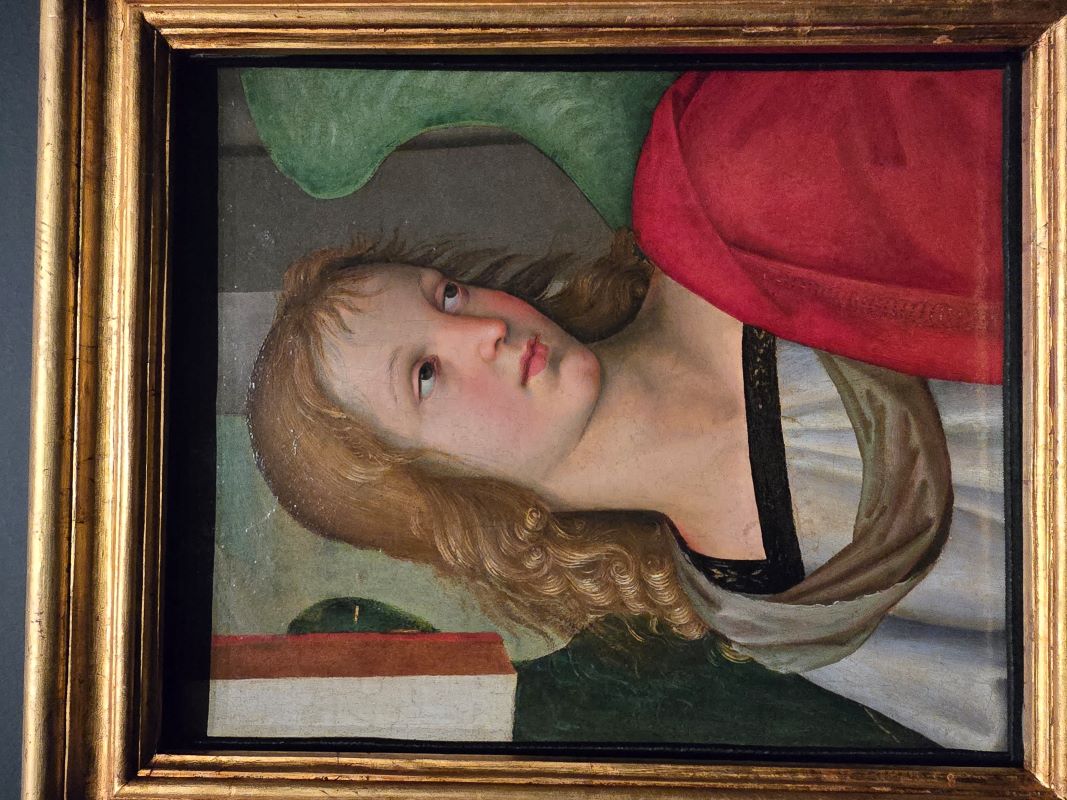
拉斐尔
《胸像天使(巴隆奇祭台画残片)》,约1500–1501年 布面油画(从木板转移),带有金色高光
布雷西亚,托西奥·马丁嫩戈美术馆与布雷西亚博物馆基金会(149号)
1500年12月10日,羊毛商人安德里亚·迪·托马索·巴隆蒂(约1466–1502/3年)与年仅十七岁的拉斐尔以及年长的埃万杰利斯塔·达·皮安·迪·梅莱托(约1460–1549年)签订合同(名字按此顺序列出),委托他们为其在卡斯泰洛城圣奥斯定教堂内的小礼拜堂绘制一幅巨大的祭坛画——这幅作品最终命运多舛。
这份合同首次记录了拉斐尔被称为“大师”(magister)。遗憾的是,由于卡斯泰洛城位于地震活跃地带,圣奥斯定教堂多次遭受地震破坏,其中1789年最为严重,如今那幅巨大的主体画板仅存三块残片。这个精致的天使位于主角——托伦蒂诺的圣尼古拉斯——的右侧。
该人物以微型画技法用油彩绘制,展现出最高品质的技艺,无疑是拉斐尔的手笔。
Raphael
Angel in Bust‑Length (Fragment from the Baronci Altarpiece), ca. 1500–1501
Oil with gold highlights on canvas, transferred from wood
Pinacoteca Tosio Martinengo e Fondazione Brescia Musei, Brescia (149)
On December 10, 1500, the wool merchant Andrea di Tommaso Baronti (ca. 1466–1502/3) contracted the seventeen‑year‑old Raphael and the elder Evangelista da Pian di Meleto (ca. 1460–1549), listed in that order, to paint an enormous—and ultimately ill‑fated—altarpiece for his chapel in the church of Sant’Agostino in Città di Castello.
The contract records the first time Raphael was identified as a magister (master). Unfortunately, as Città di Castello is in an area of seismic activity, Sant’Agostino suffered repeated damage from earthquakes, most severely in 1789, and only three fragments of the gigantic main panel survive today. This exquisite angel stood to the right of the protagonist, Saint Nicholas of Tolentino.
Exhibiting the highest quality of execution, painted in oil in a miniaturist technique, the figure is undoubtedly Raphael’s work.
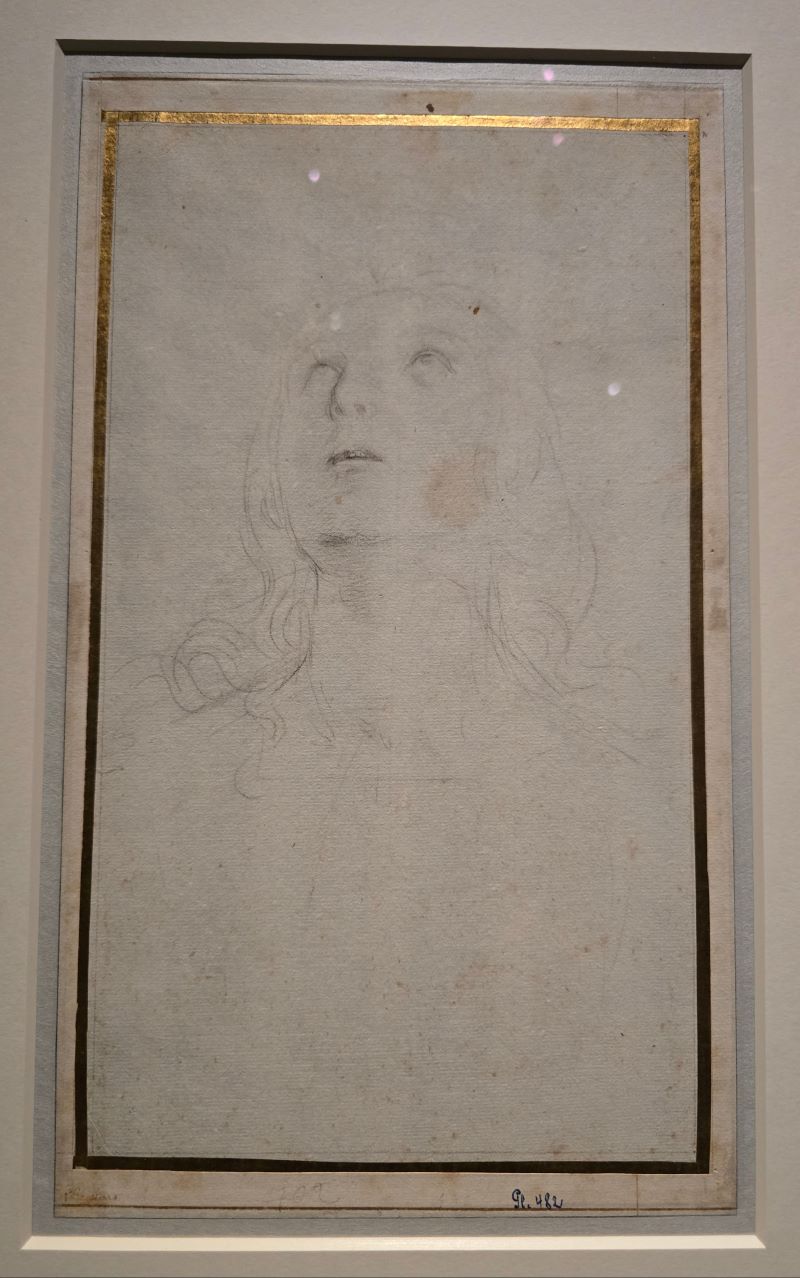
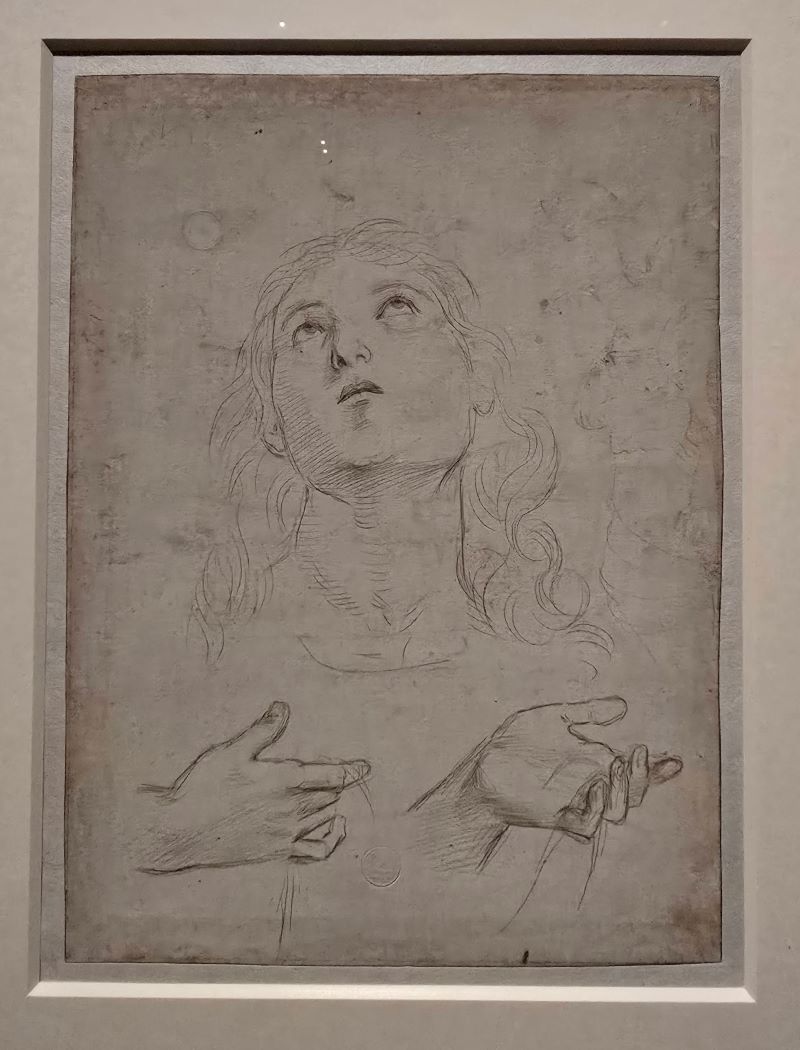
这个年轻人亲眼目睹圣母玛丽亚升天的场景,由怀疑转为信仰的瞬间。我同意展签所说,素描的空灵(ethereal)特质是成品不具有的。
拉斐尔
《年轻男子头像(奥迪祭坛画中使徒托马斯的习作)》,约1503–1504年 纸本铅尖笔
里尔美术宫(Pl. 482 正面)
《年轻男子的头部与手部(奥迪祭台画中使徒托马斯的习作)》,约1503–1504年 淡灰色底纸,铅尖笔
里尔美术宫(Pl. 440 正面)
拉斐尔为佩鲁贾圣弗朗切斯科草地教堂中奥迪家族小礼拜堂绘制的大型祭台画《圣母加冕》主体画板,充满了艺术家在姿态与目光方面新语汇的活力。这些金属尖笔习作是为使徒托马斯那缩短透视的头部所作,托马斯是画面下半部分的核心人物。拉斐尔将他描绘成一个带有忧郁气质、雌雄同体般俊美的青年。他脸上那种崇高的狂喜表情,传达出当他目睹圣母玛利亚升天(即作品上半部分的场景)时,从怀疑转为信仰的瞬间。这些素描具有一种空灵的特质,而当托马斯的形象在画中被理想化之后,这种特质便部分消失了。
拉斐尔,《圣母加冕(奥迪祭坛画)》,约1503–1505年。 木板油彩和脂肪坦培拉,后转移至画布,107 ½ × 65 英寸(272 × 165 厘米)。梵蒂冈博物馆,梵蒂冈绘画馆,梵蒂冈城(40334)
Raphael
Head of a Young Man (Study for the Apostle Thomas in the Oddi Altarpiece), ca. 1503–4 Leadpoint on paper
Palais des Beaux-Arts, Lille (Pl. 482 recto)
Head and Hands of a Young Man (Study for the Apostle Thomas in the Oddi Altarpiece), ca. 1503–4 Leadpoint on paper prepared pale gray
Palais des Beaux-Arts, Lille (Pl. 440 recto)
The large, main panel of Raphael’s Coronation of the Virgin altarpiece, painted for the Oddi family chapel in Perugia’s church of San Francesco al Prato, pulsates with the energy of the artist’s new vocabulary of gestures and gazes. These metalpoint studies are for the foreshortened head of the apostle Thomas, the central figure in the lower part of the painting. Raphael depicts him as a youth of melancholic, androgynous beauty. His expression of sublime rapture communicates the moment when his doubt shifts to faith as he witnesses the Virgin Mary ascending to heaven, the scene in the upper part of the final work. The drawings have an ethereal quality that partly disappeared as Thomas’s face was idealized in the painting.
Raphael, The Coronation of the Virgin (The Oddi Altarpiece), ca. 1503–5. Oil and tempera grassa on wood, transferred to canvas, 107 ½ × 65 in. (272 × 165 cm). Musei Vaticani, Pinacoteca Vaticana, Vatican City (40334)

回应达芬奇和米开朗基罗
1504年,21岁的拉斐尔来到佛罗伦萨,学习米开朗基罗(1475-1564)的雕塑,以及达芬奇(1452-1519)的绘画和素描,特别是速写(Sketch)技术。
圣母子(展览重点来了)
佛罗伦萨艺术市场竞争激烈。拉斐尔事业屡屡受阻,未能赢得大型祭坛画和公共宗教艺术委托。但柳暗花明又一村,他在圣母子(温柔圣母 Madonna of Tenderness, 圣母与圣子亲密地脸颊接触)这个赛道上找到了突破口,并建立口碑。这种画一般比较小,放在富裕委托人的家里。画面中健康的婴儿和喜乐的母亲,用来保佑分娩的母亲和孩子。当时的医疗知识落后,分娩死亡率很高。拉斐尔自己的母亲很可能是因分娩并发症去世的。原来拉斐尔唯美的圣母子背后是拉斐尔个人、也是整个时代的辛酸故事。
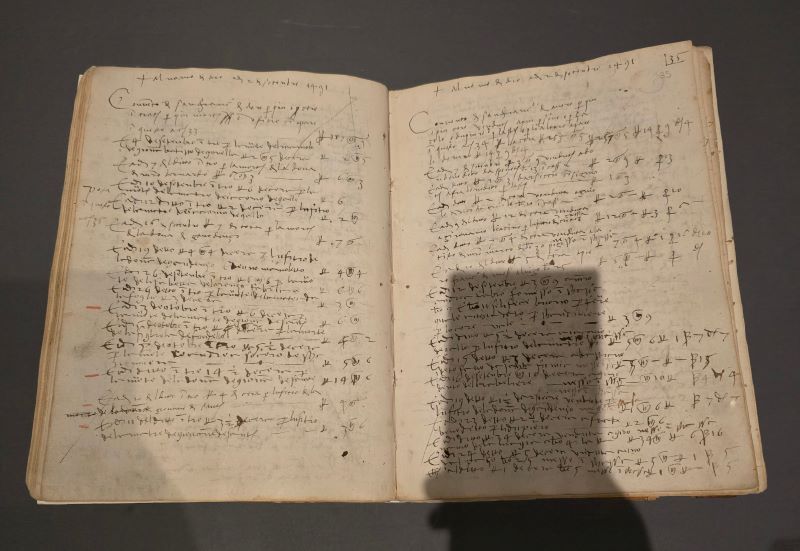
圣器室账簿:《蜡账本》、《收入与支出账本》,1485–1497年;1520–1521年(第34页反面至第35页正面) 羊皮纸装订,纸质手稿
乌尔比诺,圣方济各修道院档案室(554号)
乌尔比诺的圣方济各修道院为圣器室保留了一本账簿,用于记录蜂蜡(用于制作蜡烛的昂贵材料)的销售情况。此处翻开的手稿显示了描述1491年10月7日至8日为拉斐尔母亲玛吉亚·恰尔拉葬礼所售蜡的条目。 下一页记录了几天后一位未具名的婴儿妹妹的安葬费用。这些死亡很可能是由于分娩并发症所致,对年仅八岁的拉斐尔产生了重大影响。该账簿还记录了拉斐尔家族其他几位成员的死亡,包括一个婴儿弟弟和一位祖母。
Sagrestia, Libro delle cere, Libro di entrate e uscite, 1485–97; 1520–21 (folios 34v–35r) Parchment binding, manuscript on paper
Archivio, Convento di San Francesco d’Assisi, Urbino (554)
The convent of San Francesco d’Assisi in Urbino kept an account book for the sacristy to record the sale of beeswax, a costly material used for candles. The volume is open here to display entries that describe wax sold for the funeral of Raphael’s mother, Magia Ciarla, on October 7–8, 1491. The following page records the expense for the burial of an unnamed baby sister a few days later. These deaths, likely due to childbirth complications, would have had a significant impact on the eight-year-old Raphael. The account book also records the deaths of several other members of Raphael’s family, including an infant brother and a grandmother.
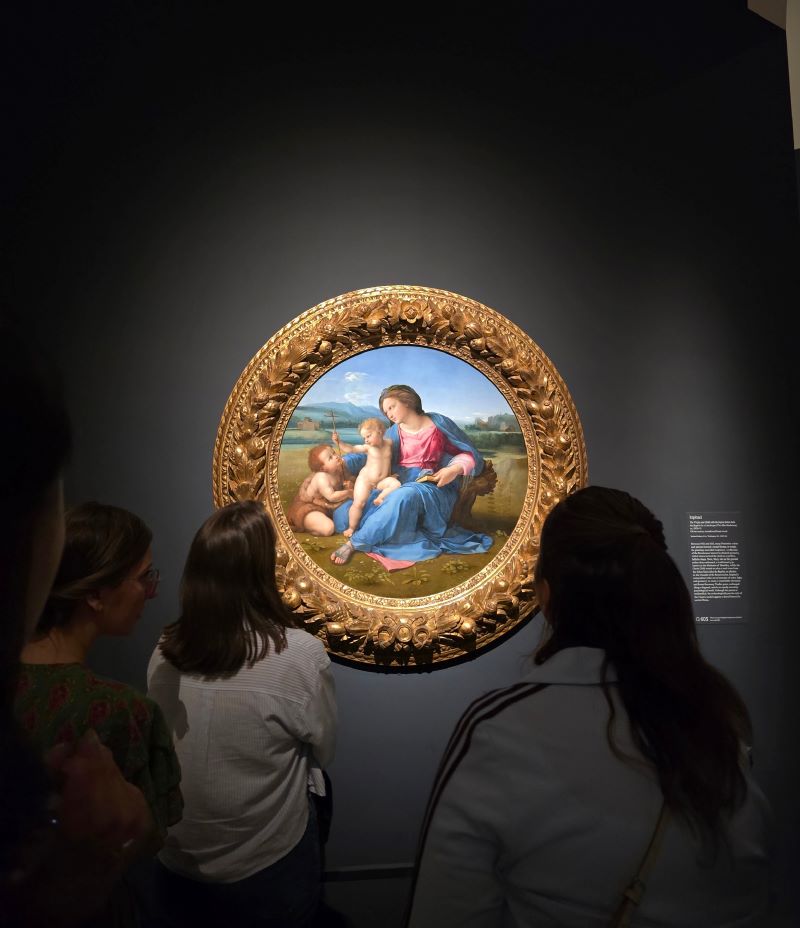
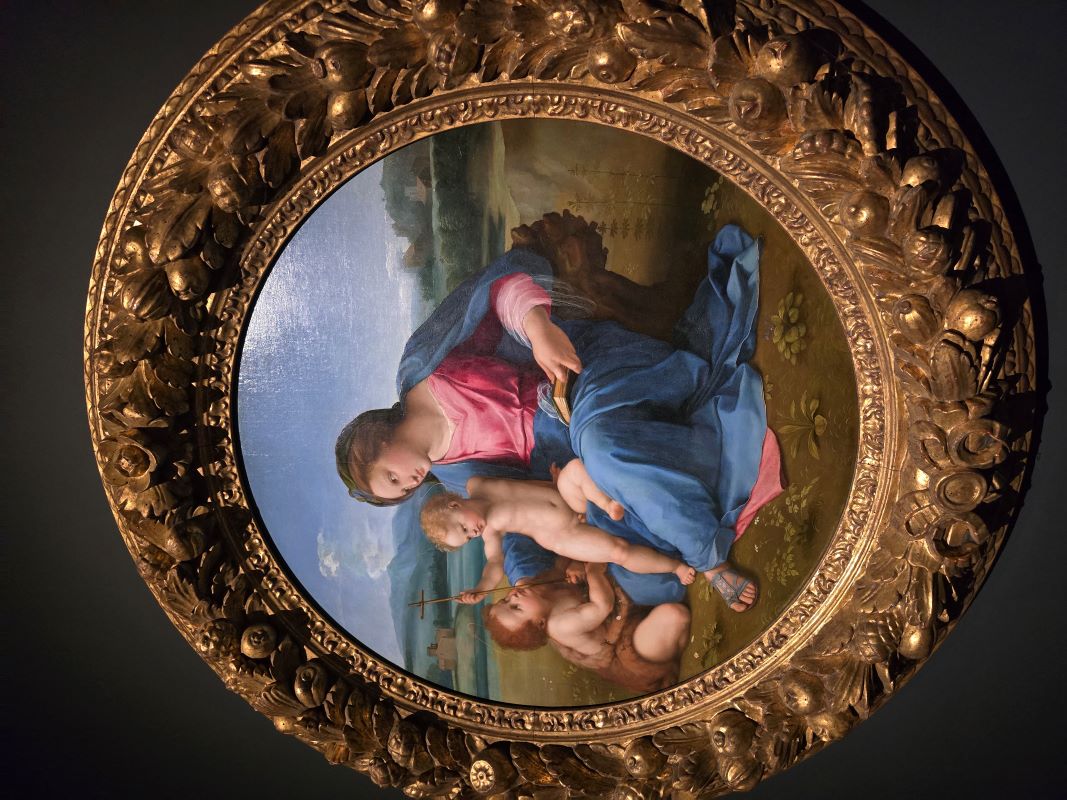
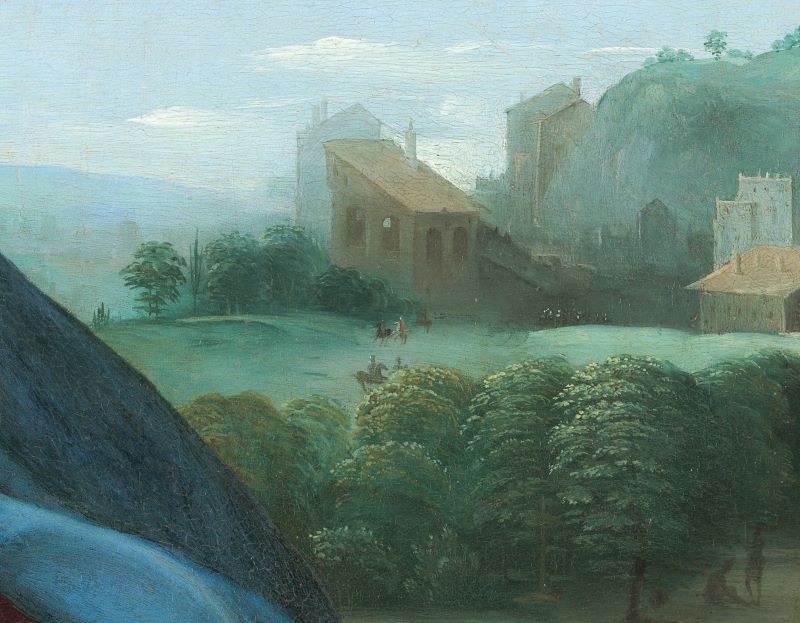
拉斐尔继承了把圣母画成优雅美丽金发贵族的传统,但也有突破和发展。他的圣母子表情和姿势更自然,更人性化,更美了。
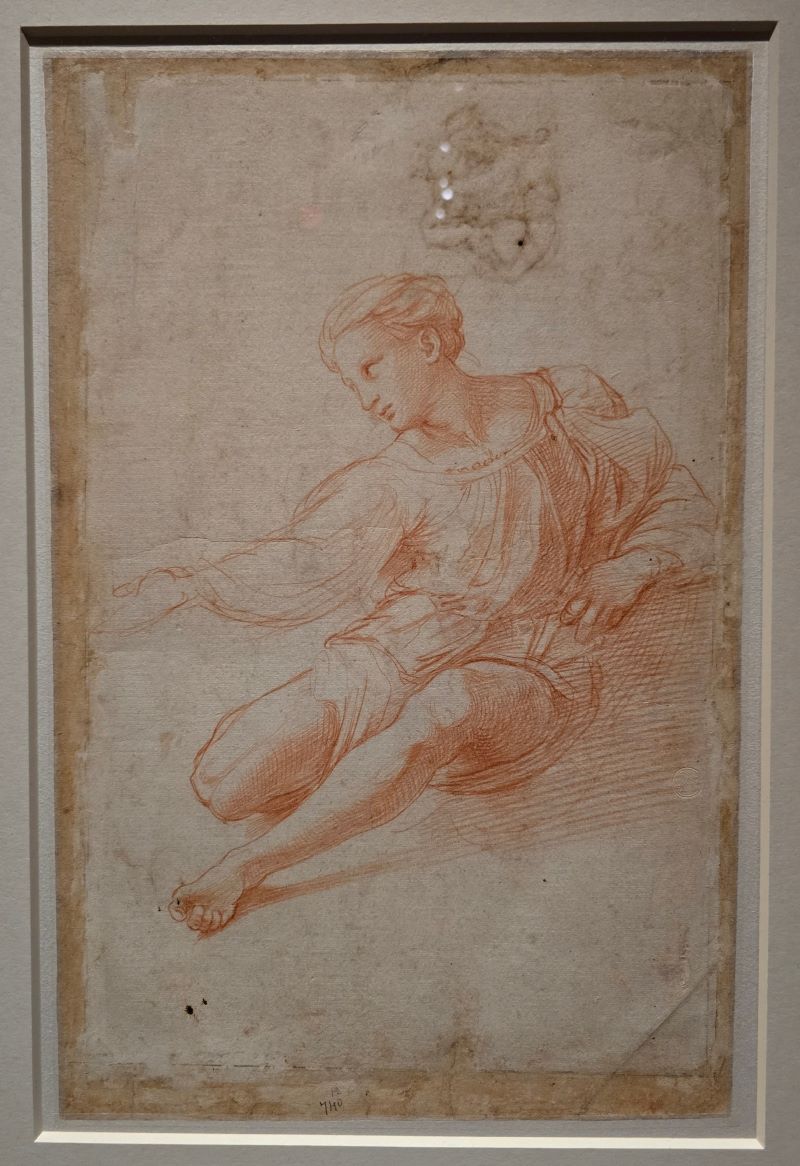
拉斐尔
《〈阿尔巴圣母〉中圣母姿势的男模特研究》,约1509–1511年 红色粉笔,底层有针笔起稿,纸本
里尔美术宫(Pl. 457 反面)
在这张双面纸的这一面,拉斐尔让一名健壮的工作室助手穿上长亚麻衬衫和短裤,摆出圣母的姿势作为替身。他开始尝试一种不同寻常、极具动感的风车式坐姿,以在构图中营造戏剧性和临场感。他在这幅素描中的技法——有力的轮廓线,以及通过平行排线和交叉排线塑造体积感——展现出非凡的技艺。
Raphael
Study of a Male Model Posing for the Virgin in the Alba Madonna, ca. 1509–11 Red chalk over preliminary stylus underdrawing, on paper
Palais des Beaux-Arts, Lille (Pl. 457 verso)
On this side of the double-sided sheet, Raphael posed an athletic workshop assistant dressed in a long linen shirt and short hose as a stand-in for the Virgin. He began to experiment with an unusual, highly dynamic pinwheel pose for the seated figure to create drama and immediacy in the composition. His drawing technique here, with forceful outlines and modeling with parallel strokes and cross-hatching, is of exceptional virtuosity.
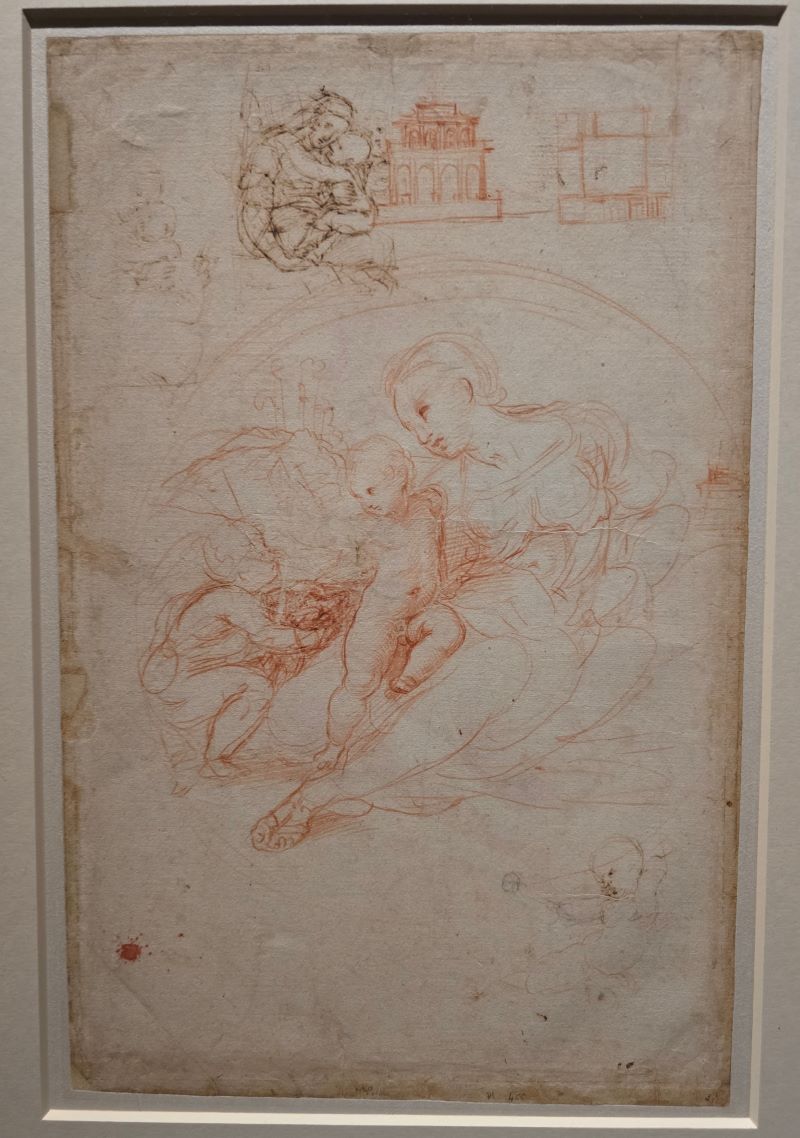
拉斐尔
《〈阿尔巴圣母〉构图研究;〈坦皮圣母〉的两个圣母子草图;建筑立面与平面图;一个卧姿儿童草图》,约1509–1511年
红色粉笔、钢笔与棕墨,底层有针笔起稿,并有用针尖刻出的圆规作图痕迹,纸本
里尔美术宫(Pl. 456 正面)
艺术家在这张纸的正反两面作画,运用强劲的红色粉笔技法,并辅以少量钢笔笔墨来明确细节,为《阿尔巴圣母》(展出于附近)做准备。在此面,他将反面的男性模特转化成了身着飘逸长袍的圣母,加入了两个正在交谈的胖乎乎的婴儿,并将人物群像压缩以适应圆形画幅。其他项目的构思包括一幅小型的钢笔圣母像和罕见的红色粉笔建筑草图。
Raphael
Composition Study for the Alba Madonna; Two Sketches of the Virgin and Child for the Tempi Madonna; Facade and Plan of a Building; Sketch of a Recumbent Child, ca. 1509–11
Red chalk, pen and brown ink, over preliminary stylus underdrawing, with stylus-incised compass work, on paper
Palais des Beaux-Arts, Lille (Pl. 456 recto)
The artist drew on both sides of this sheet, in a powerful red-chalk technique with selected pen-and-ink touches to clarify details, in preparation for the Alba Madonna painting (hanging nearby). Here, he transformed the male model on the other side into the Virgin in flowing robes, inserted two chubby conversing infants, and compressed the group to fill a circular format. Ideas for other projects include a small pen-and-ink Madonna and rare architectural sketches in red chalk.
附近还有一些其他的圣母子作品,个人感觉都不如阿尔巴圣母好看,就不贴图了。继续往前走,来到本次展览第二个高潮——
肖像画——拉斐尔的朋友圈
肖像画在当时是刚刚兴起的门类。这些肖像画的像主们很多不仅是拉斐尔的赞助人,也是拉斐尔的朋友。
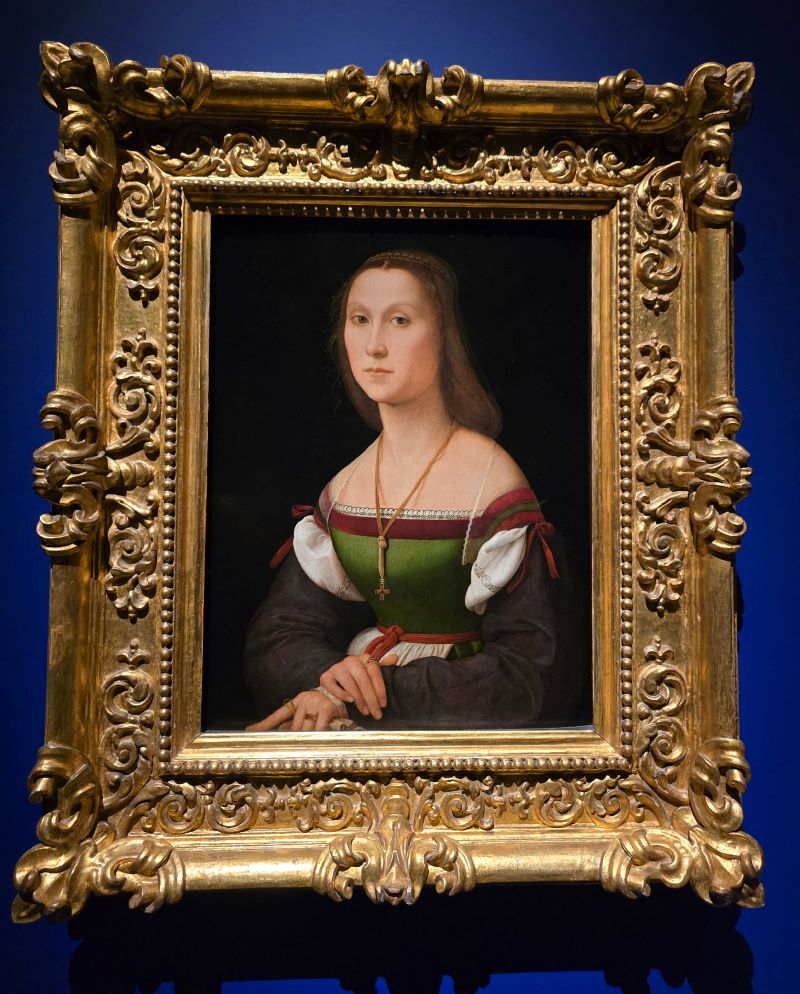
拉斐尔
《四分之三身长女子肖像(“哑女”)》,约1503–1505年 椴木板油画
乌尔比诺,马尔凯国家美术馆(1990 DE 237)
如同在达·芬奇的《蒙娜丽莎》中一样,这幅肖像中的面部与交叉的双手提供了两个强有力的焦点——既在构图意义上,也作为展现“心灵运动”的姿态。画中女子可能是乔万娜“费尔特里亚”·德拉·罗韦雷(1463–1513),一位艺术赞助人,其丈夫当时刚去世不久。她深蓝灰色的眼睛凝视着观者的方向,但并未完全对视;阴郁的背景强化了她沉思的气韵。她左手的姿态传达出一种心理强度:她握着的可能是一块手帕或一只手套,而绷紧的食指用力抵在画面的下边框上,仿佛画框的边缘是一道真实的壁架。
Raphael
Portrait of a Woman in Three-Quarter Length (La Muta), ca. 1503–5 Oil on limewood
Galleria Nazionale delle Marche, Urbino (1990 DE 237)
As in Leonardo’s Mona Lisa, the face and crossed hands in this portrait provide two strong focal points, both in a compositional sense and as gestures that manifest the “motions of the mind.” The woman may be Giovanna “Feltria” della Rovere (1463–1513), a patron of the arts whose husband had recently died. Her dark blue-gray eyes gaze in the viewer’s direction but do not fully connect, and the funereal background amplifies her aura of contemplation. The gesture of her left hand communicates a psychological intensity: she holds what may be a handkerchief or glove, and her tensed index finger presses hard against the bottom border of the composition, as if the edge of the painting were a physical ledge.
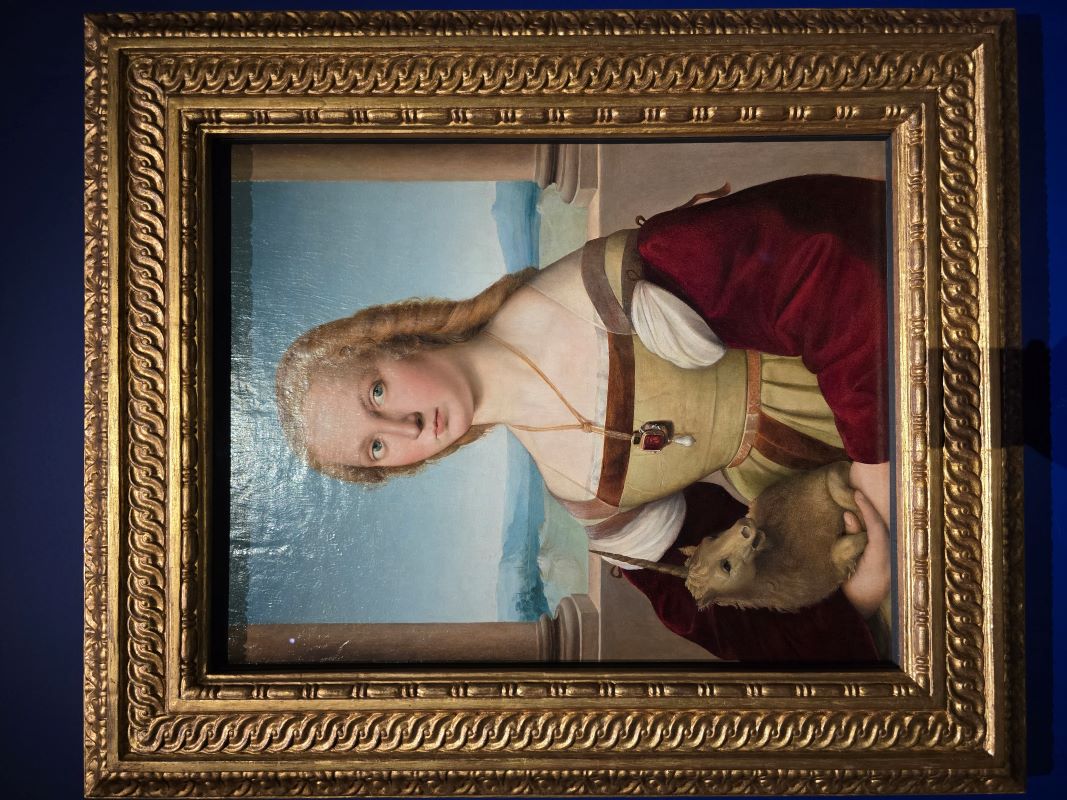
拉斐尔
《持独角兽的年轻女子肖像》 (劳拉·奥尔西尼·德拉·罗韦雷?),1505–1506年 木板油画,后转移至画布,再裱于木板上
罗马,博尔盖塞美术馆(371号)
在拉斐尔的肖像画中,这幅明亮的作品最接近于奉行彼特拉克(1304–1374)诗歌中所阐发的有影响力的理想美——彼特拉克推崇女性的金发与白皙的皮肤。她膝上的小独角兽——爱情与贞洁的象征——以及她优雅的服饰与珠宝表明这是一幅订婚或结婚肖像。奢华的材质彰显了新娘的财富、地位和“价值”,作为其家族的荣誉。这幅画可能描绘的是劳拉·奥尔西尼·德拉·罗韦雷(1492–1530/31),她的家族徽章是独角兽,她的母亲是茱莉娅·法尔内塞——一位以美貌著称的教皇亚历山大六世的情妇。
Raphael
Portrait of a Young Woman with a Unicorn (Laura Orsini della Rovere?), 1505–6 Oil on wood, transferred to canvas, glued to a wood support
Galleria Borghese, Rome (371)
Among Raphael’s portraits, this luminous painting comes closest to espousing the influential ideals of beauty articulated in the poetry of Petrarch (1304–1374), who exalted women’s blond hair and pale skin. The small unicorn on her lap—a symbol of love and chastity—and her elegant costume and jewelry indicate that this was a betrothal or marriage portrait. Sumptuous materials advertised the wealth, status, and “value” of a bride, as a matter of honor for her family. The painting may represent Laura Orsini della Rovere (1492–1530/31), whose family emblem was the unicorn and whose mother was Giulia Farnese, a mistress of Pope Alexander VI admired for her beauty.
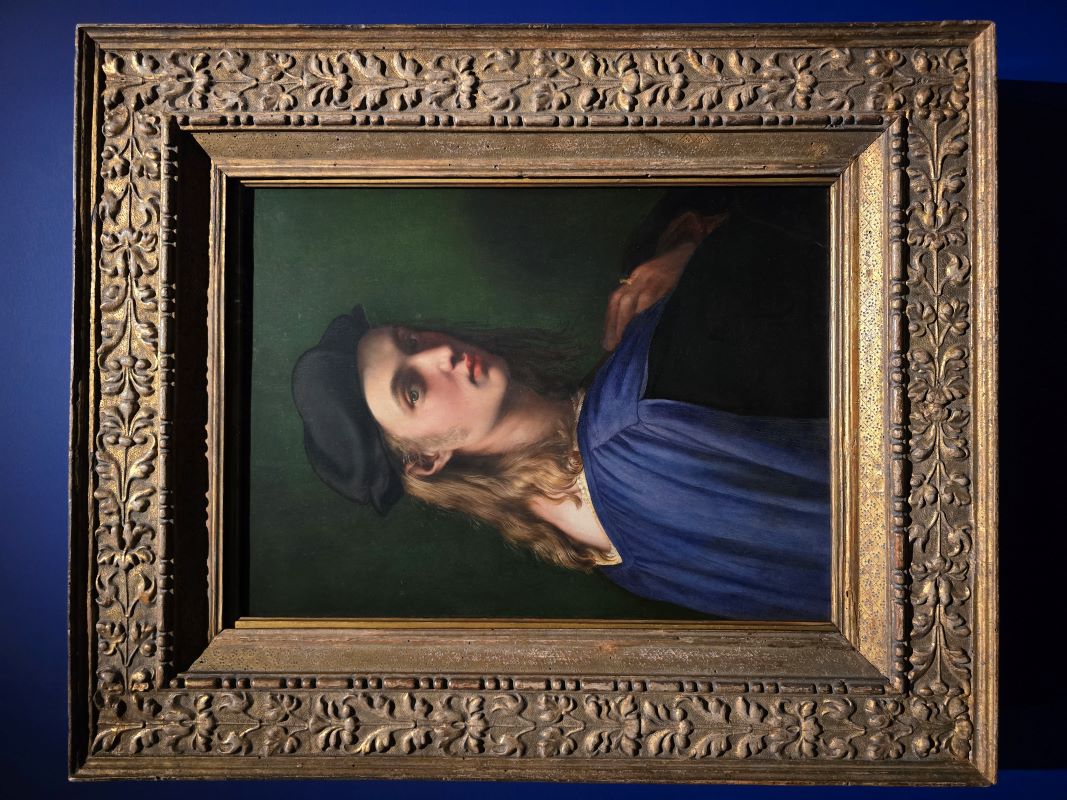
拉斐尔
《宾多·阿尔托维蒂肖像》,约1515–1516年 木板油画
华盛顿国家美术馆,塞缪尔·H·克雷斯收藏(1943.4.33)
这位引人注目的年轻人是银行家宾多·阿尔托维蒂(1491–1557),他出生于罗马,家族为佛罗伦萨贵族。拉斐尔将其绘画描摹的力量集中于描绘这位模特无胡须面庞的性感、慵懒的蓝眼睛以及长长的金发。通过这种方式,他使肖像超越了单纯的记录功能,从而唤起一种流行的文艺复兴理想——与光明之神阿波罗·福玻斯(男性美的典范)相关联的光彩照人的男性气质。尽管莱昂纳多(达·芬奇)早在1480至1490年代就已开创了这一姿态,但在个人肖像画中并不常见;拉斐尔在诸如此类的画作中对这一姿态的优雅运用,使其得以更广泛地传播。
Raphael
Portrait of Bindo Altoviti, ca. 1515–16 Oil on wood
National Gallery of Art, Washington, D.C., Samuel H. Kress Collection (1943.4.33)
This striking young man is the banker Bindo Altoviti (1491–1557), who was born in Rome to a noble Florentine family. Raphael concentrated his powers of pictorial description on the sensuality of the sitter’s beardless face, languid blue eyes, and long golden-blond hair. In this way, he transformed a portrait beyond its documentary function to conjure a popular Renaissance ideal of radiant masculinity that was associated with the god Apollo Phoebus, a paragon of male beauty. Although Leonardo had pioneered this pose in the 1480s and 1490s, it was not yet common in individual portraiture; Raphael’s graceful application in paintings like this one led to its wider diffusion.
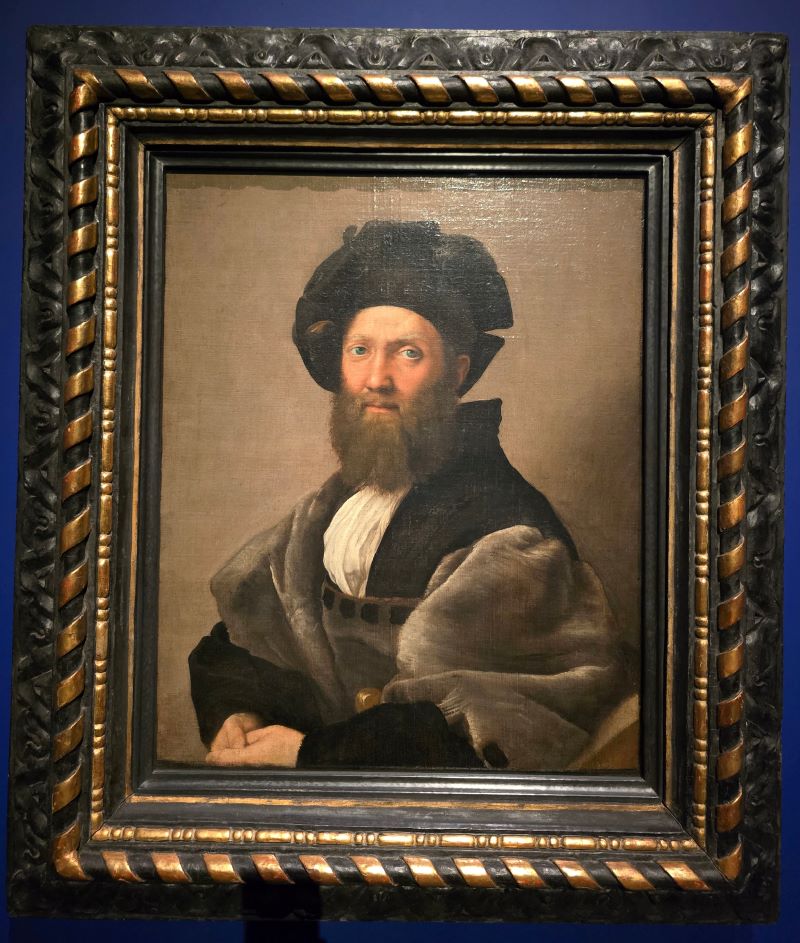
拉斐尔 《巴尔达萨雷·卡斯蒂廖内肖像》,1514–1516年 布面油画
巴黎,卢浮宫绘画部(611号)
得体的举止和文学理想在拉斐尔的肖像画中扮演了重要角色。因此,他与巴尔达萨雷·卡斯蒂廖内(1478–1529)是朋友或许就不足为奇了——正是这位人物撰写了关于文艺复兴时期意大利贵族行为准则的著作:《廷臣论》(1528年出版)。在拉斐尔的肖像中,卡斯蒂廖内体现了“sprezzatura”(漫不经心)——作者认为在宫廷自我呈现中至关重要的理想化淡然态度。他身着黑色天鹅绒、白色亚麻与灰色毛皮,同时展现出对深色、低调时尚的新品味。拉斐尔在真实与美饰之间取得平衡的能力,体现在他选择了一顶宽大优雅的帽子,并以巧妙的方式遮挡了卡斯蒂廖内的秃顶。
Raphael Portrait of Baldassarre Castiglione, 1514–16 Oil on canvas
Musée du Louvre, Département des peintures, Paris (611)
Courte behavior and literary ideals played an important role in Raphael’s portraiture. So it is perhaps not surprising that he was a friend of Baldassarre Castiglione (1478–1529), the man who literally wrote the book on how to behave as a noble person in Renaissance Italy: Libro del cortegiano (Book of the Courtier), published in 1528. In Raphael’s portrait, Castiglione embodies sprezzatura, the ideal nonchalance that the author believed to be all-important in self-presentation at court. Dressed in black velvet, white linen, and gray fur, he also exhibits the new taste for dark, understated fashion. Raphael’s ability to balance truthfulness with flattery can be seen in the choice of a large, elegant hat placed in a way that obscures Castiglione’s baldness.
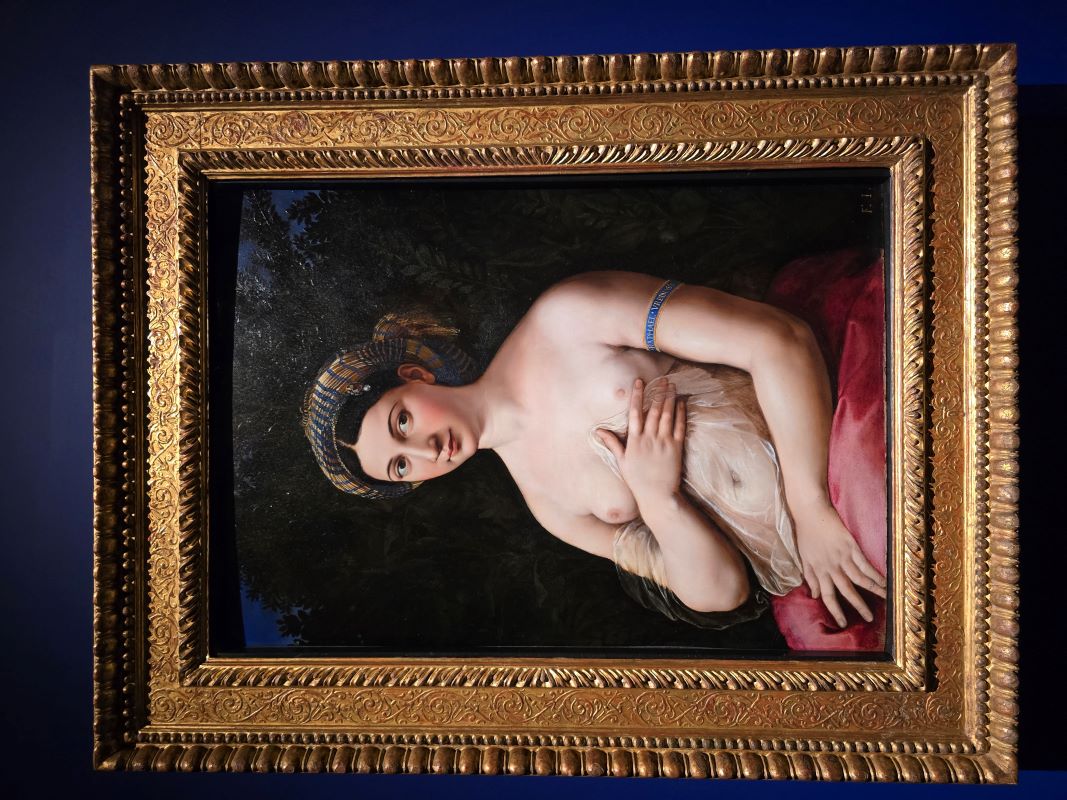
拉斐尔与朱利奥·罗马诺
朱利奥·皮皮;1499?–1546
《裸体福尔纳里娜肖像(拉福尔纳里娜)》,约1518–1520年 木板油画
罗马,巴贝里尼宫—科尔西尼宫国立古代艺术美术馆(2333号)
这幅画呈现了一种新颖、自然主义的女性类型——一位化身为维纳斯女神的模特。同时它显然也是一幅个人肖像。她直视观者,展现出强烈而独特的特征。女子的双手指向她裸露的胸部和被衣物遮盖的耻骨区域,这引用了古罗马雕塑类型“贞洁维纳斯”(Venus Pudica)。她左臂上方有一条带精致金边的蓝色臂章,上面刻有“RAPHAEL VRBINAS”(拉斐尔·乌尔比诺),这是爱情诗意束缚的视觉呈现。这幅肖像被称为《拉福尔纳里娜》(女面包师),因为它可能描绘的是玛格丽塔·卢蒂——拉斐尔的情妇,一位面包师的女儿。
Raphael and Giulio Romano
Giulio Pippi; 1499?–1546
Portrait of the Nude Fornarina (La Fornarina), ca. 1518–20 Oil on wood
Galleria Nazionale di Arte Antica di Palazzo Barberini-Palazzo Corsini, Rome (2333)
This painting presents a novel, naturalistic female type—a sitter in the guise of the goddess Venus. It is also clearly a portrait of an individual. She looks directly at an observer and exhibits strong, distinctive features. The woman’s hands gesture toward her exposed breast and to her clothed pubic area, a quotation of an ancient Roman sculpture type called the Venus Pudica, or “modest Venus.” High on her left arm is a blue band with elaborate gold borders and the inscription “RAPHAEL VRBINAS,” a visual manifestation of the poetic bondage of love. The portrait is known as La Fornarina (the female baker) because it may represent Margherita Luti, Raphael’s mistress and the daughter of a baker.
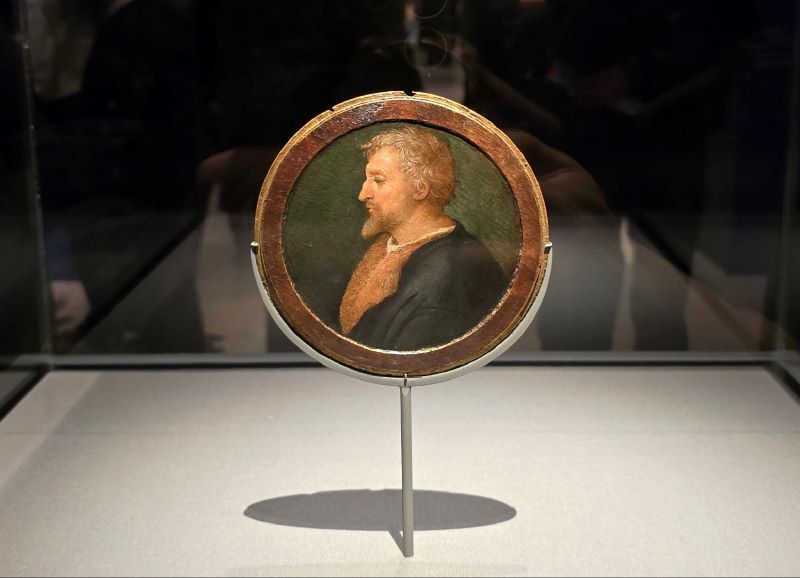
拉斐尔
《瓦莱里奥·贝利肖像》,1517年 木板油画
马德里,阿贝略收藏
与拉斐尔众多表现高社会地位男性的大型肖像画不同,这幅小型圆形画描绘的是一位艺术家兼工匠。瓦莱里奥·贝利(约1468–1546)作为宝石雕刻师、珠宝商和奖章雕刻师取得了成功,同时他还与教皇宫廷的艺术家、诗人和知识分子交好。画中他衣着考究,身穿深色毛皮领外套,内衬亚麻衬衫,低垂双眼,仿佛正在精心制作或沉思自己的某件作品。半身侧面像效仿了古董风格的浮雕宝石——这正是贝利创作中的灵感来源。
Raphael
Portrait of Valerio Belli, 1517 Oil on wood
Abelló Collection, Madrid
In contrast to Raphael’s many large portraits of men of high social status, this small roundel portrays an artist and artisan. Valerio Belli (ca. 1468–1546) achieved success as a gem cutter, jeweler, and medalist while also befriending artists, poets, and intellectuals at the papal court. Here, well-dressed in a dark, fur-collared coat over a linen undershirt, he lowers his eyes, as though engaged in crafting or contemplating one of his creations. The bust-length profile view emulates antique-style cameos, which were an inspiration to Belli in his work.
罗马——团队的力量
1508年,拉斐尔抵达罗马。文艺复兴三杰各有特点:达芬奇有拖延症,项目经常烂尾;米开朗基罗脾气暴躁,对着项目死磕;而拉斐尔脾气好、出活快、技术好,甲方满意。拉斐尔的订单越来越多,他也逐渐发展出自己的团队来执行自己的创意(也因此被米开朗基罗喷)。例如,拉斐尔出构图素描,版画家制作版画,可以大规模复制拉斐尔的作品,增大影响力。
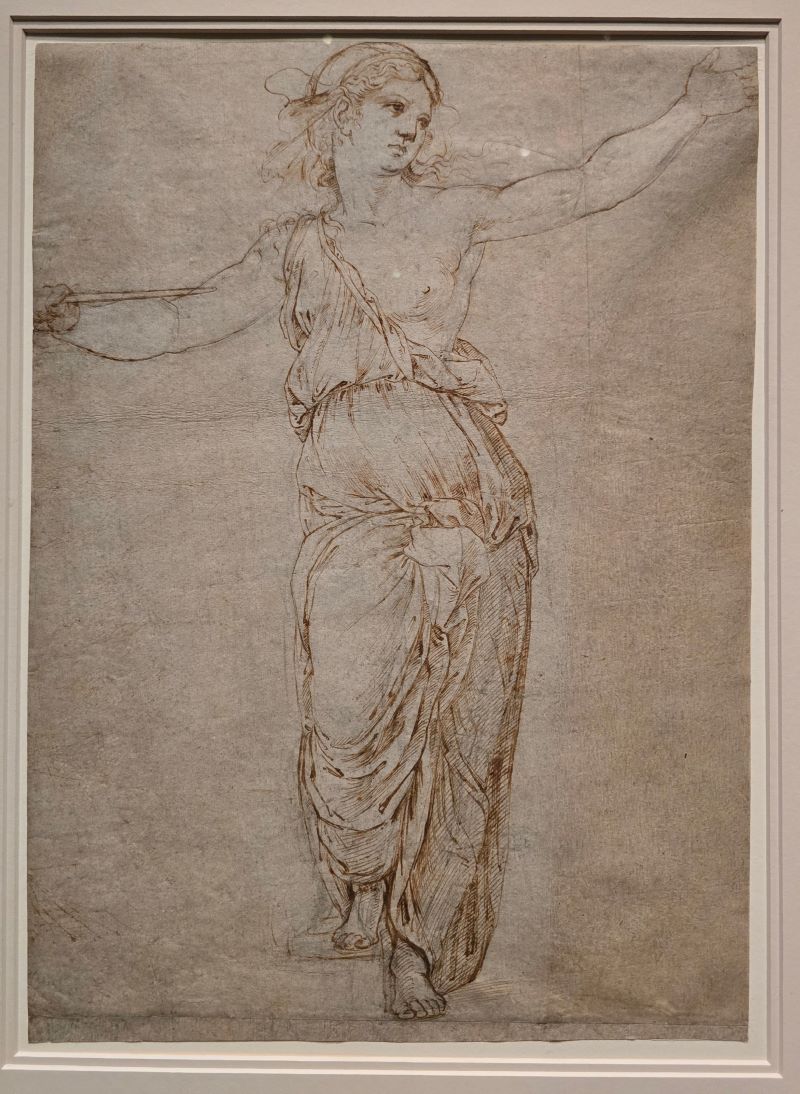
拉斐尔
《卢克莱夏之死》,约1510–1512年
纸上黑色粉笔打底,钢笔与棕墨绘制,部分以针笔刻划
纽约大都会艺术博物馆,购藏,莉拉·艾奇逊·华莱士捐赠,1997年(1997.153 正面)
这幅具有纪念性和表现力的钢笔墨水习作与拉斐尔同博洛尼亚版画家马尔坎托尼奥·雷蒙迪合作的初期相关。悬挂在附近的关联版画尺幅小得多,并包含建筑环境。根据古代文献——李维的《罗马史》和奥维德的《岁时记》——高贵的妇人卢克莱夏遭暴君之子塞克斯图斯强奸后自杀。作为一位炉火纯青的叙事者,拉斐尔选择描绘卢克莱夏即将将匕首刺入胸膛的戏剧性时刻。她双臂张开、如殉道者般的姿态,将其动作转化为崇高美德的典范(反映了其文化语境)。在这里,拉斐尔在柔和的黑色粉笔广泛底稿之上勾勒人物,显示出这幅素描的探索性质。
Raphael
The Death of Lucretia, ca. 1510–12
Pen and brown ink over black chalk, partially incised with a stylus, on paper
The Metropolitan Museum of Art, New York, purchase, Lila Acheson Wallace Gift, 1997 (1997.153 recto)
This monumental and expressive pen-and-ink study is linked to the beginnings of Raphael’s collaboration with the Bolognese printmaker Marcantonio Raimondi. The related engraving, hanging nearby, is in a much smaller scale and includes an architectural setting. According to ancient sources, Livy’s History of Rome and Ovid’s Fasti, the noble matron Lucretia committed suicide after being raped by Sextus, son of a tyrant. A consummate storyteller, Raphael chose to depict the dramatic moment when Lucretia is poised to plunge the dagger into her chest. The martyr-like pose, arms outstretched, recasts her gesture as a model of sublime virtue (a reflection of its cultural context). Here, Raphael sketched the figure over extensive underdrawing in soft black chalk that shows the exploratory nature of the drawing.
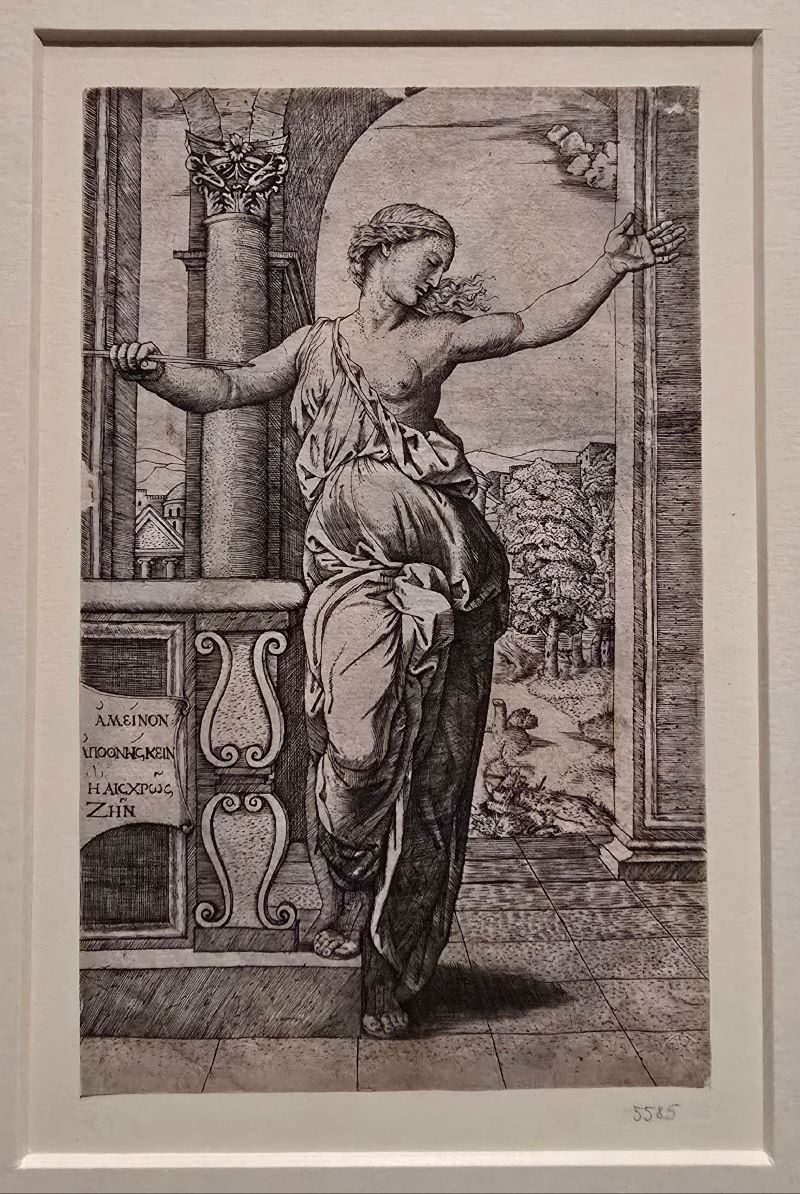
马尔坎托尼奥·雷蒙迪
约1480–1534年之前 据拉斐尔
《卢克莱夏之死》,约1510–1512年 engraving(版画/雕版画)
布达佩斯美术博物馆(5585)
马尔坎托尼奥的版画改编自相邻的素描,那幅素描是拉斐尔独立准备的。版画中的人物尺寸比素描中的人物小约四倍,并置于罗马式室内环境中。在马尔坎托尼奥的版画中,中心人物的朝向与拉斐尔原作相同——然而,为版画准备的设计素描必须是镜像的,以纠正版画制作过程中产生的反转。尽管卢克莱夏服装复杂而优雅布置的衣褶相互匹配,但在最终版画中,她的头部位置被改为更侧面的视角,以唤起更多的同情。
Marcantonio Raimondi
ca. 1480–before 1534 after Raphael
The Death of Lucretia, ca. 1510–12 Engraving
Museum of Fine Arts, Budapest (5585)
Marcantonio’s engraving is an adaptation of the adjacent drawing, which Raphael prepared independently. The printed figure is about four times smaller than the one in the drawing and set within a Roman-style interior. In Marcantonio’s print, the central figure is oriented in the same direction as in Raphael’s original, whereas a design drawing intended for a print must be in mirror image, to correct for the reversal that occurs in the printmaking process. Although the complex, gracefully arranged folds of Lucretia’s garment match, the position of her head was altered to a more profile view in the final engraving to evoke more sympathy.
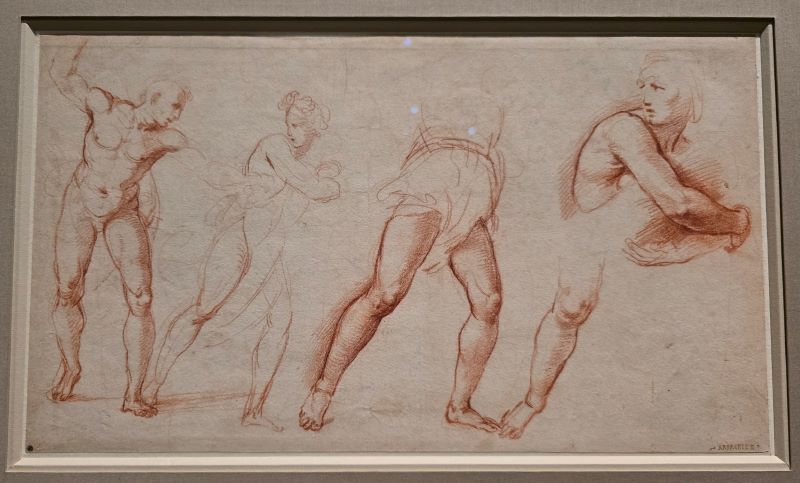
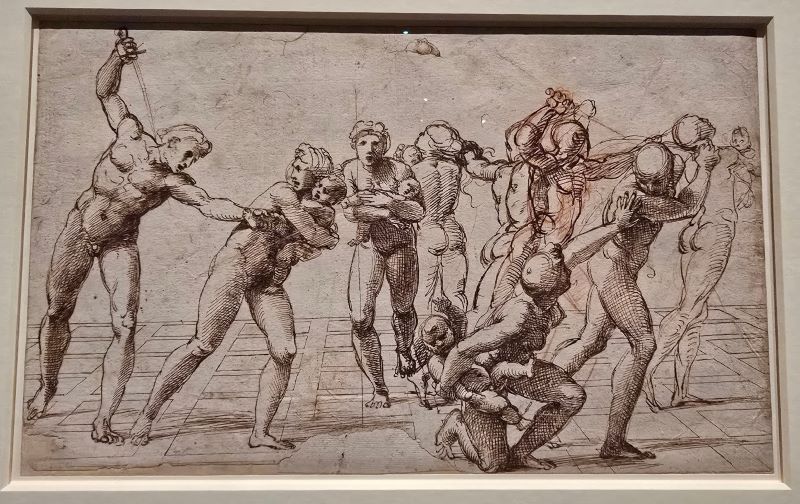
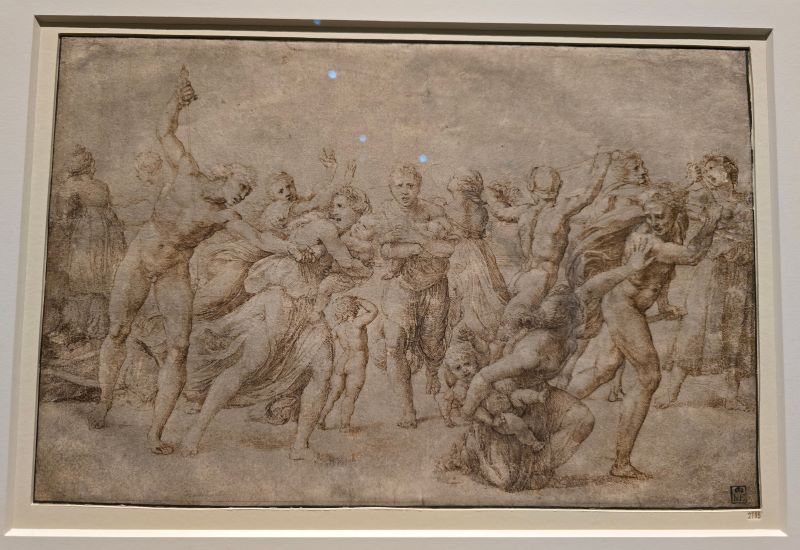
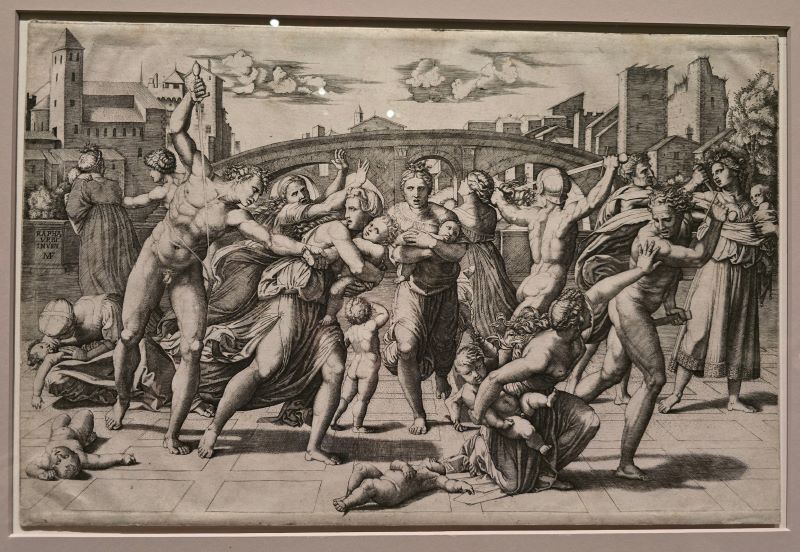
拉斐尔
《无辜者杀戮的研究》,约1510–1512年 纸本红色粉笔
维也纳阿尔贝蒂娜博物馆(188正面)
《无辜者杀戮的构图草稿》,约1510–1512年 纸上钢笔与棕墨,红色粉笔修改,针笔打格与圆规作图,垂直轴线(部分刺孔);轮廓线刺孔以转印设计稿
伦敦大英博物馆(1860,0414.446)
《无辜者杀戮的构图研究》,约1510–1512年 纸上钢笔与棕墨,后期有少许修饰,白色水粉提亮,底层有扑粉转印痕迹(粉扑底稿),艺术家用黑色粉笔自由重新加工
布达佩斯美术博物馆(2195)
马尔坎托尼奥·雷蒙迪 约1480–1534年之前 据拉斐尔
《无辜者杀戮》,约1510–1512年 engraving(版画/雕版画),第一版(共四版)
纽约大都会艺术博物馆,罗杰斯基金,1922年(22.67.21)
拉斐尔在创作过程中所展现的严谨设计方法,在他与马尔坎托尼奥·雷蒙迪的版画《无辜者杀戮》相关的素描中清晰地体现出来。这一题材源自《马太福音》,讲述希律王命令士兵屠杀伯利恒所有男婴的故事。在拉斐尔的笔下,这个叙事变成了对残酷与悲情修辞的演练,充满了展开中的暴力动作。那幅红色粉笔习作页(部分据真人模特绘制)描绘了作为构图核心的裸体士兵,以及他身旁一位惊恐母亲的三次不同迭代。两幅构图研究都与版画保持相同比例。在较早的一幅中,拉斐尔用钢笔和墨水快速勾勒人物,这符合他一贯的做法:首先将所有人物以裸体形式构思构图。轮廓线被仔细地刺孔,以便转移设计稿——他随后持续对该设计进行修改。他精心推敲的最终构图素描是最后一步,之后他或助手会在半透明纸上描摹,然后通过用针刺孔或将轮廓刻入金属表面的方式,将设计转移到铜板上。随后版画家接手,娴熟地将轮廓线和精心排布的平行刻线雕入用于制作版画的铜板。
Raphael
Studies for the Massacre of the Innocents, ca. 1510–12 Red chalk on paper
Albertina, Vienna (188 recto)
Composition Sketch for the Massacre of the Innocents, ca. 1510–12 Pen and brown ink, corrections in red chalk, stylus-ruled construction and compass work, vertical axis line (partly pricked); outlines pricked for transfer of the design, on paper
The British Museum, London (1860,0414.446)
Composition Study for the Massacre of the Innocents, ca. 1510–12 Pen and brown ink, with some later retouching, highlighted with white gouache, over preliminary pounce marks (spolvero underdrawing), reworked freehand by the artist in black chalk, on paper
Museum of Fine Arts, Budapest (2195)
Marcantonio Raimondi ca. 1480–before 1534 after Raphael
The Massacre of the Innocents, ca. 1510–12 Engraving, first state of four
The Metropolitan Museum of Art, New York, Rogers Fund, 1922 (22.67.21)
Raphael’s disciplined approach to the design process emerges with clarity in his drawings connected with Marcantonio Raimondi’s engraving of the Massacre of the Innocents. The subject, from the Gospel of Matthew, is King Herod’s order that his soldiers slaughter all the male infants in Bethlehem. In Raphael’s hands, the story became an exercise in the rhetoric of cruelty and pathos, full of violent action in the unfolding. The sheet of studies in red chalk, partly drawn from live models, portrays the nude soldier who anchors the design and three iterations of the terrified mother next to him. The two composition studies are in the same scale as the print. In the earlier one, Raphael sketched the figures quickly in pen and ink, in keeping with his practice of first visualizing a composition with all the figures rendered in the nude. The outlines are finely pricked to enable transfer of the design, which he continued to revise. His carefully elaborated final composition drawing was the last step before he or an assistant made a tracing on translucent paper, which they used to transfer the design to a copper plate by pricking the outlines with a needle or incising them onto the metal surface. The engraver would then take over, masterfully incising contours and carefully ordered strokes of hatching onto the copper plate used to produce the print.
鱼之圣母
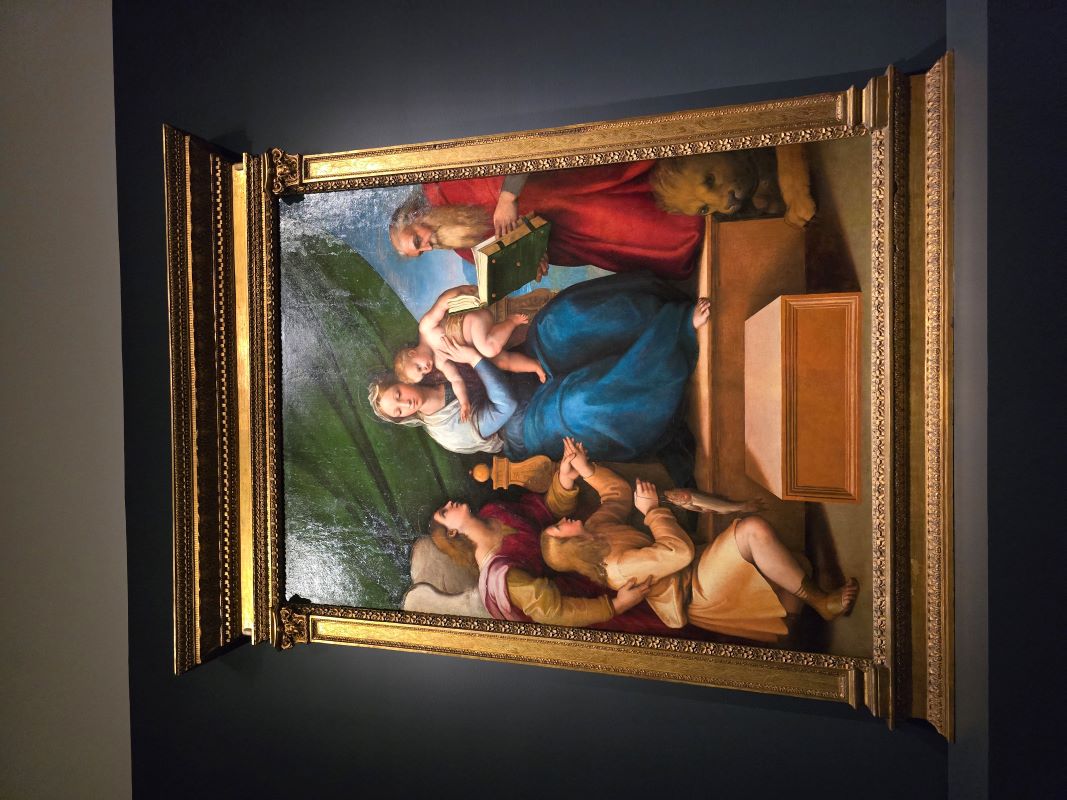
拉斐尔
《圣母子与拉斐尔、托比亚斯和圣杰罗姆(鱼之圣母)》,约1512–1514年 布面油画,从木板转移
马德里,普拉多博物馆(P000297)
在传统的“神圣对话”(sacra conversazione)中,圣母、圣婴与圣徒们以相对静态的构图组合在一起。在此,拉斐尔改变了这一类型,让人物相互互动以形成一个故事——尽管在圣经时代,圣母圣婴与这些圣徒并无关联。这个非正式的标题指的是托比亚斯手中拿着的小鱼,这既暗指《托比书》中的一个奇迹情节,也可能与希腊语的“鱼”一词有关——该词被用作早期基督教对“耶稣基督,上帝之子,我们的救主”的缩略语。拉斐尔在工作室的协助下为那不勒斯圣多梅尼科马焦雷教堂中的一个小礼拜堂绘制了这幅祭坛画。
Raphael
The Virgin and Child with Raphael, Tobias, and Saint Jerome (The Madonna of the Fish, or The Madonna del Pesce), ca. 1512–14 Oil on canvas, transferred from wood
Museo Nacional del Prado, Madrid (P000297)
In a traditional sacra conversazione, or “holy conversation,” the Virgin and Christ Child are grouped together with saints in a relatively static composition. Here, Raphael transformed the type so that the figures interact with one another to create a story, although the holy mother and infant have no connection to these saints in biblical time. The informal title refers to the small fish held by the child, Tobias, which alludes to a miraculous episode in the Book of Tobit but also perhaps to the Greek word for fish, used as an early Christian acronym for Jesus Christ, Son of God, Our Savior. Raphael painted this altarpiece with some assistance from his workshop for a chapel in the church of San Domenico Maggiore in Naples.
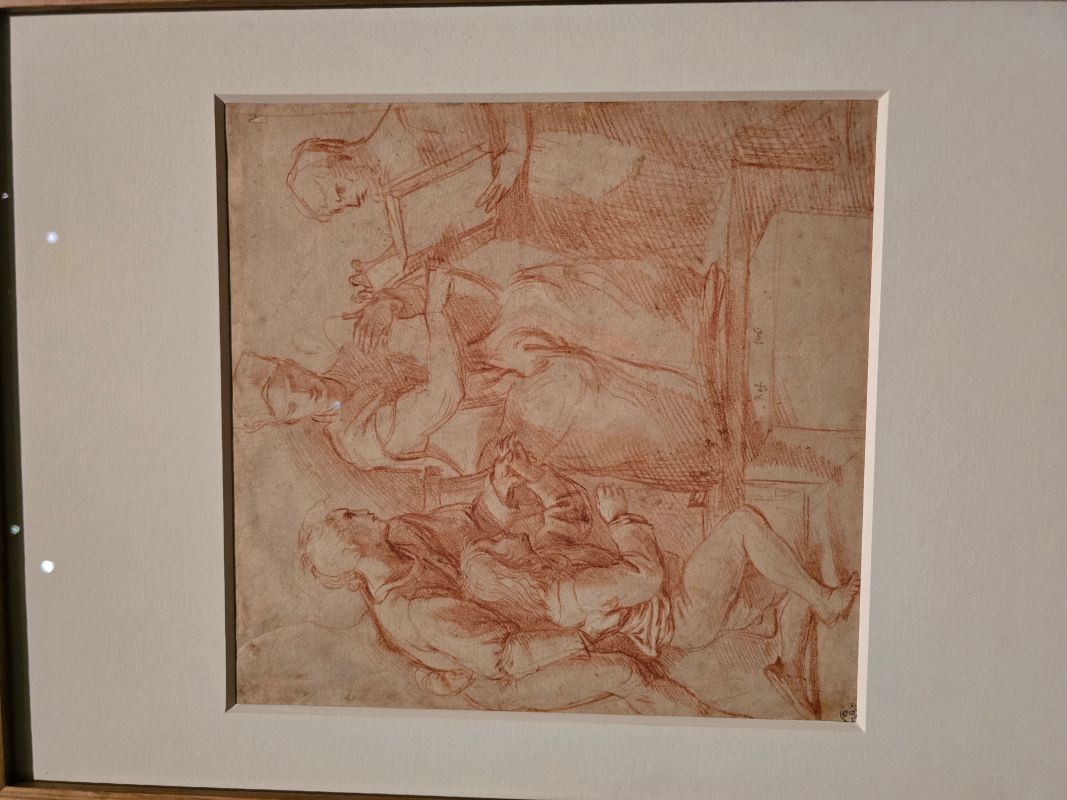
拉斐尔
《工作室助手为〈圣母子与拉斐尔、托比亚斯和圣杰罗姆(鱼之圣母)〉做模特的构图研究》,约1512–1514年
偏橙红色粉笔,底层有针笔和铅尖笔起稿,纸本
佛罗伦萨,乌菲齐美术馆,素描与版画部(524 E)
这幅用笔强劲的构图研究是在祭坛画设计的最后阶段完成的,描绘了一个完全由工作室助手在画室中摆出姿势所扮演的场景。一位戴着方形帽子的助手充当圣母的替身;他拿着一个包裹状的物体,该物体后来将被转化为圣婴。与这一时期的许多素描一样,拉斐尔首先轻快地勾画出人物的轮廓,然后从左到右以不同的力度在纸上描绘。画面左侧那些将要成为站着的天使拉斐尔和跪着的托比亚斯的年轻人,是最为成熟完善的人物。这种富有表现力且自信的绘画方式,以及人物身上众多的修改调整,都表明这是一幅充满活力的进行中的创作。
Raphael
Composition Study with Workshop Assistants Posing for the Virgin and Child with Raphael, Tobias, and Saint Jerome (The Madonna of the Fish, or The Madonna del Pesce), ca. 1512–14
Slightly orangish red chalk over underdrawing in stylus and leadpoint, on paper
Gallerie degli Uffizi, Gabinetto dei Disegni e delle Stampe, Florence (524 E)
This forcefully drawn composition study, made in the final design stages for an altarpiece, depicts a scene enacted entirely by workshop assistants posed in the studio. An assistant wearing a square cap is a stand-in for the Virgin; he holds a package-like object that will later be transformed into the Christ Child. As in many drawings of this period, Raphael first blocked in the figures lightly, then drew on the paper with varying intensity from left to right. At left, the youths who will become the standing angel Raphael and the kneeling Tobias are the most developed figures. The expressive and self-assured manner of drawing, as well as the many adjustments of the figures, indicates a vividly creative work in progress.
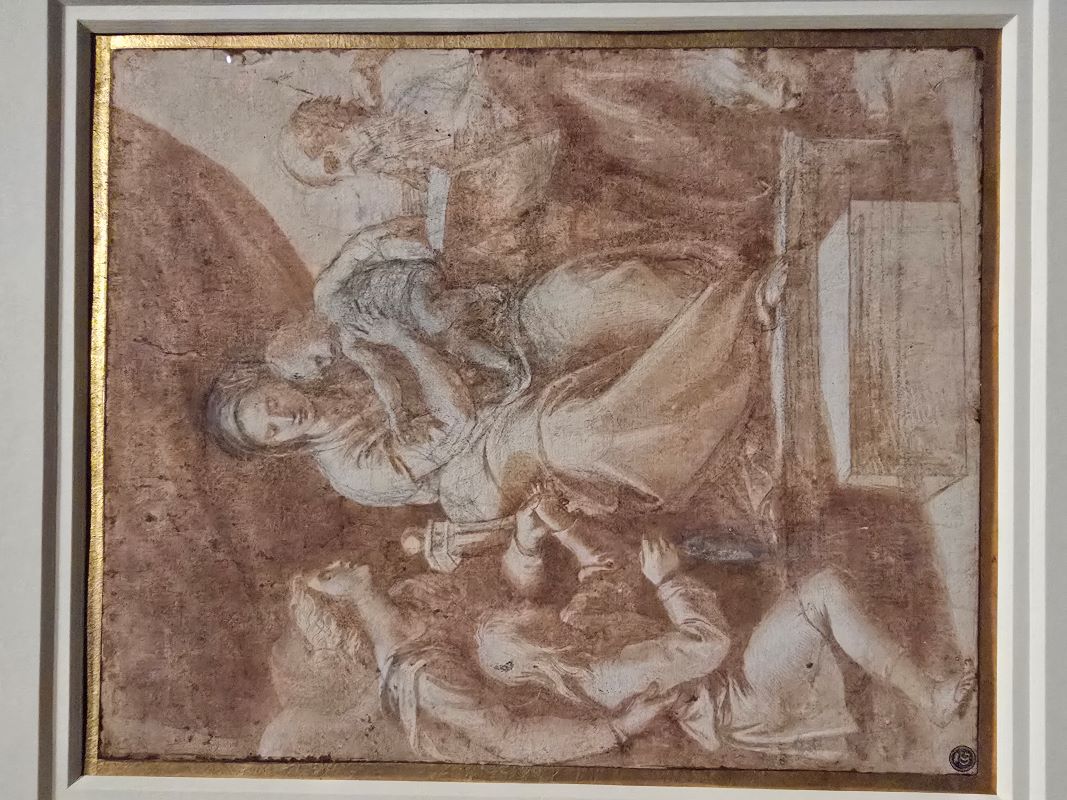
拉斐尔
《〈圣母子与拉斐尔、托比亚斯和圣杰罗姆(鱼之圣母)〉的模型稿》,约1512–1514年
毛笔与棕褐色水洗,白色水粉提亮(部分氧化),底层有大量黑色粉笔的起稿与覆绘,纸本
爱丁堡,苏格兰国家美术馆,1993年通过私下协议购买,获Art Fund(含沃尔夫森基金会捐款)、国家遗产纪念基金及Keith与Rene Andrews遗产资金支持(D 5342)
这幅为《鱼之圣母》所作的“模型稿”(modello,即演示性素描)呈现的构图与祭坛画中的画面几乎完全一致,包括沿对角线垂落以向场景注入动感与生气的戏剧性帷幕。拉斐尔的技法表明他将素描媒介推向了极限:运用棕褐色水洗和白色水粉高光来探索柔和的晕涂效果——这种效果在油画和色彩中更容易实现。
Raphael
Modello Drawing for the Virgin and Child with Raphael, Tobias, and Saint Jerome (The Madonna of the Fish, or The Madonna del Pesce), ca. 1512–14
Brush and brown wash, highlighted with white gouache (some oxidized), over extensive black-chalk under- and overdrawing, on paper
National Galleries of Scotland, Edinburgh, purchased by Private Treaty with the aid of the Art Fund (including a contribution from the Wolfson Foundation), the National Heritage Memorial Fund, and funds from the estate of Keith and Rene Andrews, 1993 (D 5342)
This modello, or demonstration drawing, for the painting known as the Madonna del Pesce presents the composition almost exactly as it appears in the altarpiece, including the dramatic curtain that falls along a diagonal curve to inject movement and animation into the scene. Raphael’s technique shows him pushing his drawing media to the limit, using brown wash and white gouache highlights to explore soft sfumato effects more easily accomplished in paint and color.
圣塞西利亚的狂喜
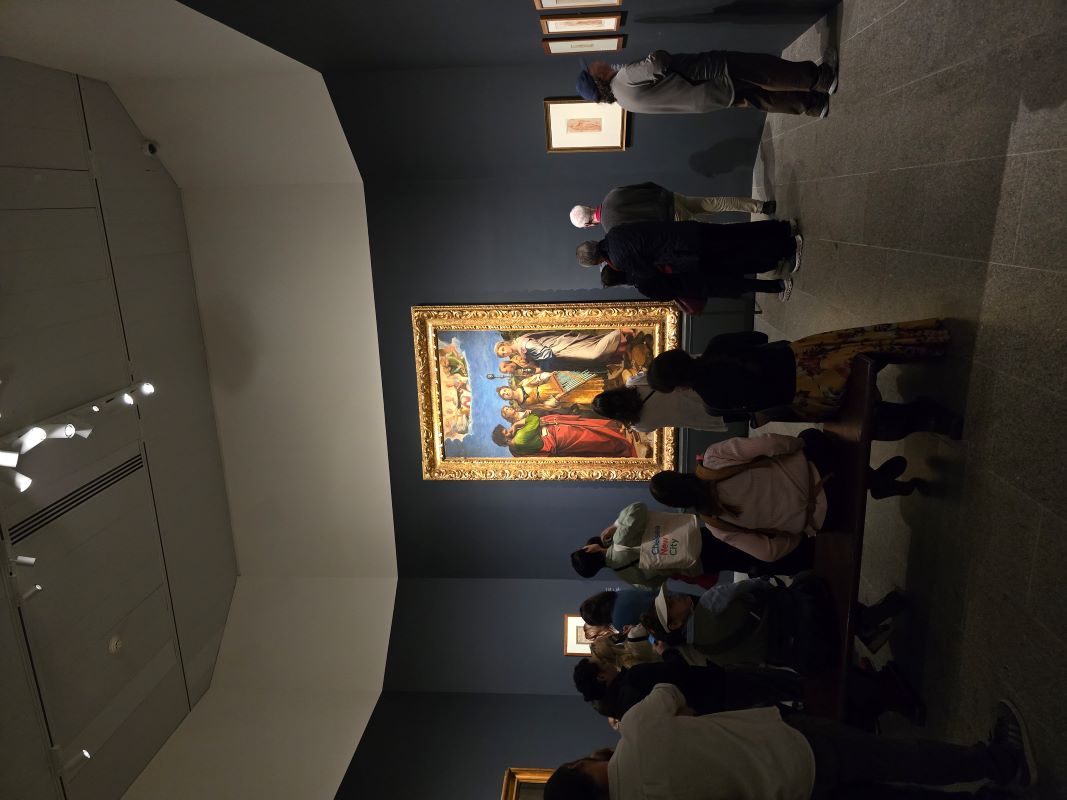
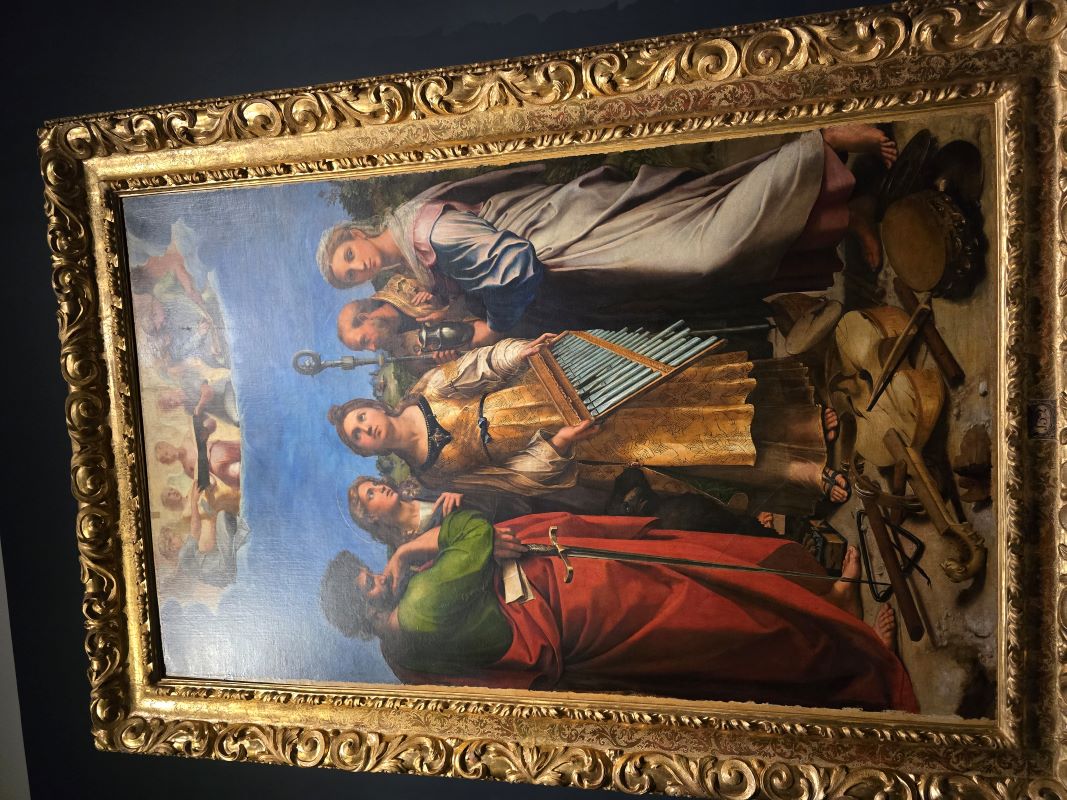
拉斐尔
《圣塞西莉亚的狂喜与圣保罗、圣约翰福音传道者、圣奥古斯丁和抹大拉的玛利亚》,约1515–1516年 布面油画,从木板转移
艾米利亚-罗马涅博物馆联盟,博洛尼亚国家美术馆(577)
这幅技艺精湛的巨幅画作也是拉斐尔最具精神感召力的祭坛画之一。他借鉴了古代和早期基督教的范本,构建出一幅能够唤起埃莱娜·杜廖利·达洛廖(1472–1520)诸多热忱信仰的构图。埃莱娜以贞洁、虔诚和慷慨著称,她委托了这幅画作及圣塞西莉亚礼拜堂。她是拉斐尔少数几位杰出的女性赞助人之一。画中器乐与声乐的并置具有强大的象征功能:塞西莉亚在狂喜中向上仰望,天幕裂开,显露出天国的天使唱诗班。她被动地拿着一个小管风琴(organetto),它已经开始滑向她脚边散落的破损乐器——这些乐器象征着她对尘世音乐的摒弃,而转向灵性的内在之声。
Raphael
The Ecstasy of Saint Cecilia with Saints Paul, John the Evangelist, Augustine, and Mary Magdalene, ca. 1515–16 Oil on canvas, transferred from wood
Polo Museale dell’Emilia Romagna, Pinacoteca Nazionale di Bologna (577)
This monumental painting of virtuosic technique is also one of Raphael’s most spiritually inspired altarpieces. He looked to ancient and Early Christian models to create a composition that evoked many of the ardent beliefs of Elena Duglioli dall’Olio (1472–1520), the famously chaste, devout, and generous woman who commissioned the painting and the Saint Cecilia chapel. Elena was one of Raphael’s few prominent female patrons. The painting’s juxtaposition of instrumental and vocal music has a powerful symbolic function. Cecilia looks upward in rapture as the heavens part to reveal a celestial choir of angels. She passively holds an organetto (small organ) that has begun to slide toward damaged instruments strewn at her feet, symbols of her rejection of earthly music in favor of the spiritual inner voice.
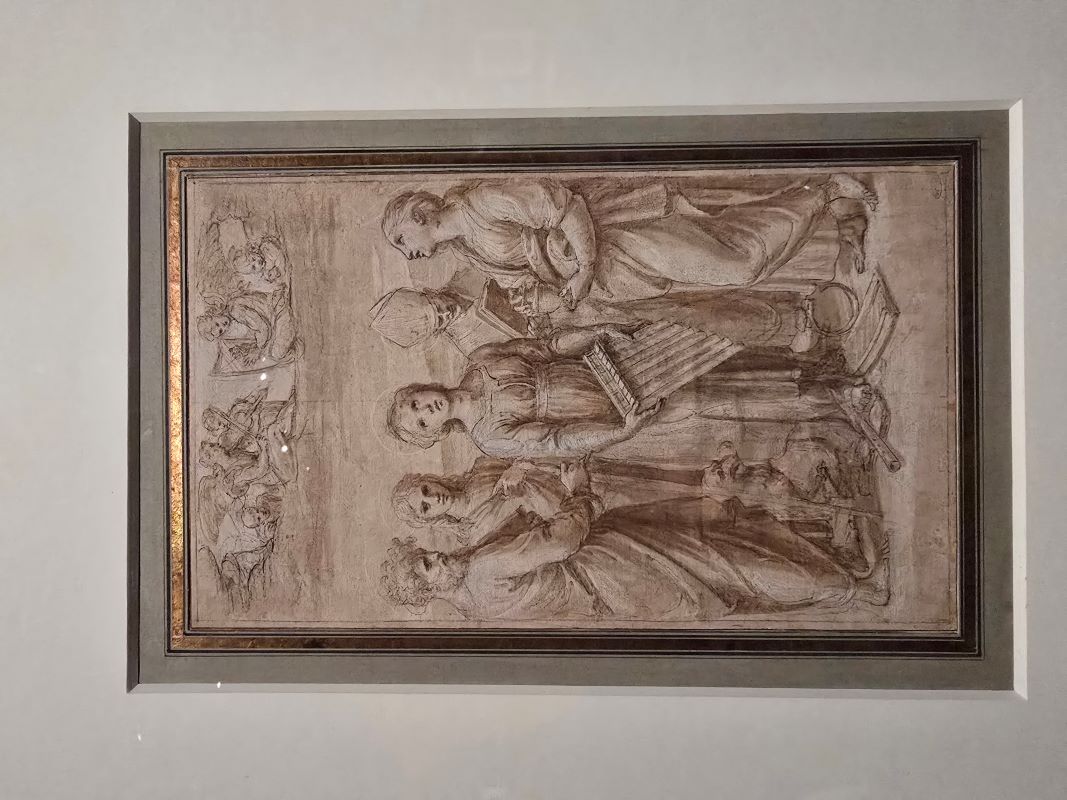
归属于 拉斐尔
《圣塞西莉亚的狂喜》的模型稿, 约1515–1516年 钢笔与棕墨,毛笔与棕褐色水洗,底层有柔和的灰黑色粉笔起稿;黑色粉笔的垂直与水平轴线;用针刺测量并构出外框轮廓,纸本
巴黎,小皇宫美术博物馆(DDUT980)
拉斐尔在设计《圣塞西莉亚的狂喜》祭坛画时面临的最大挑战之一,是如何为构图注入引人入胜的戏剧性。将这幅演示性素描与最终画作进行对比,可以看出他如何彻底地重新构思了构图。此处的光源方向与小礼拜堂的预定安放位置不协调。此外,主要人物在身体和心理上彼此脱节,目光之间没有互动。与画作不同,这幅素描未能充分传达天国(天使唱诗班)与尘世(脚下的乐器)之间强烈的分野。
Attributed to Raphael
Modello Drawing for the Ecstasy of Saint Cecilia, ca. 1515–16 Pen and brown ink, brush and brown wash, over soft grayish black-chalk underdrawing; vertical and horizontal axis lines in black chalk; framing outlines constructed and measured with pinpricks, on paper
Petit Palais, Musée des Beaux-Arts de la Ville de Paris (DDUT980)
Among the greatest challenges facing Raphael in designing the Ecstasy of Saint Cecilia altarpiece was how to infuse the composition with compelling drama. A comparison of this demonstration drawing with the final painting shows how he entirely rethought the composition. The light here emanates from a direction that did not work with the intended placement in the chapel. Additionally, the main figures are physically and psychologically disconnected from one another, and there is no interplay of their gazes. Unlike the painting, the drawing does not fully communicate the powerful division between the heavenly (the choir of angels) and the terrestrial (the instruments below).
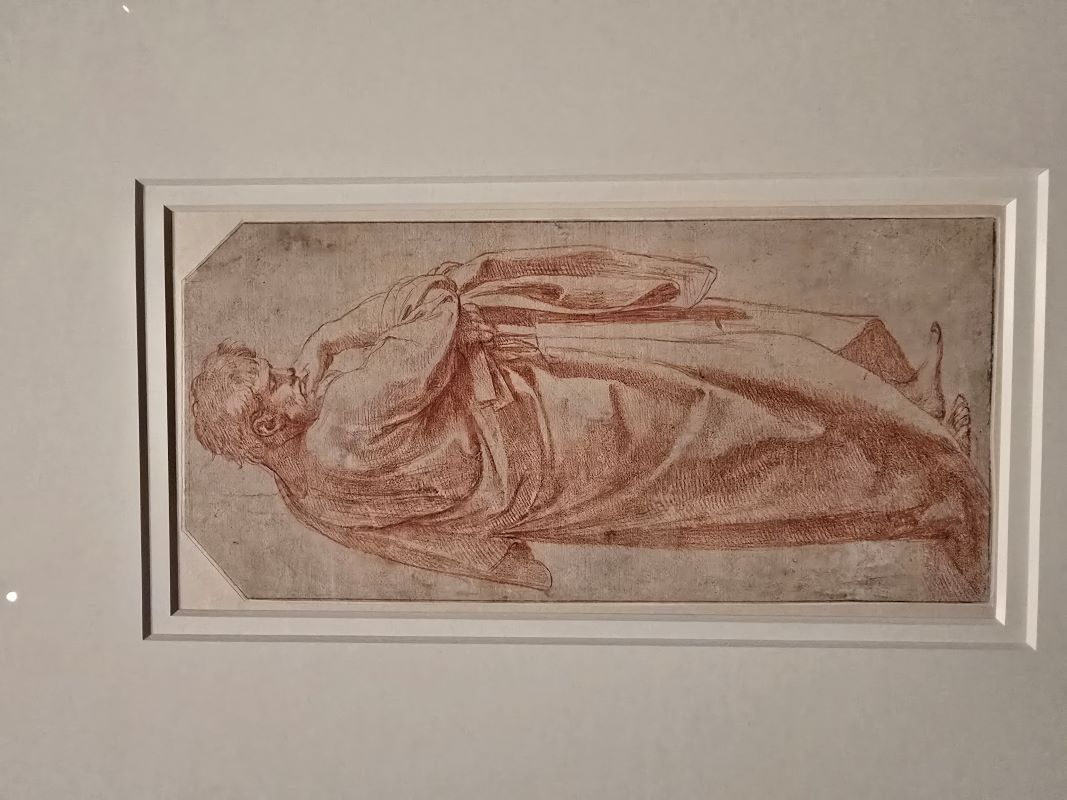
拉斐尔
《圣保罗习作》,约1515–1516年 红色粉笔,底层有针笔起稿,纸本
哈勒姆,泰勒斯博物馆(I 026 正面)
这幅为《圣塞西莉亚的狂喜》所作的习作描绘的是祭坛画中最左侧的圣保罗。与附近所展的初期构图不同,此处的光源与最终画作一致。这表明该习作是重新设计过程的一部分——拉斐尔在这一阶段巧妙地调整了圣徒们的位置和姿态,以超越五个并排人物的构图简单性,营造出一种恢弘感与心理张力。在画作中那种目光的磁石般互动里,保罗内敛的凝视以及约翰与奥古斯丁之间的对视,与两位女性圣徒强有力的直视形成了鲜明对比。
Raphael
Study for Saint Paul, ca. 1515–16 Red chalk over preliminary stylus underdrawing, on paper
Teylers Museum, Haarlem (I 026 recto)
This study for The Ecstasy of Saint Cecilia portrays Saint Paul, who stands on the far left in the altarpiece. Unlike the preliminary composition hanging nearby, the light source here agrees with that of the final painting. This suggests the study was made as part of the redesign, in which Raphael subtly rearranged the placement and gestures of the saints to achieve a sense of grandeur and psychological energy that transcends the compositional simplicity of five figures set side by side. In the painting’s magnetic interaction of glances, Paul’s introverted gaze and that shared between John and Augustine contrast with the powerful directness of the two female saints.
拉斐尔房间
经乌尔比诺老乡、圣彼得大教堂总建筑师布拉曼特推荐,拉斐尔开始为教皇创作壁画。教皇很满意,让他负责更多项目,成果就是在四个“拉斐尔房间”四面墙和天花板上的复杂壁画,包括著名的《雅典学院》。壁画自然没法带到纽约来(梵蒂冈宗座宫毕竟不是清凉寺、广胜寺),展览安排了一个小房间,循环投影四个房间(不包括天花板)。
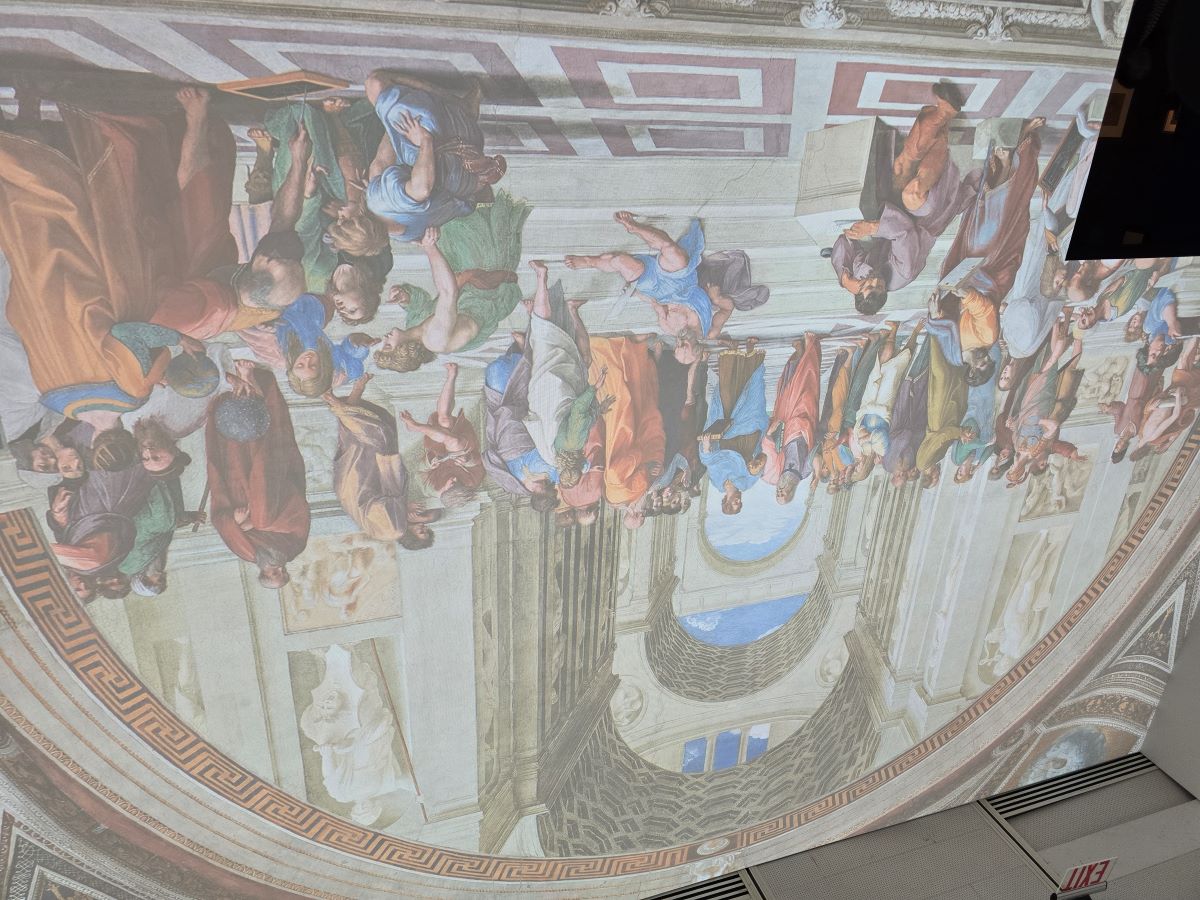
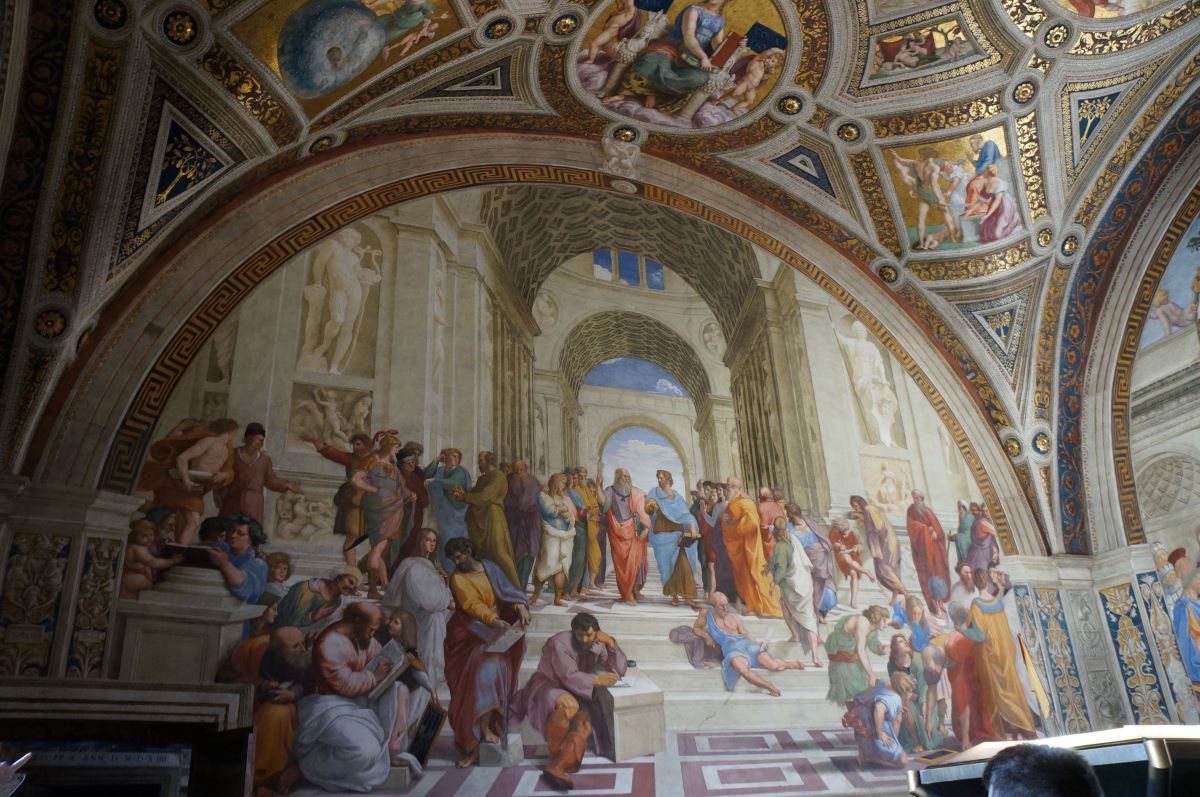
西斯廷挂毯
教皇利奥十世委托拉斐尔设计一组巨型挂毯,用于特殊场合挂在西斯廷礼拜堂。利奥十世颇有些与委托米开朗基罗绘制西斯廷礼拜堂天顶画的前任教皇尤利乌斯二世竞争的意思,同时也把拉斐尔拉出来和米开朗基罗正面对抗。这组挂毯在布鲁塞尔生产,黄金白银丝绸等名贵材料几乎让教皇破产。各国君主都表示我也要!这里展出的是西班牙国王腓力二世的收藏。内容是福音书和使徒行传故事,经过几百年,褪色不少,但当年贵得不得了。
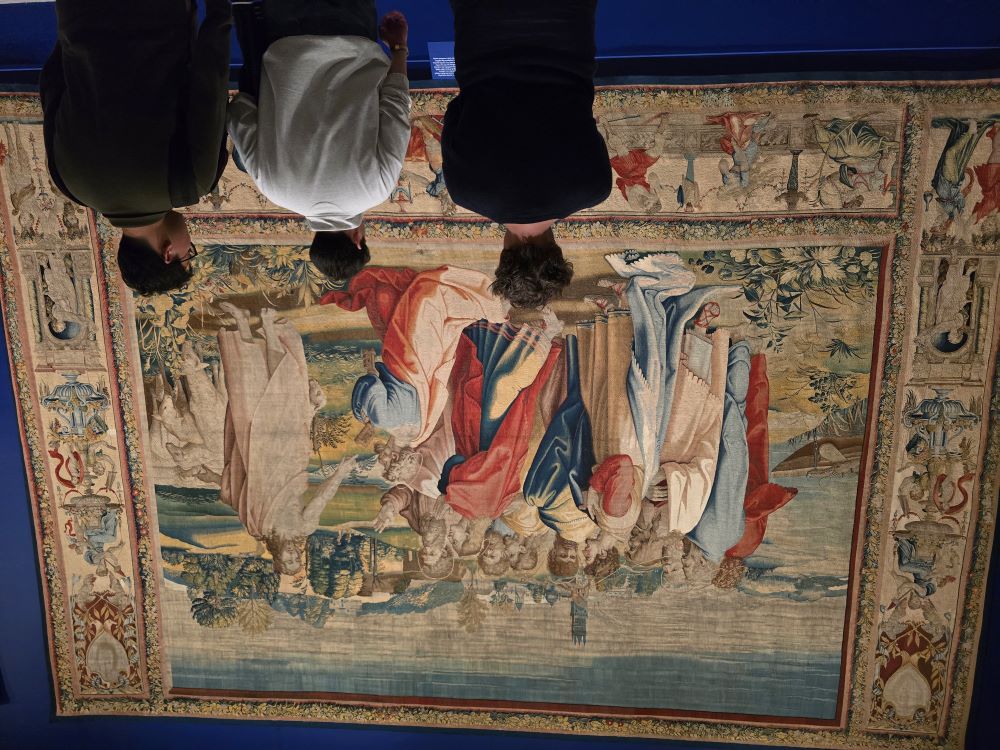
扬·范·蒂海姆与弗兰斯·赫特尔斯
佛兰芒,活跃于1530–1568年;佛兰芒,活跃于1540–1568年
据拉斐尔及工作室的卡通画摹本
《基督将使命交给彼得》(出自《使徒行传》挂毯系列第二版),1540年代末或1550年代初
经线:羊毛,7–8根/厘米;纬线:羊毛和丝,背面衬里,34–38根/厘米
马德里,国家遗产管理局,皇家收藏(10004081 [TA-12/2])
拉斐尔的《使徒行传》挂毯由教皇利奥十世委托、为西斯廷礼拜堂织造,其声望之高,以至于王室赞助人也定制了自己的版本。这是西班牙国王腓力二世(1527–1598)所拥有的一套中的一件,其构图确立了第一位教皇的权威。基督说:“我要把天国的钥匙给你”,同时指向彼得和正在吃草的羊——这暗指彼得作为信徒牧羊人的角色。一幅为该作品所作的小型残片素描展出于附近。
Jan van Tieghem and Frans Gheteels
Flemish, active 1530–68; Flemish, active 1540–68
after a copy of a cartoon by Raphael and workshop
Christ’s Charge to Peter (from the Second Edition of the Acts of the Apostles Tapestry Series), late 1540s or early 1550s
Warp: wool, 7–8 per cm; weft: wool and silk, lined on the reverse, 34–38 per cm
Patrimonio Nacional, Colecciones Reales, Madrid (10004081 [TA-12/2])
The prestige of Raphael’s Acts of the Apostles tapestries, commissioned by Pope Leo X and woven for the Sistine Chapel, was such that royal patrons ordered their own editions. Part of a set owned by King Philip II of Spain (1527–1598), this one displays a composition that establishes the authority of the first pope. Christ says, “I will give you the keys of the kingdom of heaven” and points at both Peter and the grazing sheep, a reference to Peter’s role as shepherd of the faithful. A small, fragmentary study for this work is exhibited nearby.
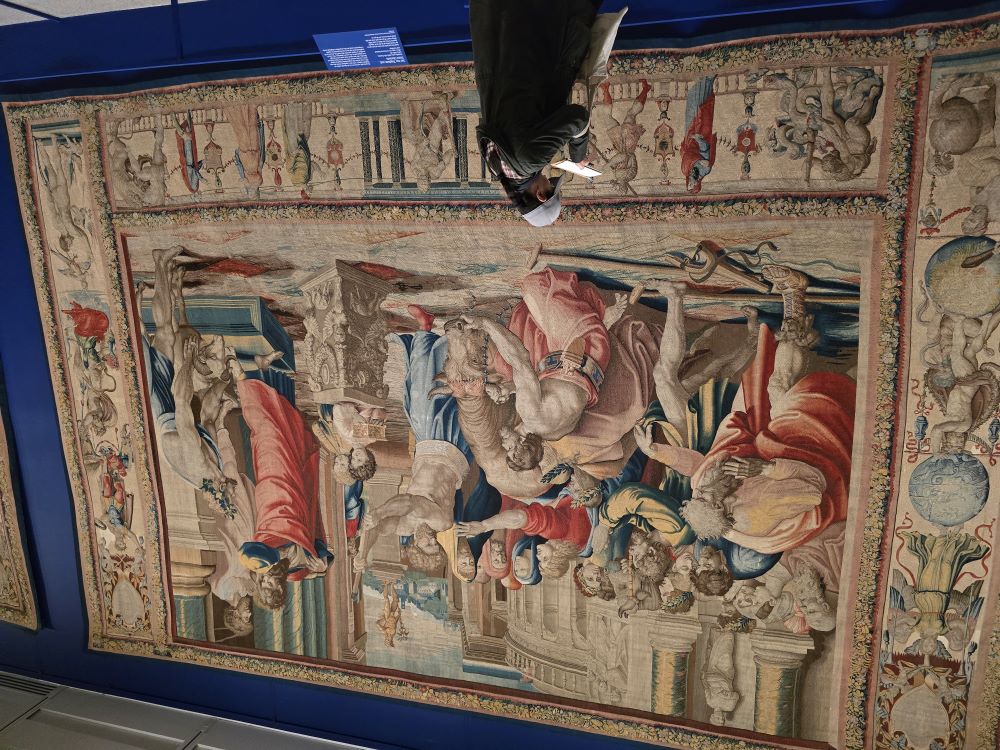
扬·范·蒂海姆与弗兰斯·赫特尔斯
佛兰芒,活跃于1530–1568年;佛兰芒,活跃于1540–1568年
据拉斐尔及工作室的卡通画摹本
《圣保罗与圣巴拿巴在路司得》(出自《使徒行传》挂毯系列第二版),1540年代末或1550年代初
经线:羊毛,7–8根/厘米;纬线:羊毛和丝,背面衬里,34–38根/厘米
马德里,国家遗产管理局,皇家收藏(10004084 [TA-12/8])
拉斐尔挂毯系列的这套西班牙版本保存异常完好,色彩清新,或许能让人感受到西斯廷礼拜堂原初版本刚完成时的面貌。此场景描绘圣保罗与圣巴拿巴治愈了一个瘸腿的人,而当地人想要向朱庇特和假神献祭——这一误解导致身着传统绿红衣袍的保罗痛苦地撕裂自己的衣服。一幅为该构图的残片素描展出于附近。
Jan van Tieghem and Frans Gheteels
Flemish, active 1530–68; Flemish, active 1540–68
after a copy of a cartoon by Raphael and workshop
Saint Paul and Saint Barnabas at Lystra (from the Second Edition of the Acts of the Apostles Tapestry Series), late 1540s or early 1550s
Warp: wool, 7–8 per cm; weft: wool and silk, lined on the reverse, 34–38 per cm
Patrimonio Nacional, Colecciones Reales, Madrid (10004084 [TA-12/8])
Exceptionally well preserved, the Spanish edition of Raphael’s tapestry series has a freshness of color that may offer a sense of how the original Sistine Chapel set looked when it was first created. This scene shows Saints Paul and Barnabas, who have cured a lame man and are thought sacrifices to Jupiter and false idols lead Paul, dressed in his traditional green and red, to tear his garments in anguish. A fragmentary study for this composition is displayed nearby.
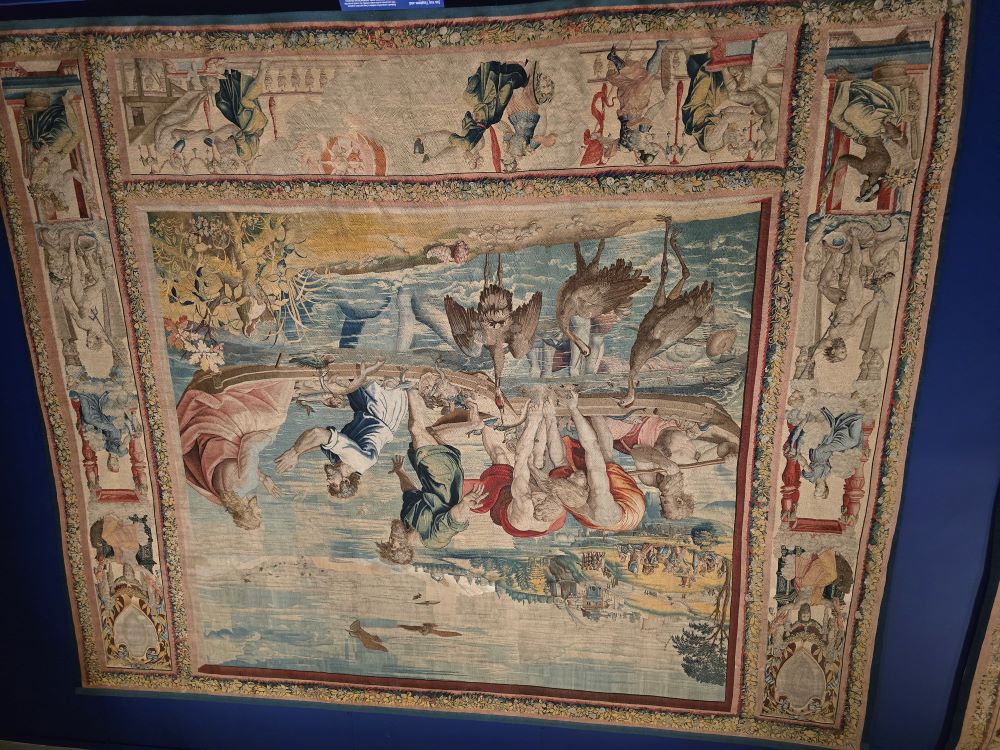
扬·范·蒂海姆与弗兰斯·赫特尔斯
佛兰芒,活跃于1530–1568年;佛兰芒,活跃于1540–1568年
据拉斐尔及工作室的卡通画摹本
《捕鱼神迹》(出自《使徒行传》挂毯系列第二版),1540年代末或1550年代初
经线:羊毛,7–8根/厘米;纬线:羊毛和丝,背面衬里,34–38根/厘米
马德里,国家遗产管理局,皇家收藏(10004080 [TA-12/1])
拉斐尔的构图将一段漫长的叙事序列压缩进一个画面,随着情节展开而推进。他在晚期的几件作品中再次使用了这一策略,包括他最后的祭坛画《变容》。神迹发生在此构图的左侧部分,但渔夫们的场景在右侧达到高潮——坐着的基督对走近的彼得说:“从今以后,你将得人如得鱼。”一幅为该构图所作的预备素描展出于附近。
Jan van Tieghem and Frans Gheteels
Flemish, active 1530–68; Flemish, active 1540–68
after a copy of a cartoon by Raphael and workshop
The Miraculous Draft of the Fishes (from the Second Edition of the Acts of the Apostles Tapestry Series), late 1540s or early 1550s
Warp: wool, 7–8 per cm; weft: wool and silk, lined on the reverse, 34–38 per cm
Patrimonio Nacional, Colecciones Reales, Madrid (10004080 [TA-12/1])
Raphael’s composition conflates a long narrative sequence into one picture as the action unfolds. He would revisit this strategy in several late works, including his last altarpiece, the Transfiguration. The miracle occurs in the left-hand portion of this composition, but the scene with the fishermen culminates at right, when the seated Christ says to the approaching Peter, “Henceforth you will be catching men.” A preliminary drawing for the composition is exhibited nearby.
其他作品
耶稣变容
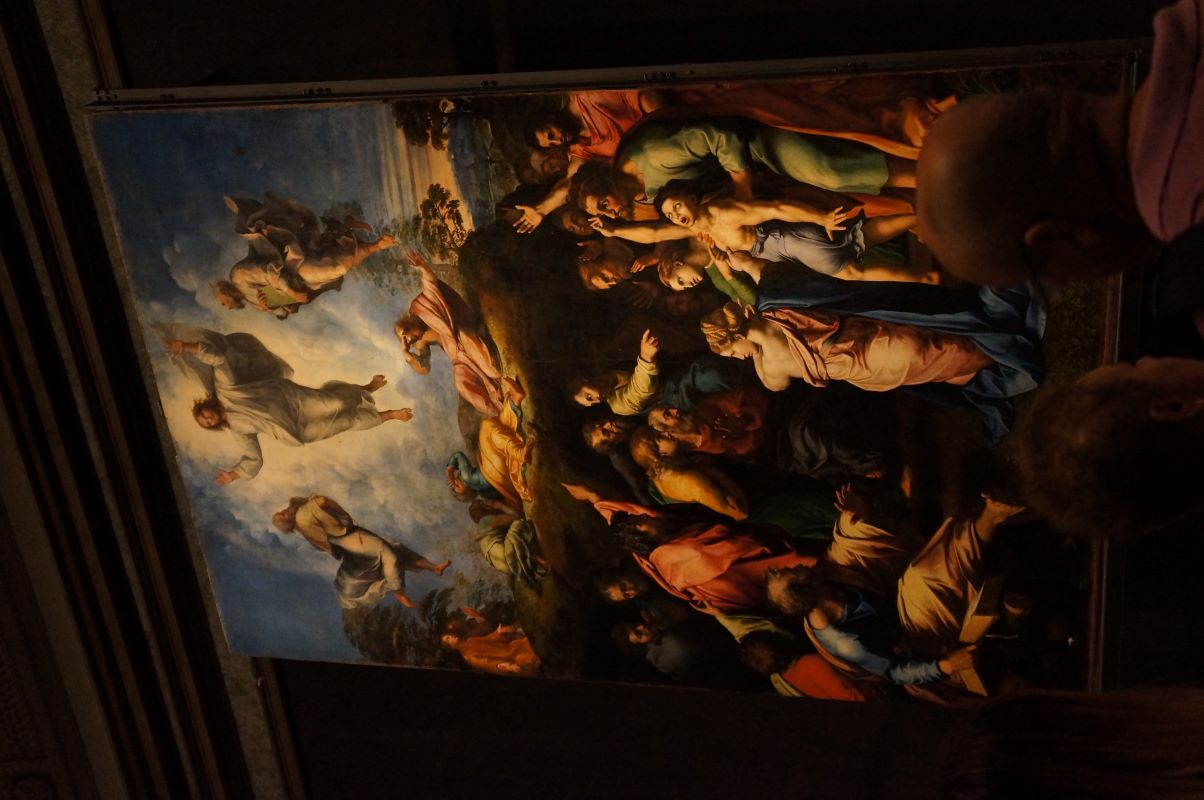
《耶稣变容》是拉斐尔最后和最大的祭坛画。因为早逝而中断,后来由他的团队完成。原作没有来,但展出了很多素描习作。
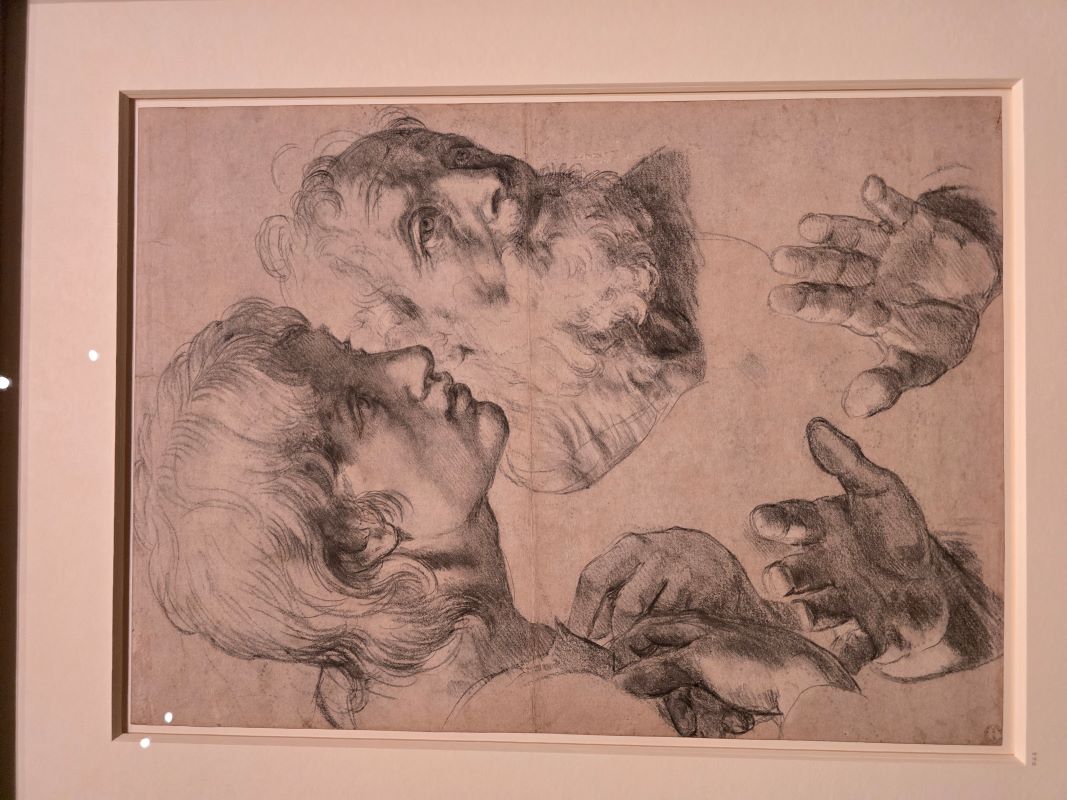
拉斐尔
《两位使徒的头部与手部(〈变容〉的“辅助性卡通”)》,约1519–1520年
黑色粉笔,在扑粉标记(粉扑底稿)上徒手绘制,留有白色水粉高光痕迹,纸本
牛津阿什莫林博物馆,1846年由一群订阅者捐赠(WA1846.209)
这幅气势恢宏的习作页描绘了圣约翰和圣彼得的头部与手部,他们出现在祭坛画下半部分的中央。这两位圣徒的模特仿佛被定格在欲言又止的瞬间,双唇微张,凝视着构图右前景中的情节。他们传达出不同的反应——彼得略带疑问,双手举起;约翰则平静地接纳,双手谦卑地交叠于胸前。拉斐尔将肌肤部分处理得极为精细,却将肩膀、躯干和袖子几乎留为白纸——然而,这些未完成的形式仍然产生了显著的视觉冲击。
Raphael
Heads and Hands of Two Apostles (“Auxiliary Cartoon” for the Transfiguration), ca. 1519–20
Black chalk drawn freehand over pounce marks (spolvero underdrawing), traces of white gouache highlights, on paper
The Ashmolean Museum, Oxford, Presented by a Body of Subscribers in 1846 (WA1846.209)
This imposing sheet of studies depicts the heads and hands of Saints John and Peter, who appear at center in the lower section of the altarpiece. The models for the saints are captured as if in arrested speech, their lips slightly parted as they gaze intently toward the action in the right foreground of the composition. They convey different reactions—Peter’s somewhat questioning, his hands raised, and John’s serenely accepting, his hands humbly knitted at his breast. Raphael worked up the passages of flesh to a high polish but left the shoulders, torsos, and sleeves as nearly blank paper—and yet, those forms have a significant visual impact.
与丢勒的通信
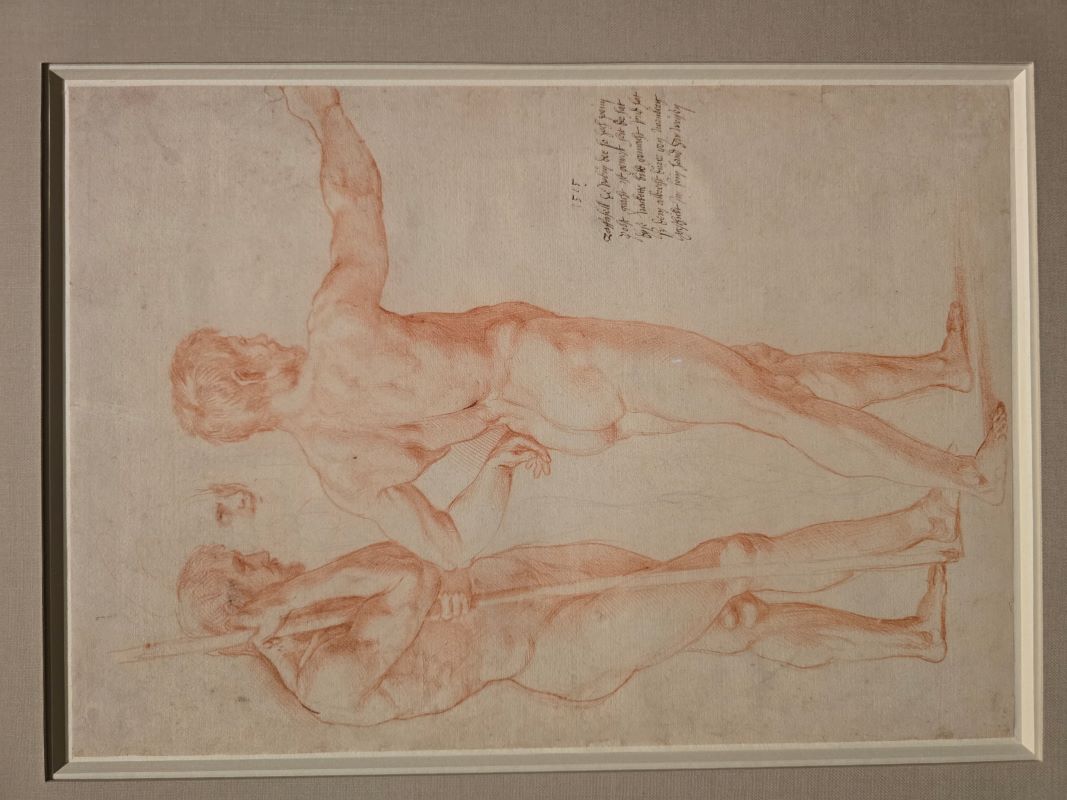
拉斐尔
《两名男性裸体研究(可能为〈火灾室〉中〈奥斯蒂亚海战〉而作)》,1515年
红色粉笔,底层有针笔起稿,纸本
维也纳阿尔贝蒂娜博物馆(17575)
这是拉斐尔唯一一幅可能与《火灾室》中的《奥斯蒂亚海战》湿壁画(由其工作室完成)相关联的写生素描。该素描描绘了两个站立的肌肉发达的男性裸体,红色粉笔的运用如此精湛,以至于它更像一件展示技艺的示范作品,而非功能性的工作草图。它曾为德国伟大的画家和版画家阿尔布雷希特·丢勒(1471–1528)所有。右侧有丢勒的手写题记(译文):“1515年。备受教皇推崇的乌尔比诺的拉斐尔绘制了这些裸体人物的素描,并将其寄往纽伦堡给阿尔布雷希特·丢勒,以向他展示自己的手法。”
Raphael
Studies of Two Male Nudes (Probably for the Naval Battle of Ostia, Stanza dell’Incendio), 1515
Red chalk over preliminary stylus underdrawing, on paper
Albertina, Vienna (17575)
This is the only sheet of life drawings by Raphael that may be connected to the Naval Battle of Ostia fresco in the Stanza dell’Incendio (completed by his workshop). The drawing renders two standing male nudes of muscular anatomy with such virtuosic handling of the red chalk that it suggests a demonstration piece, rather than a functional working drawing. It was once owned by the great German painter and printmaker Albrecht Dürer (1471–1528). A handwritten note by Dürer on the right reads (in translation), “1515. Raphael of Urbino, who was so highly esteemed by the Pope, made this drawing of these naked men, and sent it to Albrecht Dürer in Nuremberg, to show him his hand.”
文物保护工作
1514年布拉曼特去世后,拉斐尔接任圣彼得大教堂首席建筑师。后来他又负责罗马文物古迹的勘察保护工作。
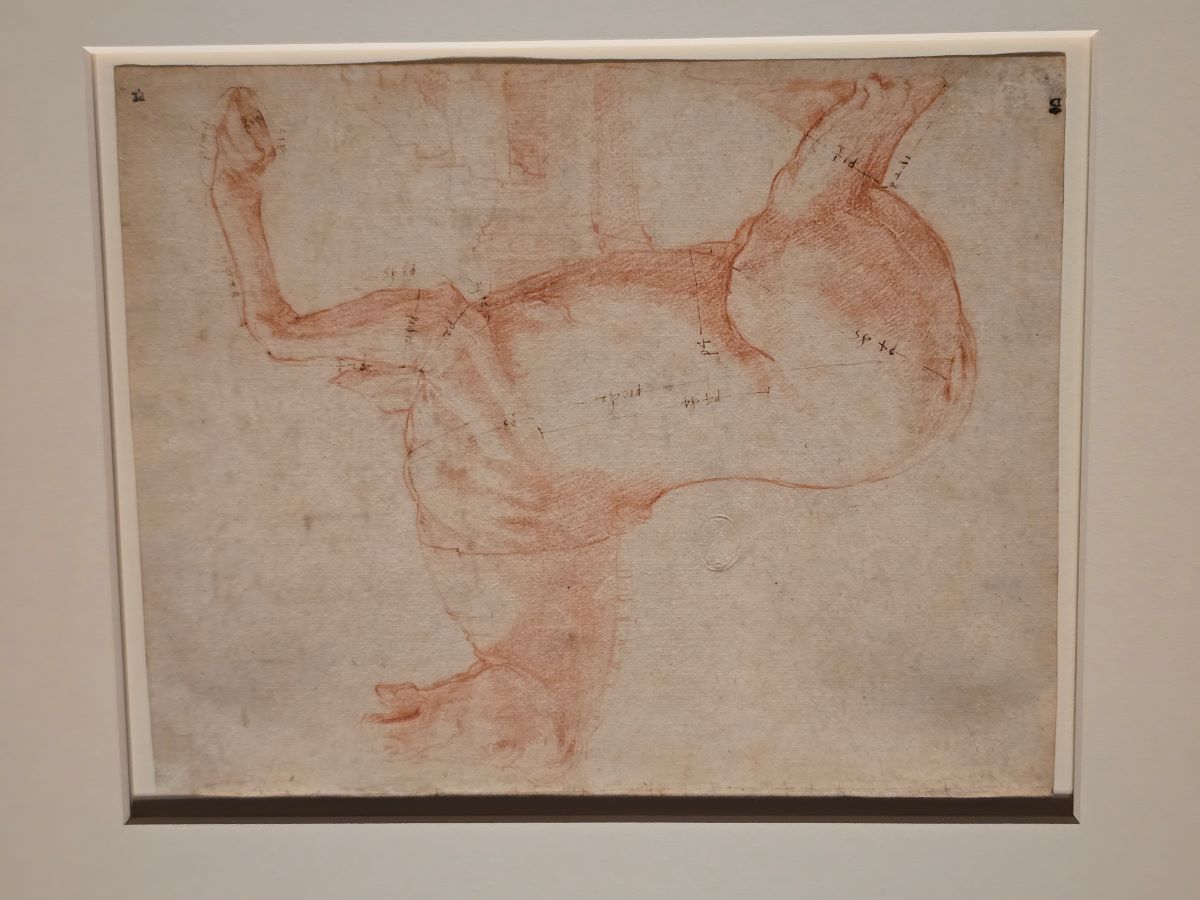
拉斐尔
《奎里纳尔山上的一匹大理石马研究》(“普拉克西特列斯之作”),约1515–1516年
红色粉笔,底层有铅尖笔与针笔起稿;另有人手以钢笔和棕墨添加注释,纸本
华盛顿国家美术馆(1993.51.3.a)
拉斐尔去世时,同时代人尤其痛惜他是一位博学的学者,对罗马的古迹有着深刻的理解。教皇利奥十世曾委托拉斐尔基于对建筑和遗址的严谨细致调查,绘制一幅巨大的城市地形图。拉斐尔对“狄俄斯库里”雕塑群中一匹大理石马的研究——该群像被归于古希腊雕塑家普拉克西特列斯——上面带有精确的测量数据和钢笔棕墨注释,这些注释被认为是出自他合作团队中最博学的古物专家乔瓦尼·达·乌迪内之手。
Raphael
Study of a Marble Horse on the Quirinal Hill (OPUS PRAXITELIS), ca. 1515–16
Red chalk over leadpoint and stylus underdrawing, with annotations by another hand in pen and brown ink, on paper
National Gallery of Art, Washington, D.C. (1993.51.3.a)
At his death, Raphael’s contemporaries especially mourned him as an erudite scholar with a deep understanding of Rome’s ancient monuments. Pope Leo X had charged Raphael with producing a gigantic topographic drawing of the city based on rigorously detailed surveys of buildings and ruins. Raphael’s study of a marble horse from the Dioscuri sculpture group, attributed to the ancient Greek sculptor Praxiteles, bears precise measurements and notes in pen and brown ink attributed to Giovanni da Udine, the most knowledgeable antiquarian on his team of collaborators.
以西结的异象
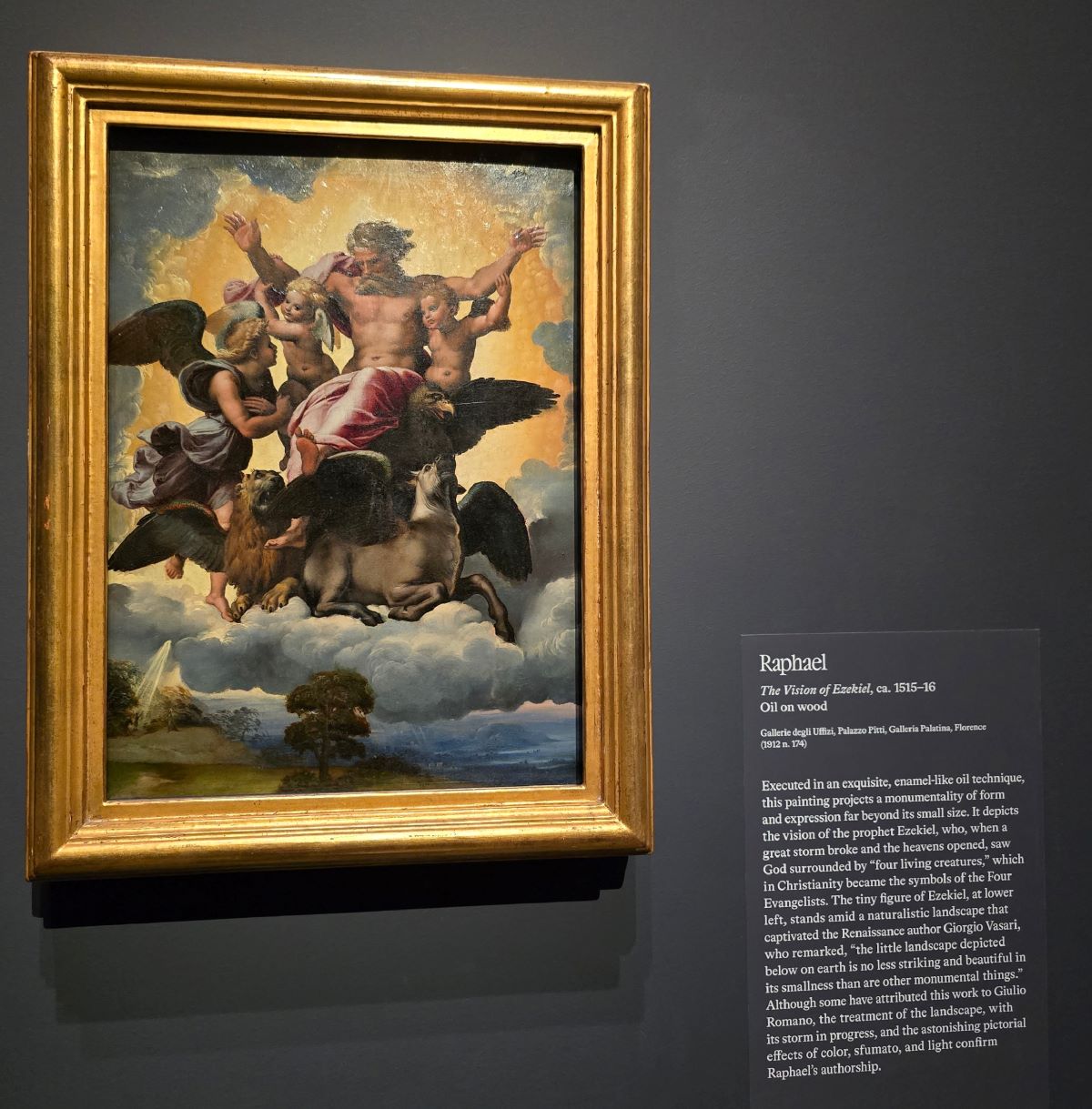
拉斐尔
《以西结的异象》,约1515–1516年
木板油画
佛罗伦萨,乌菲齐美术馆(皮蒂宫,帕拉蒂纳美术馆)
(1912年第174号)
这幅画以精美、如珐琅般的油画技法绘制,其形式与表现力的纪念碑性远远超出了它小巧的尺幅。它描绘了先知以西结的异象:当一场大风暴爆发、天空裂开时,他看见上帝被“四个活物”环绕——在基督教传统中,这四个活物成为四福音书作者的象征。左下角小小的以西结人物站立在一片自然主义风景中,这片风景令文艺复兴作家乔治·瓦萨里着迷不已,他评论道:“下方画于地上的小幅风景,其小巧精致之夺目与美丽,丝毫不亚于其他宏伟之物。”尽管有人将此作归于朱利奥·罗马诺,但风景中暴风雨的动态处理,以及色彩、晕涂法与光的惊人画面效果,都证实了拉斐尔的作者身份。
Raphael
The Vision of Ezekiel, ca. 1515–16
Oil on wood
Gallerie degli Uffizi, Palazzo Pitti, Galleria Palatina, Florence
(1912 n. 174)
Executed in an exquisite, enamel-like oil technique, this painting projects a monumentality of form and expression far beyond its small size. It depicts the vision of the prophet Ezekiel, who, when a great storm broke and the heavens opened, saw God surrounded by “four living creatures,” which in Christianity became the symbols of the Four Evangelists. The tiny figure of Ezekiel, at lower left, stands amid a naturalistic landscape that captivated the Renaissance author Giorgio Vasari, who remarked, “the little landscape depicted below on earth is no less striking and beautiful in its smallness than are other monumental things.” Although some have attributed this work to Giulio Romano, the treatment of the landscape, with its storm in progress, and the astonishing pictorial effects of color, sfumato, and light confirm Raphael’s authorship.
去世
正当拉斐尔领导着他的团队,同时在装饰梵蒂冈房间、监督圣彼得大教堂建设、罗马文物遗迹保护工作等多个战线上干得风生水起之时,1520年4月6日,37岁的拉斐尔突然去世,被安葬在罗马万神庙。只剩下我们这些凡人看着他的作品不胜唏嘘。死亡原因众说纷纭,有说对手下毒的,有说纵欲过度的。我觉得可能是 Sprezzatura 刻意掩盖努力痕迹的优雅。事情太多,弦绷得太紧,就断了。
瓦萨里在《艺苑名人录》中评价拉斐尔:大多数艺术家本性中都有某种张狂与野性……然而在拉斐尔身上却有种极罕见的谦虚……他才华出众、为人随和、生性善良,又知书达理、举止端庄,可以在任何场合,让不同阶层的人同时感到亲切、友善(重点是我加的)。这最后一句话让我想起了同样是早逝的秦可卿。红楼梦第十三回描述她死后,“那长一辈的想他素日孝顺,平一辈的想他素日和睦亲密,下一辈的想他素日慈爱,以及家中仆从老小想他素日怜贫惜贱,慈老爱幼之恩,莫不悲嚎痛哭者。”不论地位高低、年纪长幼,所有的人都喜欢。这一方面是天赋,另一方面在背后需要付出极大的心力。
关于展览的感想
以前对拉斐尔的理解仅限于“雅典学院”“文艺复兴三杰”这类关键词,看展之后细细回味,通过写作本文,对甜美作品背后的艺术家本人算是有了粗浅的理解。最喜欢的作品是阿尔巴圣母和塞西莉亚的狂喜。展览将进行到6月28日,大都会博物馆也在官网上默默地增加内容。现场说明版文案(Inside the Exhibition)是我参观完之后加上的,而参展物品(Exhibition Objects)是本文写作接近完成时添加的,不知道是不是想逐渐放出更多资料吸引更多观众?要是稍微挑刺的话,就是草稿、习作这类在我这种外行看来凑数的作品多了些(展出了33幅绘画和142幅素描。不过拉斐尔的作品在哪里都是镇馆之宝级别的,要借过来也不容易);整体有点“头重脚轻”,前期脉络比较清晰,晚期就发散了,稍显混乱(晚期他干的事情太多,本身就比较乱,没什么脉络);另外为了叙事的方便,简化了不少。例如按照展览的逻辑,似乎圣母子应该是佛罗伦萨时期的重点,但阿尔巴圣母其实是拉斐尔的罗马时期创作的(这些都是细节,自己有兴趣再去研究吧,别把观众绕晕了)。
附录
除了在正文中提到的以外,之前在其他地方看过的拉斐尔作品也一并附上3:
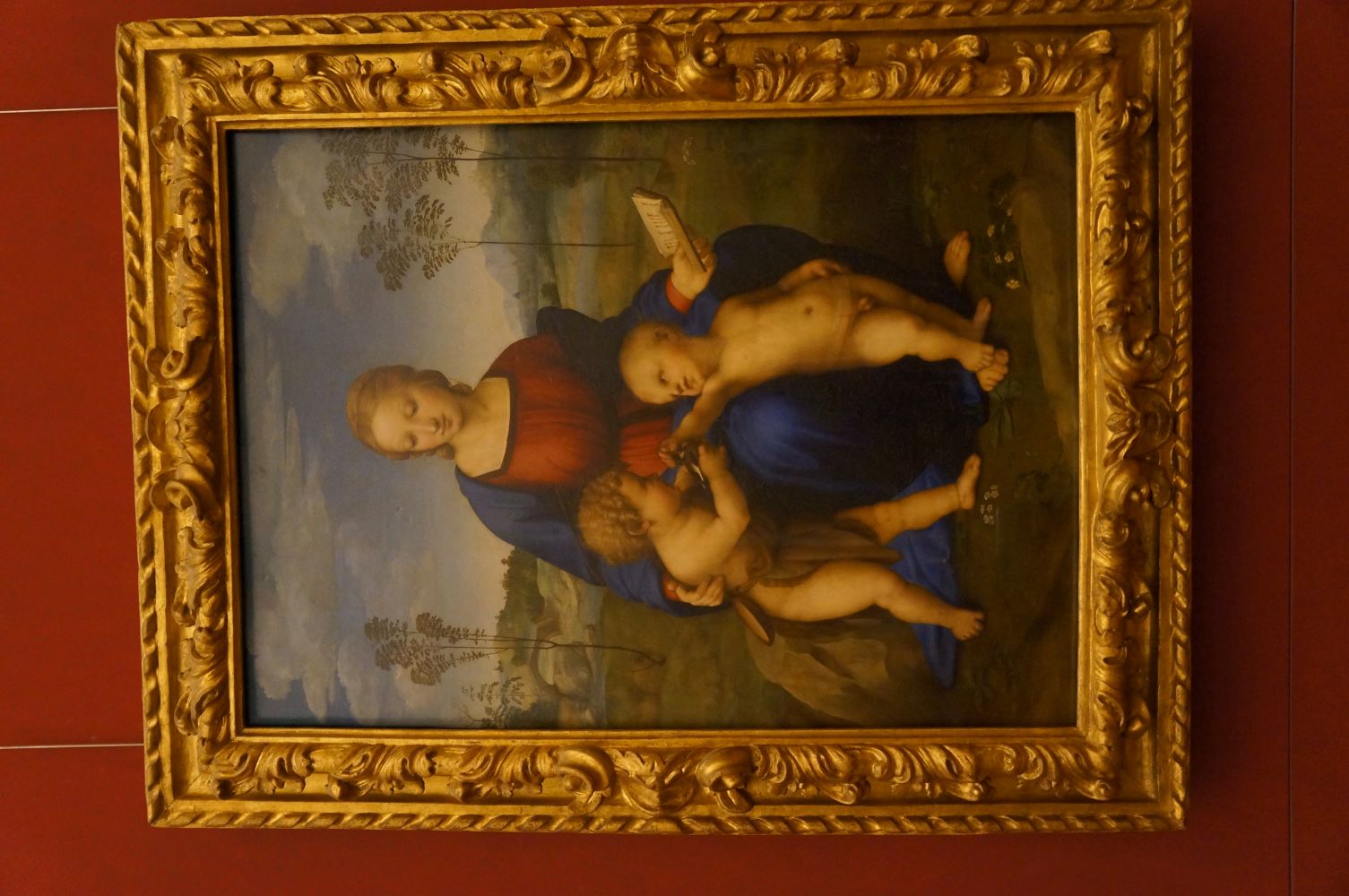
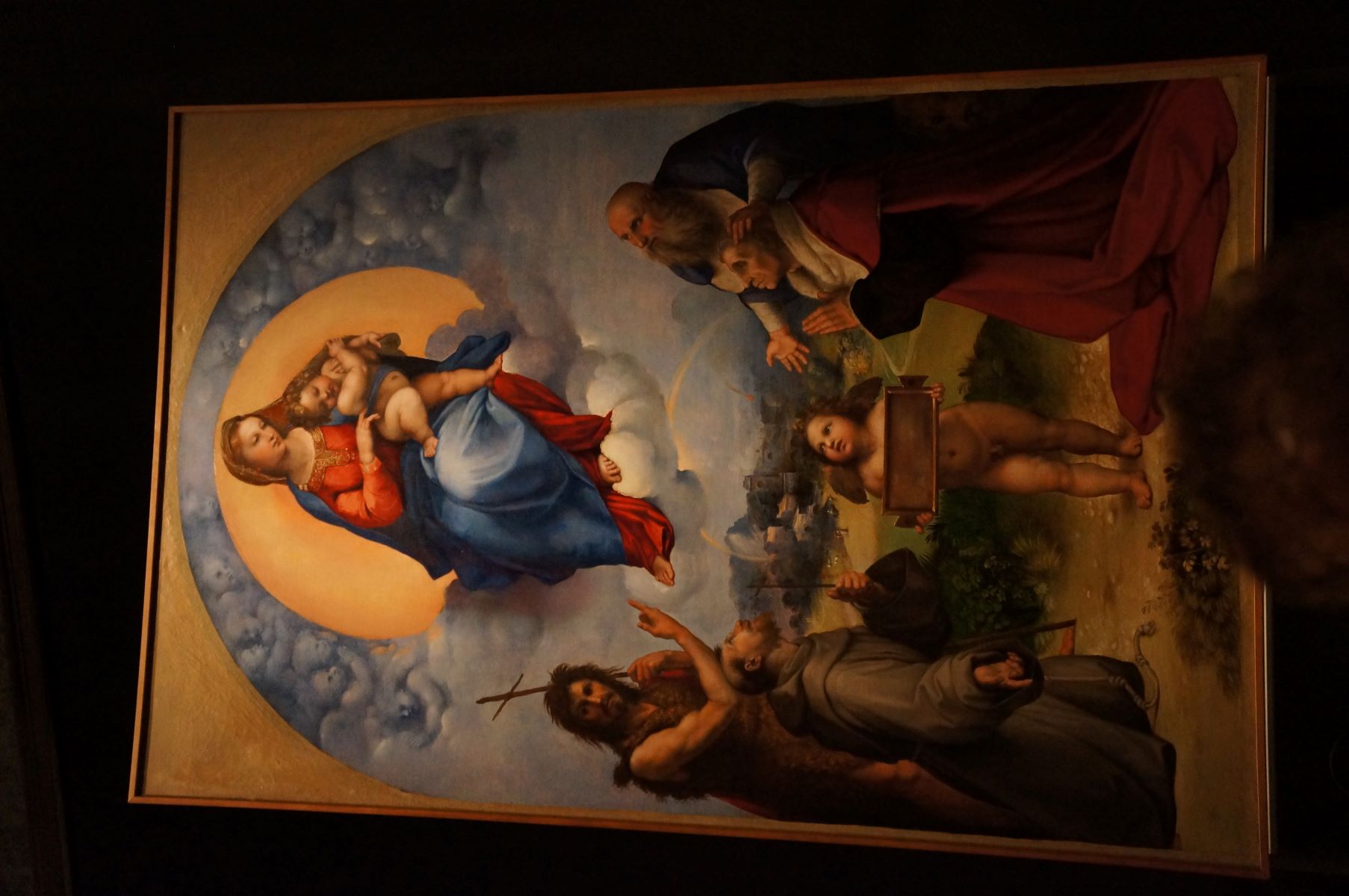
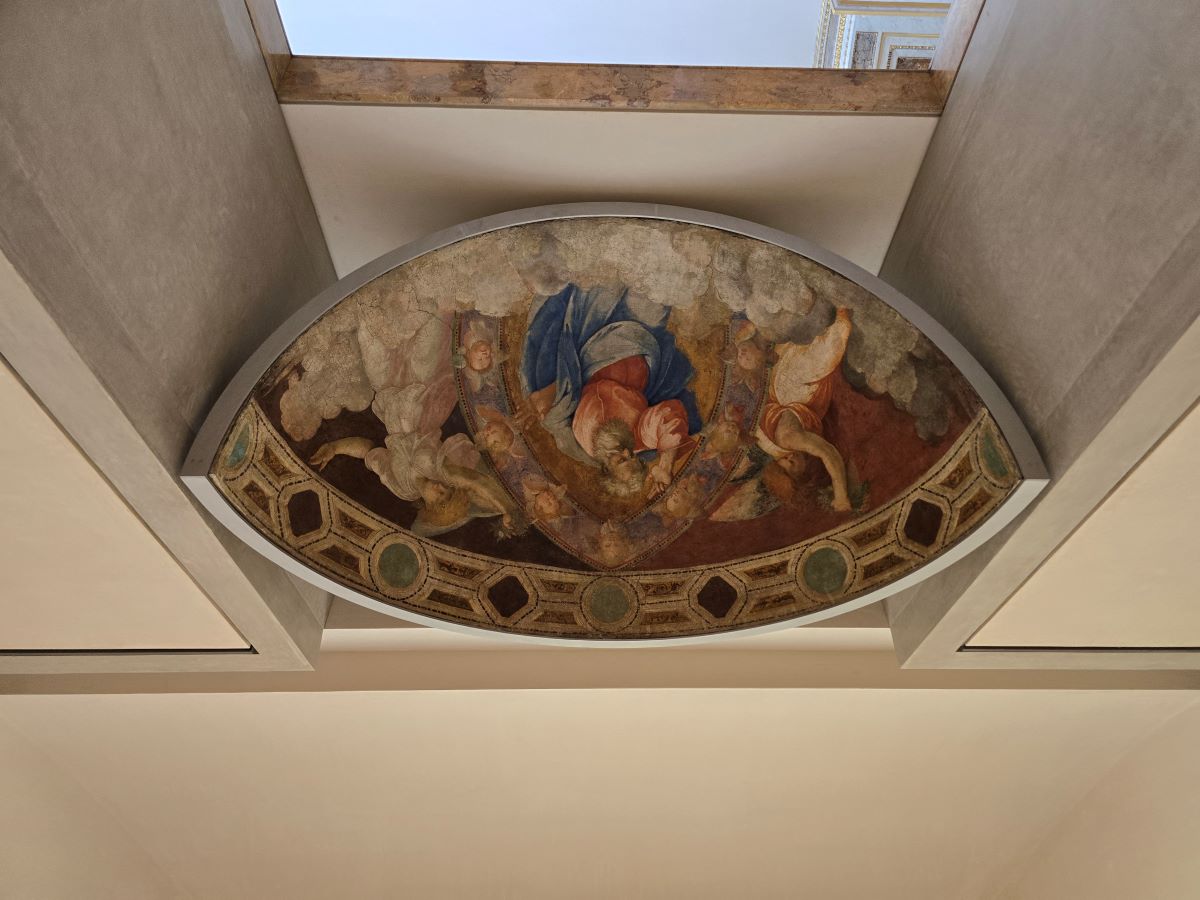
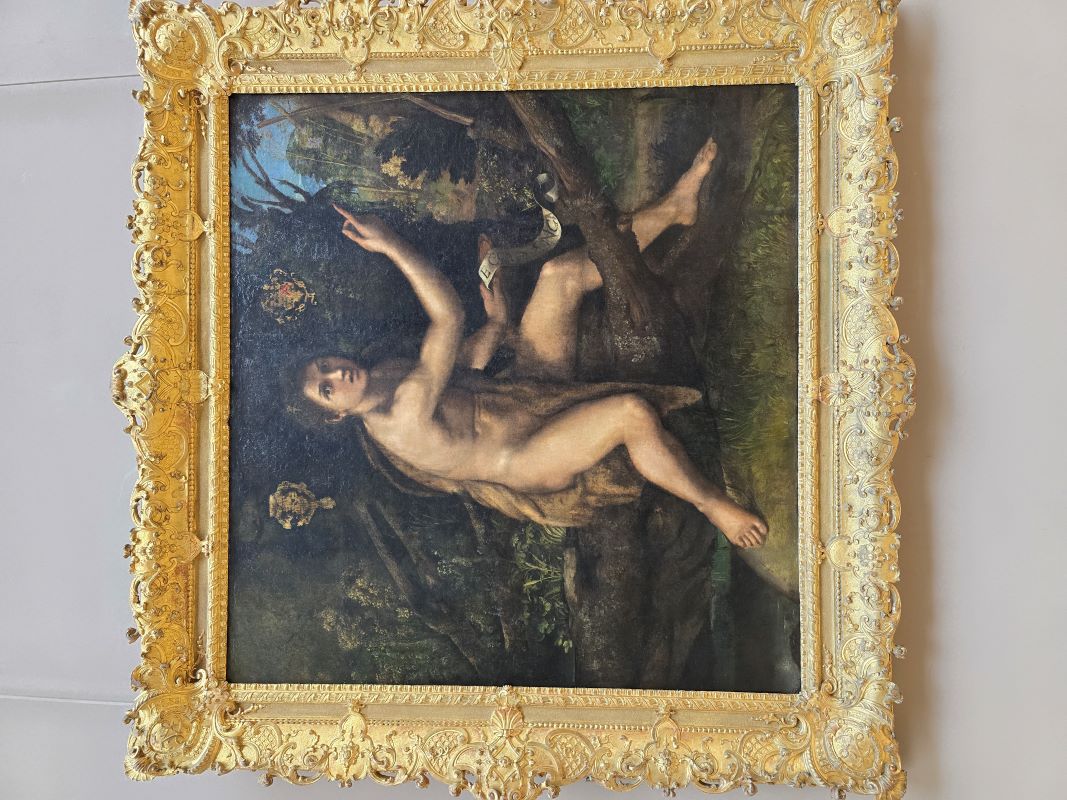
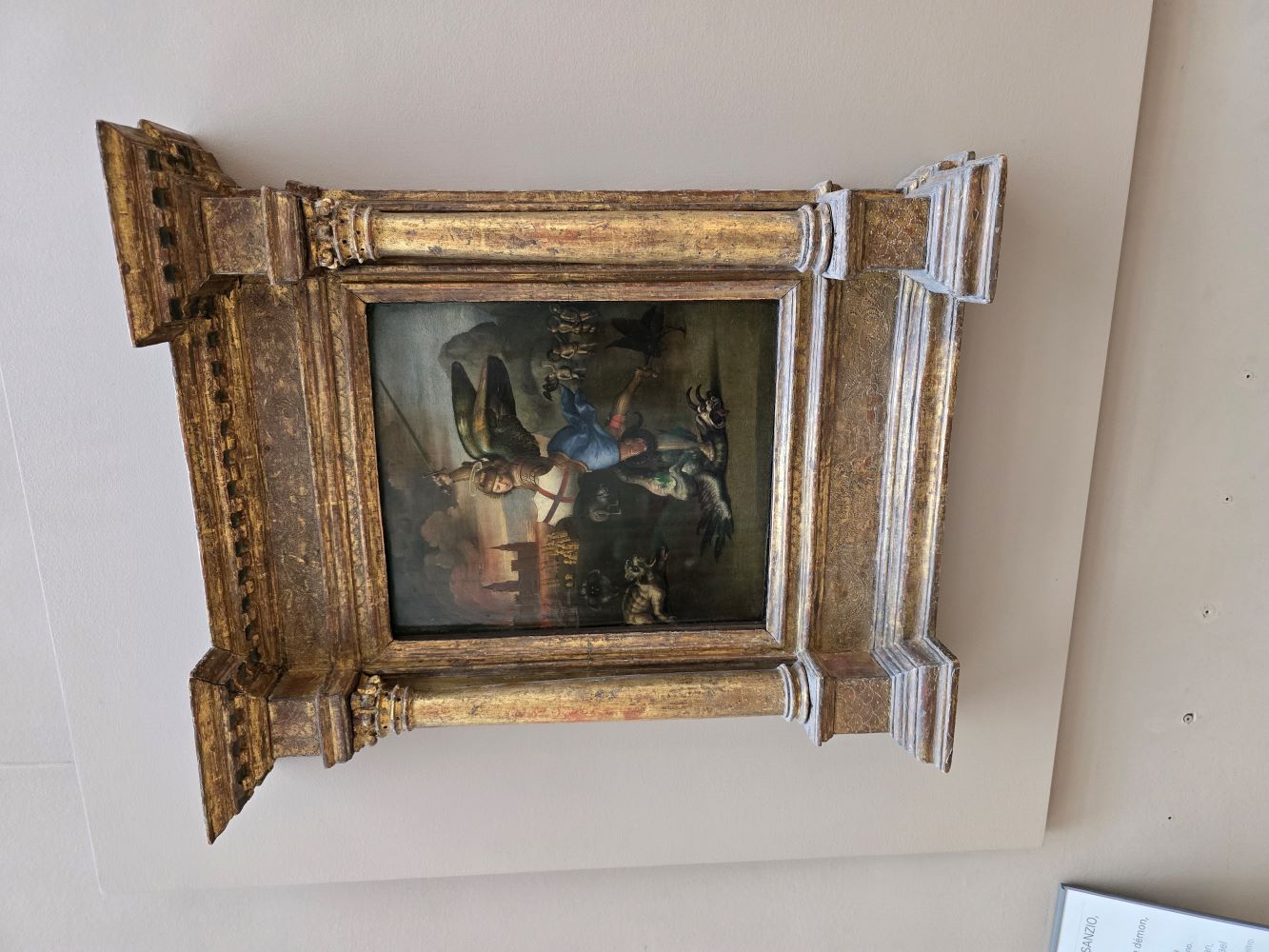
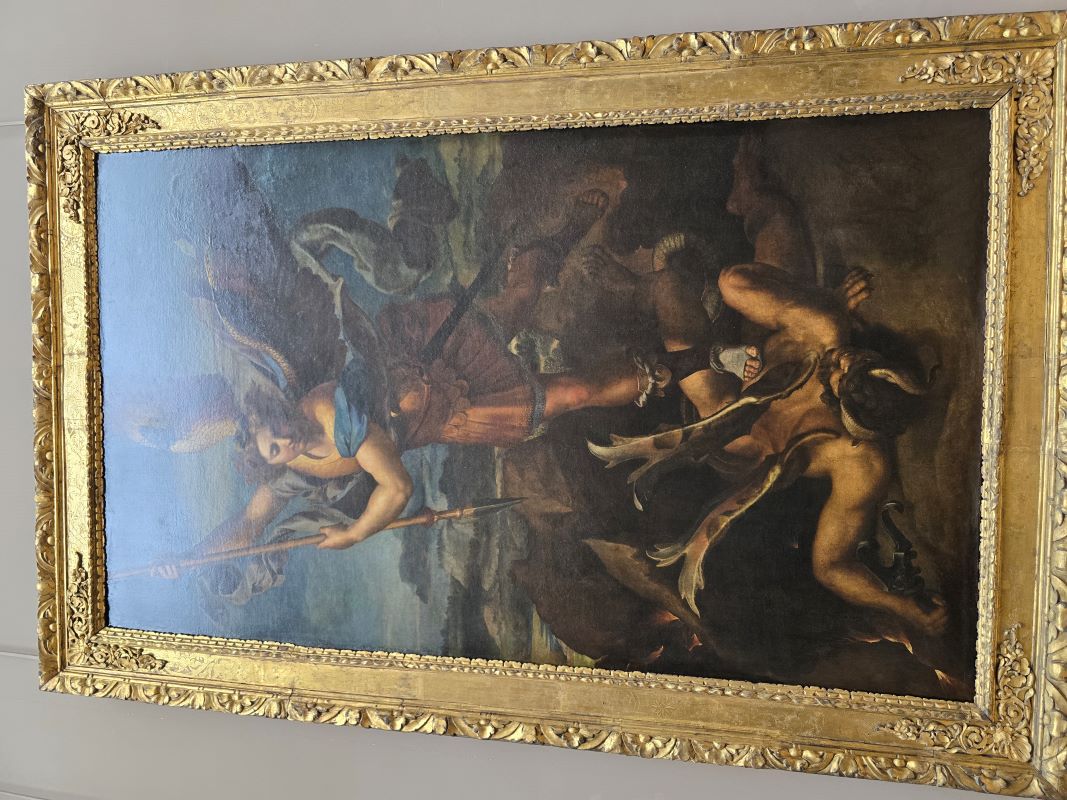
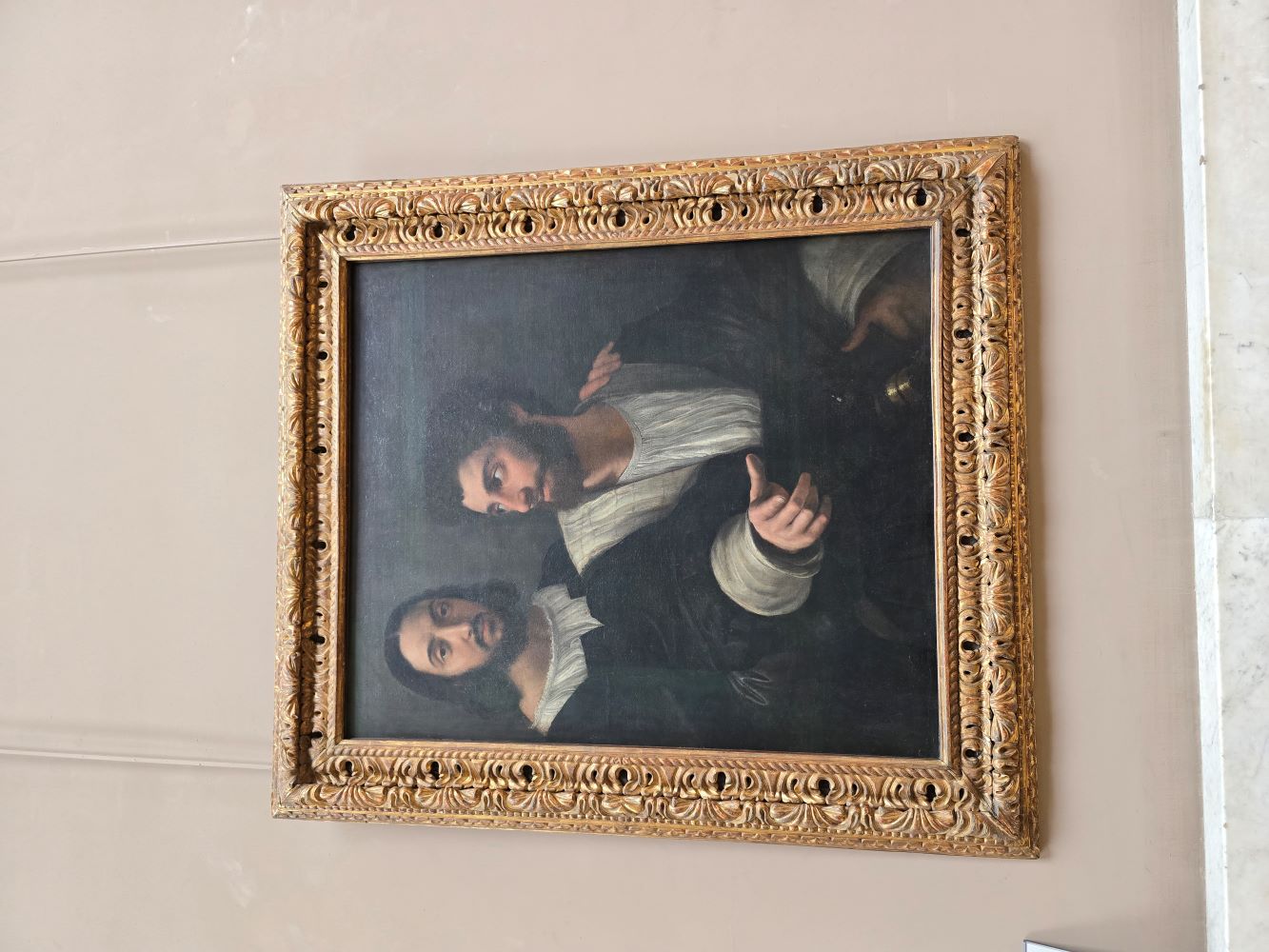
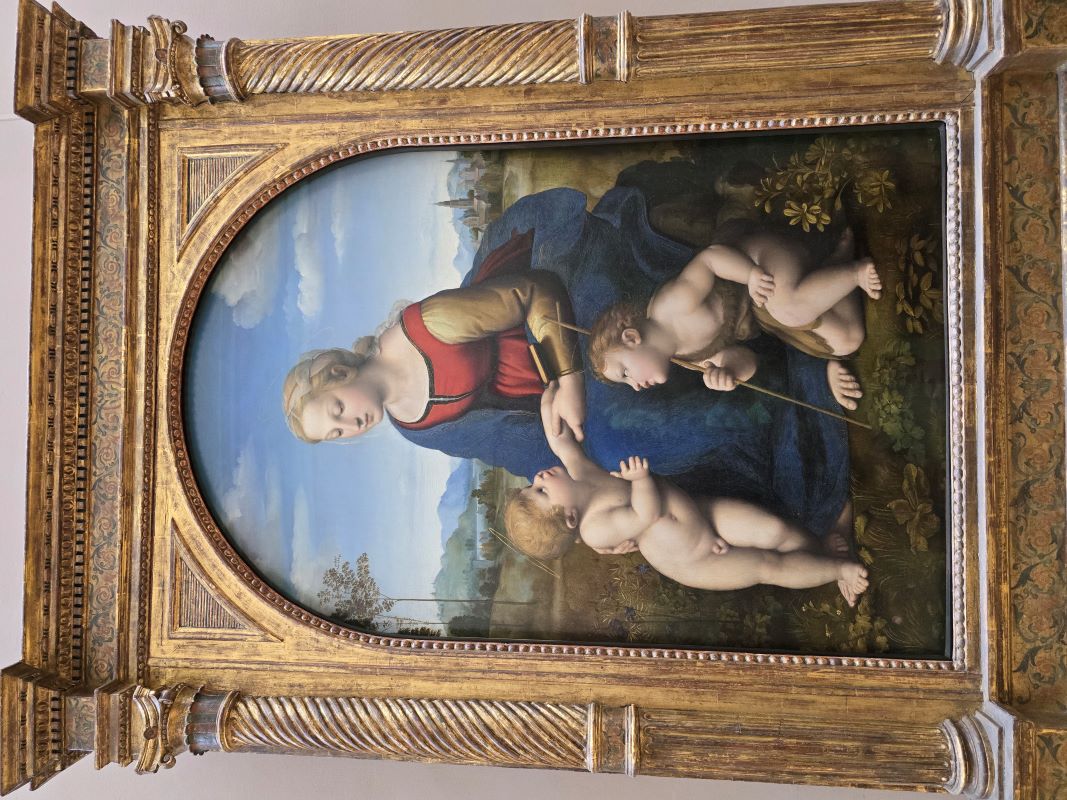
-
帮助比较大的资料:一亩三分地匿名博主的评论,大卫翁和可达的逛展音频(全网我找到的最好的解读),官方语音导览,官方说明版文案,官方宣传视频。最有意思的是参观当天上午查漏补缺的时候发现了谢拉克洛瓦和凯西的逛展视频(似乎是当天上午才发布,头天晚上还没搜到)。看完视频下午去现场结果就碰到凯西。缘分这种东西,说也说不清楚! ↩︎
-
很好奇ChatGPT将如何翻译这些中文网络用语。 ↩︎